Vibrating Wire Strain Gauge vs MEMS Sensor for Long-Term Monitoring
In 2016, the Majerhat Bridge in Kolkata showed no external distress before a span collapsed, killing three people — a failure that post-incident investigations attributed partly to the absence of embedded strain monitoring capable of detecting long-term section loss. The question of which sensor technology can reliably sustain measurement fidelity across a 20–30 year infrastructure lifecycle is therefore not academic. When instrumentation engineers evaluate the vibrating wire strain gauge vs MEMS sensor for long term monitoring, the decision hinges on quantifiable performance parameters: thermal drift, zero-stability, fatigue life, and signal integrity under field conditions — not on datasheet headlines.
This post presents a rigorous, data-anchored comparison of vibrating wire (VW) and MEMS-based strain sensing technologies, with reference to manufacturer performance curves, Indian deployment contexts, and the software ecosystems that process their outputs.
Key Takeaways
- Vibrating wire strain gauges maintain zero-stability over decades because their output is a frequency ratio, not a voltage amplitude — making them inherently immune to cable resistance drift and connector degradation.
- MEMS accelerometers and strain sensors exhibit temperature-dependent offset drift typically in the range of ±0.1–1.0 mg/°C (per manufacturer datasheets), which compounds over multi-year deployments without active compensation.
- For embedment in concrete structures monitored under IS 13311 or IRC:112 compliance frameworks, VW gauges remain the dominant choice due to their proven 20+ year field record.
- MEMS sensors offer superior dynamic bandwidth (up to several kHz) and are better suited for modal analysis, seismic response, and short-duration load events.
- Hybrid architectures — VW for quasi-static strain, MEMS for dynamic response — are increasingly deployed in Indian bridge and tunnel SHM platforms, including the RITES 3D Digital Twin and VR Visualization Platform for Bridge Health Monitoring System.
What Is a Vibrating Wire Strain Gauge?
A vibrating wire strain gauge is a sensor that measures mechanical strain by detecting the resonant frequency of a tensioned steel wire, where frequency shift is directly proportional to strain change in the host structure. The output is a frequency signal (typically 400–6000 Hz range), which is converted to engineering units using a calibration factor expressed in micro-strain (με) per Hz².
Because frequency is a ratio measurement, VW gauges are inherently insensitive to cable resistance changes caused by moisture ingress, connector oxidation, or long cable runs — a critical advantage in buried or embedded installations. The embedment vibrating wire strain gauge is specifically designed for casting into concrete, where it must survive pour pressures, curing heat, and decades of structural load cycling.
Resolution for well-manufactured VW gauges is typically 1 με or better, with full-scale ranges commonly spanning ±3000 με. Thermal correction is applied using a co-located thermistor, with gauge factors traceable to the manufacturer's calibration certificate.
What Is a MEMS Strain Sensor?
MEMS (Micro-Electro-Mechanical Systems) strain sensors use microfabricated silicon or polysilicon piezoresistive elements to transduce mechanical deformation into a voltage change. They are produced at wafer scale, which gives them cost and size advantages, and their dynamic response can extend to several kilohertz — far beyond the quasi-static bandwidth of VW technology.
However, piezoresistive MEMS elements are sensitive to temperature because silicon's gauge factor and resistivity both vary with temperature. Manufacturer datasheets for industrial MEMS strain sensors typically specify offset temperature coefficients of 0.1–2.0 mV/V/°C and gain temperature coefficients of 0.01–0.1%/°C. Over a 30-year deployment spanning Indian seasonal temperature ranges of 15–45 °C in northern plains or −10 °C to +35 °C in Himalayan corridors, uncorrected MEMS drift can accumulate to values that obscure the structural signals being measured.
MEMS drift — the slow, irreversible shift in sensor zero or gain independent of temperature — is a separate concern. Piezoresistive creep and diaphragm stress relaxation contribute to long-term zero drift that manufacturers typically specify over 1-year periods, not 20-year horizons.
VW Strain Gauge Lifespan vs MEMS Drift: A Performance Comparison
The most consequential difference between the two technologies for vibrating wire strain gauge vs MEMS sensor for long term monitoring applications is the divergence in long-term stability. VW gauge lifespan in embedded concrete applications is well-documented: instruments installed in dam galleries and bridge decks in the 1980s and 1990s continue to return valid readings where cable integrity has been maintained. The physical mechanism is stable — a tensioned wire's resonant frequency is governed by its mass and tension, both of which are mechanically stable in a protected environment.
MEMS sensors, by contrast, are subject to several degradation mechanisms over multi-year deployments:
- Piezoresistive creep: Silicon resistor networks exhibit slow resistance drift under sustained mechanical stress, contributing to zero offset shifts measurable over months to years.
- Packaging stress: Differential thermal expansion between the MEMS die, adhesive, and substrate introduces parasitic strain that appears as sensor drift.
- Moisture sensitivity: MEMS devices not hermetically sealed to MIL-STD-883 or equivalent standards are vulnerable to humidity-induced resistance changes in bond wires and resistor networks.
- Electromigration: At elevated temperatures (>60 °C, common in Indian summer conditions in unventilated sensor housings), electromigration in aluminium interconnects can shift resistance values over years.
For structural health monitoring programmes where sensor replacement is impractical — embedded gauges in post-tensioned bridge decks, tunnel linings, or dam bodies — VW technology's long-term stability is a decisive engineering argument.
Sensor Technology Comparison: VW Strain Gauge vs MEMS for SHM
The table below compares key performance parameters relevant to long-term structural monitoring deployments. Values are drawn from published manufacturer datasheets and peer-reviewed instrumentation literature.
| Parameter | Vibrating Wire Strain Gauge | MEMS Strain / Accelerometer Sensor |
|---|---|---|
| Measurement principle | Resonant frequency of tensioned wire | Piezoresistive or capacitive MEMS element |
| Typical resolution | 0.5–1.0 με | 1–10 με (strain); 0.001–0.01 mg (accel) |
| Long-term zero stability | ±0.1% FS over 10+ years (manufacturer data) | ±0.5–2.0% FS per year (manufacturer data) |
| Temperature coefficient of offset | Corrected via co-located thermistor; residual <0.5 με/°C | 0.1–2.0 mV/V/°C (uncorrected); requires active compensation |
| Dynamic bandwidth | 0.001–1 Hz (quasi-static) | DC to several kHz |
| Cable sensitivity | Immune (frequency output) | Sensitive (voltage/current output) |
| Embedment suitability | High — designed for concrete casting | Low to moderate — packaging constraints |
| Typical field lifespan | 20–30+ years (documented field records) | 5–15 years (packaging and drift dependent) |
| Power requirement | Excitation pulse only; ultra-low average power | Continuous power; higher average consumption |
| Cost per channel (indicative) | Higher unit cost; lower lifecycle cost | Lower unit cost; higher lifecycle cost due to replacement |
This comparison is relevant to engineers specifying sensors for projects governed by IRC SP-35 (bridge instrumentation), CWC dam safety guidelines, or IS 13311 (non-destructive testing of concrete) compliance frameworks.
Signal Conditioning, Dataloggers, and Software Integration
Sensor technology selection cannot be separated from the data acquisition and software stack that processes the output. VW gauges require a dedicated readout module that generates an excitation pulse, measures the wire's ring-down frequency using a period-counting or FFT algorithm, and applies thermistor correction. Modern VW dataloggers sample at rates from 1 reading per minute to several readings per second, sufficient for quasi-static structural monitoring.
MEMS sensors — particularly accelerometers used for modal analysis — require high-speed ADCs (typically 16–24 bit at 100–10,000 samples per second) and anti-aliasing filters. The data volumes generated are orders of magnitude larger than VW systems, placing greater demands on onsite storage, telemetry bandwidth, and cloud processing infrastructure.
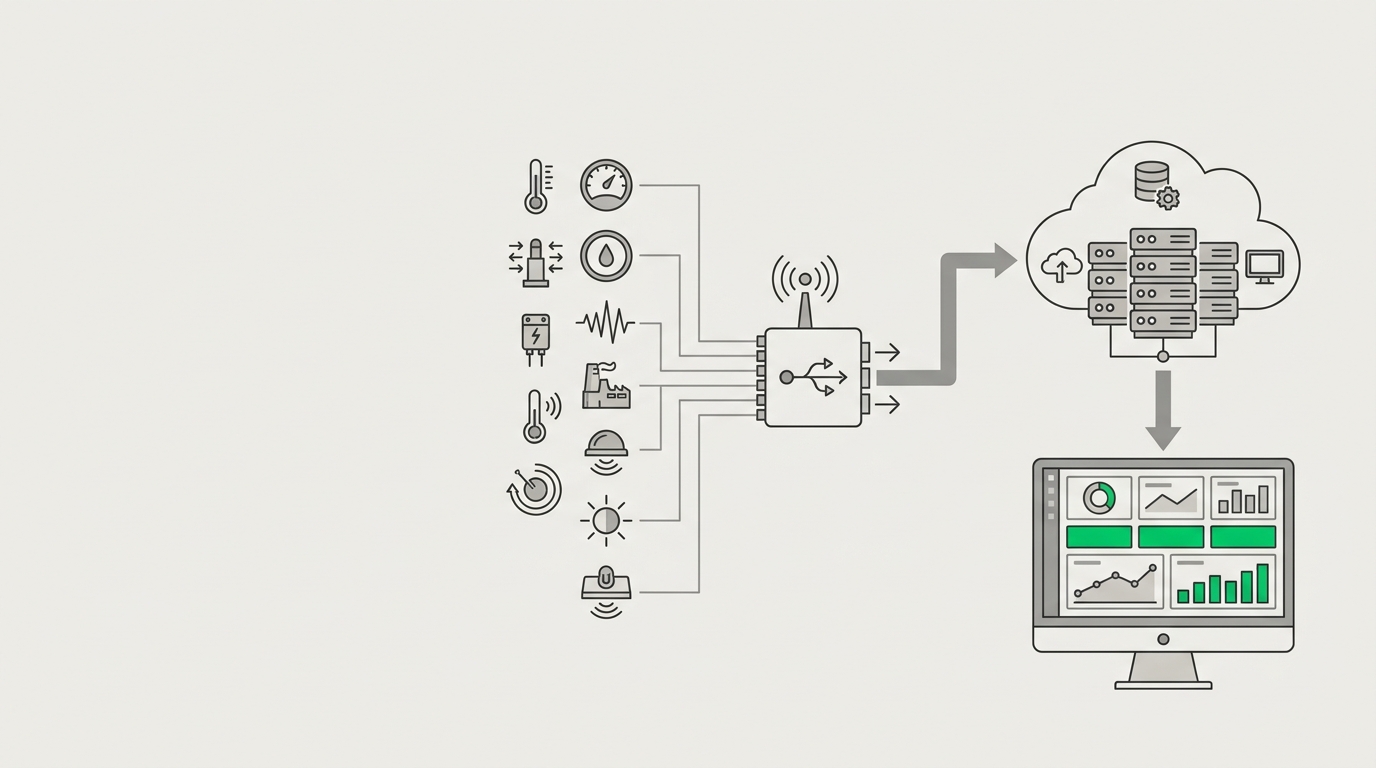
For integrated deployments, multi-channel structural monitoring dataloggers that support both VW and MEMS inputs allow hybrid architectures where VW gauges handle long-term quasi-static strain and MEMS accelerometers capture dynamic events. The software platform must then reconcile two fundamentally different data streams — slow-sampled strain histories and high-frequency vibration records — into a unified structural state assessment.
This is precisely the architecture deployed in the RITES 3D Digital Twin and VR Visualization Platform for Bridge Health Monitoring System, where long-term strain baselines from VW sensors are fused with dynamic modal data to update the digital twin's structural model in near-real-time. Similarly, the MIT-WPU Tunnel Health Monitoring and Digital Twin Excellence Centre, inaugurated by Hon'ble Minister Sh. Nitin Gadkari, uses multi-sensor fusion as a research and training framework for next-generation SHM engineers.
The structural health monitoring software platform must handle sensor-specific calibration coefficients, thermistor correction polynomials for VW channels, and drift compensation algorithms for MEMS channels — all within a unified data model that supports alarm thresholds, trend analysis, and regulatory reporting.
Drift Compensation Strategies for MEMS in Long-Term Deployments
Instrumentation engineers who choose MEMS sensors for long-term applications — typically because dynamic bandwidth or form factor requirements cannot be met by VW technology — must implement active drift compensation strategies to maintain measurement integrity.
The most common approaches include:
- Temperature compensation polynomials: Manufacturer-supplied or field-calibrated polynomial coefficients applied in firmware or software to correct offset and gain as a function of measured temperature. Effective for reversible thermal drift; does not address irreversible creep.
- Periodic in-situ calibration: Applying a known reference load or acceleration (using a calibrated shaker or deadweight) at scheduled intervals to detect and correct zero and gain drift. Practical for accessible sensors; impractical for embedded or inaccessible installations.
- Redundant sensor cross-referencing: Co-locating a VW gauge with a MEMS sensor and using the VW reading as a long-term reference against which MEMS drift is detected and corrected. This hybrid approach is increasingly specified in high-consequence monitoring programmes.
- Machine learning drift models: Training regression models on historical sensor data to predict and subtract drift components. This approach is explored in machine learning applications for structural health monitoring, where sensor anomaly detection algorithms can flag drift events before they corrupt structural assessments.
None of these strategies fully eliminates the fundamental limitation: MEMS sensors require active management to maintain long-term accuracy, whereas VW gauges are passive and self-referencing by design.
Application Mapping: Which Technology for Which Structure?
The choice between VW and MEMS is not binary across an entire project — it is a channel-by-channel engineering decision based on measurement objective, access constraints, and monitoring duration.
- Concrete bridge decks and girders (IRC:112 compliance): Embedment VW strain gauges for long-term prestress loss monitoring; MEMS accelerometers for periodic modal testing or continuous dynamic monitoring under traffic loading.
- Tunnel linings (NATM, IS 14458 context): VW gauges embedded in shotcrete or cast-in-place lining segments for convergence-correlated strain; MEMS for blast vibration monitoring during construction.
- High-rise building cores and transfer slabs: VW gauges for column shortening and differential settlement strain; MEMS accelerometers for wind-induced vibration and seismic response per IS 1893.
- Dam bodies and galleries (Dam Safety Act 2021, CWC guidelines): VW gauges are the mandated technology for embedded strain and pore pressure monitoring in dam safety instrumentation plans; MEMS seismometers for strong-motion recording.
- Transport infrastructure (NHAI, MORTH): For transport infrastructure monitoring, VW gauges in pavement layers for load-induced strain; MEMS in weigh-in-motion and bridge dynamic response systems.
Understanding what is structural health monitoring and why does it matter is the prerequisite for making these technology allocation decisions correctly — the sensor is only as useful as the monitoring objective it serves.
Frequently Asked Questions
Q: What is the primary difference between a vibrating wire strain gauge and a MEMS sensor for long-term structural monitoring?
A: A vibrating wire strain gauge measures strain through the resonant frequency of a tensioned wire, producing a frequency output immune to cable resistance drift, while a MEMS sensor uses a piezoresistive or capacitive silicon element producing a voltage output susceptible to temperature-dependent drift and long-term creep. For deployments exceeding 10 years, VW technology offers demonstrably superior zero-stability per published manufacturer data.
Q: What is VW strain gauge lifespan in embedded concrete applications?
A: VW strain gauge lifespan in embedded concrete applications is documented at 20–30 years or more, based on field records from dam and bridge instrumentation programmes where cable integrity was maintained. The frequency-based measurement principle is mechanically stable, and the gauge wire is protected from corrosion by the surrounding concrete matrix, making long-term survival feasible under normal structural conditions.
Q: How significant is MEMS drift over a 10-year monitoring programme?
A: MEMS drift over a 10-year monitoring programme can be significant enough to mask real structural signals if uncompensated. Industrial MEMS strain sensors typically specify zero drift of 0.5–2.0% of full scale per year in manufacturer datasheets. Over a decade, cumulative drift can reach tens of micro-strain, comparable in magnitude to the slow structural changes — prestress loss, creep, settlement — that long-term monitoring is designed to detect.
Q: Can MEMS sensors be used for long-term structural health monitoring in Indian infrastructure projects?
A: MEMS sensors can be used for long-term structural health monitoring when paired with active drift compensation strategies such as temperature correction polynomials, periodic in-situ calibration, or co-located VW reference gauges. They are well-suited for dynamic monitoring objectives — modal analysis, seismic response, traffic-induced vibration — but require more intensive data management than VW systems for quasi-static strain measurement over multi-year periods.
Q: Which Indian Standard governs the use of embedded strain gauges in concrete structures?
A: IS 13311 governs non-destructive testing methods for concrete in India and provides the framework within which embedded instrumentation data is interpreted for structural assessment. For bridge structures, IRC:112 (Code of Practice for Concrete Road Bridges) and IRC SP-35 (Guidelines for Inspection and Maintenance of Bridges) establish the monitoring context within which embedded VW strain gauges are specified and their data reported to NHAI or MORTH.
Compare datasheets
Selecting the right sensor technology for a long-term structural monitoring programme requires more than a datasheet comparison — it requires matching sensor performance curves to your specific monitoring duration, access constraints, data acquisition architecture, and regulatory reporting obligations.
Geolook's instrumentation team works with civil, structural, and geotechnical engineers across NHAI, RVNL, BRO, and EPC projects to specify sensor configurations that maintain measurement integrity across the full infrastructure lifecycle. Whether your project requires embedment vibrating wire strain gauges for concrete casting, MEMS accelerometers for dynamic response, or a hybrid multi-sensor architecture integrated into a unified SHM software platform, we can provide the technical documentation and field performance data to support your specification.
Contact Geolook's instrumentation engineers to request sensor datasheets, calibration certificates, and application-specific performance data for your project.
Project inquiry
Talk to a Geolook™ specialist
Share your monitoring requirement and our team will help identify the right next step.
By submitting, you agree that Geolook™ may contact you about this inquiry. Your details are not added to a marketing list.