Machine Learning in Structural Health Monitoring: From Theory to Deployment
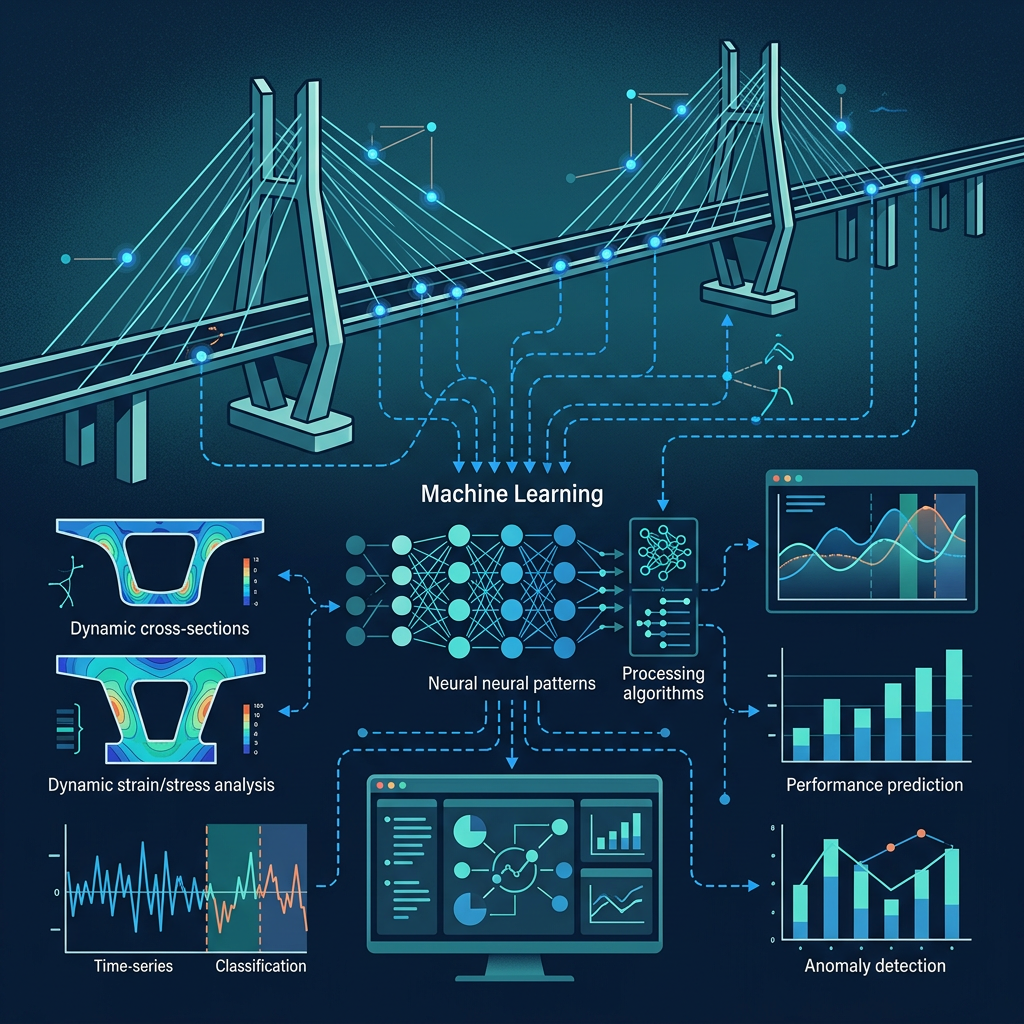
Structural Health Monitoring (SHM) is undergoing a revolution, driven by the power of machine learning. This guide provides a practical roadmap for civil engineers, geotechnical consultants, and infrastructure managers looking to leverage machine learning for enhanced safety, predictive maintenance, and optimized resource allocation in their projects. We'll move beyond theoretical concepts, focusing on actionable strategies for deploying machine learning models in real-world SHM scenarios.
Who This Guide Is For
- Civil Engineers: Implementing advanced monitoring techniques for infrastructure projects.
- Geotechnical Consultants: Analyzing subsurface data and predicting potential risks.
- Infrastructure Project Managers: Optimizing maintenance schedules and ensuring structural integrity.
- Procurement Leads: Evaluating and selecting SHM solutions for government and smart city initiatives.
The Role of Machine Learning in Structural Health Monitoring
Machine learning algorithms excel at identifying subtle patterns and anomalies in complex datasets, making them ideal for SHM. By analyzing data from various sensors (such as strain gauges, accelerometers, and displacement transducers), machine learning models can detect early signs of structural degradation, predict remaining useful life, and optimize maintenance schedules. This proactive approach minimizes downtime, reduces repair costs, and enhances the overall safety and longevity of infrastructure assets. Learn more about different SHM sensor types.
Key Machine Learning Models for SHM
Several machine learning models are commonly used in SHM, each with its strengths and weaknesses:
- Supervised Learning: Models like Support Vector Machines (SVMs), Random Forests, and Neural Networks are trained on labeled data to predict structural condition or identify specific damage types.
- Unsupervised Learning: Algorithms like clustering (K-Means, DBSCAN) and anomaly detection (Isolation Forest) can identify unusual patterns in sensor data without requiring pre-labeled data. Useful for detecting novel or unexpected damage scenarios.
- Time Series Analysis: Recurrent Neural Networks (RNNs) and Long Short-Term Memory (LSTM) networks are well-suited for analyzing time-dependent sensor data and predicting future structural behavior.
- Hybrid Approaches: Combining multiple models can improve accuracy and robustness. For example, using unsupervised learning to pre-process data before feeding it into a supervised learning model.
Data Requirements for Machine Learning Structural Health Monitoring
The performance of any machine learning model depends heavily on the quality and quantity of data used for training. In SHM, this includes:
- Sensor Data: High-resolution, accurate data from a variety of sensors, including strain gauges, accelerometers, displacement transducers, and environmental sensors.
- Historical Data: Past performance data, including maintenance records, inspection reports, and failure events.
- Environmental Data: Temperature, humidity, wind speed, and other environmental factors that can affect structural behavior.
- Metadata: Information about the structure, including its design specifications, construction materials, and loading conditions.
Data preprocessing is a crucial step, involving cleaning, normalization, and feature engineering to prepare the data for model training. Addressing missing values and outliers is also essential.
Steps for Deploying Machine Learning in Structural Health Monitoring
Deploying machine learning models in SHM involves several key steps:
- Data Acquisition and Preprocessing: Collect and clean data from various sensors and sources.
- Feature Engineering: Extract relevant features from the data that can be used to train the machine learning model.
- Model Selection and Training: Choose the appropriate machine learning model based on the specific application and data characteristics. Train the model using historical data.
- Model Validation and Testing: Evaluate the performance of the trained model using independent test data. Fine-tune the model parameters to optimize its accuracy and robustness.
- Model Deployment: Integrate the trained model into a real-time SHM system.
- Continuous Monitoring and Improvement: Continuously monitor the performance of the deployed model and retrain it periodically with new data to maintain its accuracy.
Challenges in Machine Learning Structural Health Monitoring
Despite its potential, implementing machine learning in SHM faces several challenges:
- Data Scarcity: Obtaining sufficient labeled data for training machine learning models can be difficult, especially for rare failure events.
- Data Quality: Sensor data can be noisy and unreliable, requiring careful preprocessing and validation.
- Model Interpretability: Understanding why a machine learning model makes a particular prediction can be challenging, especially for complex models like neural networks.
- Computational Cost: Training and deploying complex machine learning models can be computationally expensive, requiring specialized hardware and software.
- Regulatory Compliance: SHM systems must comply with relevant regulations and standards, which can vary depending on the application and location.
Geolook vs Traditional Approach
Traditional SHM methods often rely on manual inspections and threshold-based monitoring, which can be time-consuming, costly, and prone to human error. Geolook's machine learning-powered platform offers a more efficient and accurate approach. For example, on a recent bridge monitoring project, Geolook identified a critical structural anomaly 3 weeks earlier than traditional methods, preventing a potentially catastrophic failure and saving an estimated INR 50 Lakhs in repair costs.
Comparison Table
| Feature | Geolook | Encardio-Rite |
|---|---|---|
| Data Analysis | Advanced machine learning algorithms | Traditional threshold-based monitoring |
| Predictive Maintenance | Predicts remaining useful life and optimizes maintenance schedules | Reactive maintenance based on manual inspections |
| Anomaly Detection | Detects subtle anomalies and early signs of structural degradation | Relies on predefined thresholds and may miss early warning signs |
| Reporting | Automated reports with actionable insights | Manual report generation |
| Indian Project Suitability | Specifically designed for Indian infrastructure conditions and regulatory requirements | Global solution, may require customization for Indian projects |
| Cost-Effectiveness | Reduces maintenance costs and extends asset lifespan | Higher upfront costs and ongoing maintenance expenses |
Download: ML-Powered SHM Deployment Guide
Download our comprehensive guide on deploying machine learning for structural health monitoring. This guide provides detailed steps, best practices, and case studies to help you implement machine learning in your SHM projects. Download the guide now.
Frequently Asked Questions
Q: What types of structures can benefit from machine learning-based SHM?
A: Bridges, dams, buildings, tunnels, and other critical infrastructure assets can all benefit from machine learning-based SHM.
Q: How much data is needed to train a machine learning model for SHM?
A: The amount of data needed depends on the complexity of the model and the specific application. Generally, more data leads to better model performance.
Q: What are the key performance indicators (KPIs) for evaluating the effectiveness of a machine learning-based SHM system?
A: Key KPIs include accuracy, precision, recall, F1-score, and the time it takes to detect anomalies.
Q: How can I ensure the security of data collected from SHM sensors?
A: Implement robust security measures, including encryption, access controls, and regular security audits.
Q: What are the regulatory requirements for implementing SHM systems in India?
A: SHM systems must comply with relevant Indian standards and regulations, such as those issued by the National Highways Authority of India (NHAI) and the Central Public Works Department (CPWD).
Conclusion
Machine learning is transforming the field of structural health monitoring, enabling more proactive, efficient, and cost-effective maintenance strategies. By leveraging the power of machine learning, civil engineers and infrastructure managers can enhance the safety, reliability, and longevity of critical infrastructure assets. Geolook is at the forefront of this revolution, providing cutting-edge machine learning solutions for SHM.
See Geolook's AI Monitoring Engine
Ready to experience the future of structural health monitoring? Explore our blog to learn more about Geolook's AI-powered platform and how it can help you optimize your infrastructure maintenance strategies. Contact us today to schedule a demo and discover the power of predictive maintenance.