How Do Vibrating Wire Strain Gauges Compare to MEMS Sensors for Dam Monitoring in India
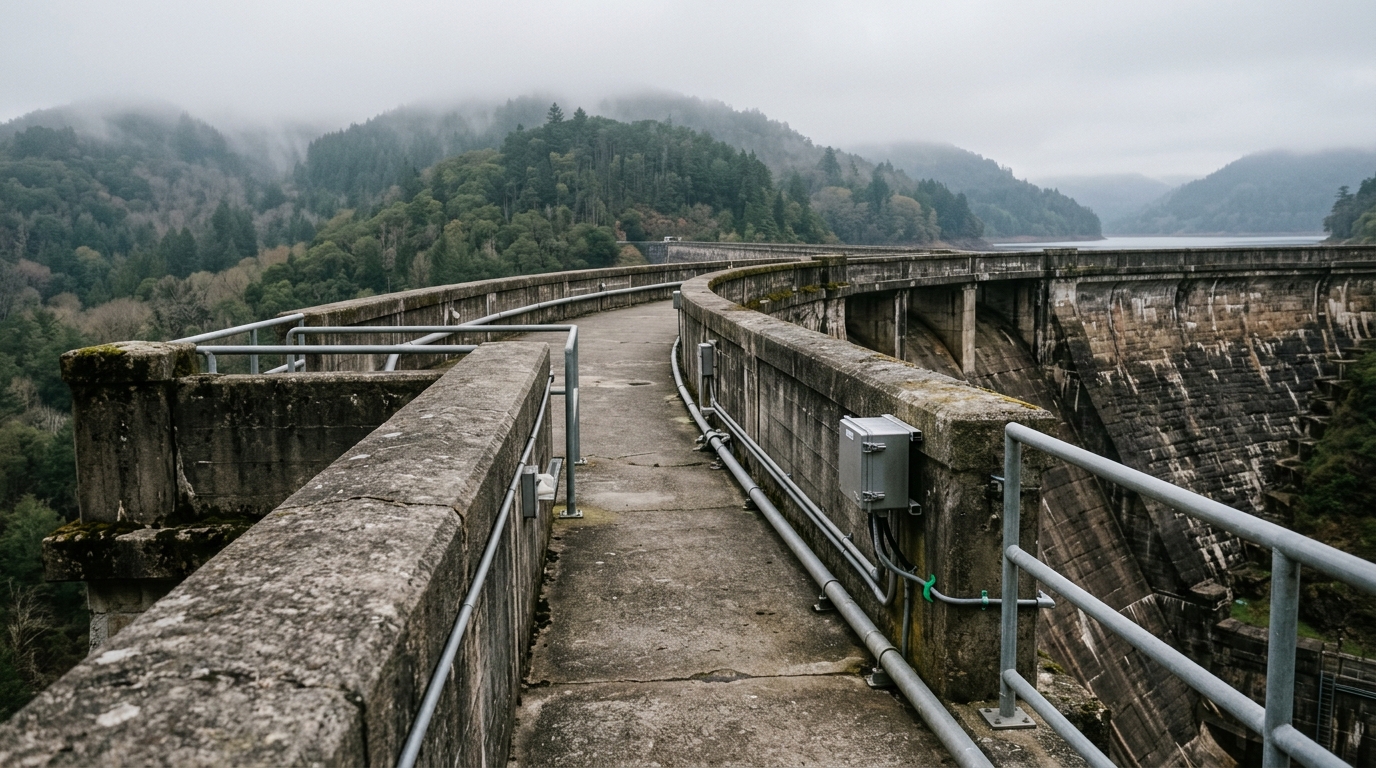
In August 2018, the Cheruthoni dam in Kerala released emergency spillway discharges following unprecedented rainfall, contributing to one of India's worst flood events in a century and displacing over a million people. Post-event analysis by the Central Water Commission (CWC) highlighted gaps in real-time structural instrumentation at ageing dam structures across the country. Understanding how do vibrating wire strain gauges compare to MEMS sensors for dam monitoring in India is therefore not an academic exercise — it is a dam safety compliance question with direct consequences under the Dam Safety Act, 2021. This act mandates instrumentation, surveillance, and emergency action plans for all large dams, placing the sensor selection decision squarely in the hands of dam engineers and consultants who must justify every instrument choice to CWC and state dam safety organisations.
Key Takeaways
- Vibrating wire (VW) strain gauges offer long-term stability and low drift, making them the established choice for embedded concrete and earthfill dam instrumentation under CWC guidelines and IS 7894.
- MEMS (Micro-Electro-Mechanical Systems) accelerometers and tilt sensors provide high-frequency dynamic response, suited for seismic event capture and real-time deformation profiling.
- VW sensors operate reliably across the temperature ranges and humidity conditions typical of Indian dam environments without requiring frequent recalibration.
- Dam sensor selection in India must account for the Dam Safety Act, 2021 requirements, CWC instrumentation guidelines, and the specific dam type — concrete gravity, earthfill, or rockfill.
- A hybrid instrumentation approach — VW for static and quasi-static parameters, MEMS for dynamic and tilt monitoring — is increasingly adopted on large Indian dam projects.
Defining the Core Measurement Technologies
A vibrating wire strain gauge is an electromechanical sensor that measures strain by detecting the resonant frequency of a tensioned steel wire; as the surrounding structure deforms, wire tension changes, shifting the resonant frequency in a relationship that is highly linear and temperature-compensable. MEMS sensors, by contrast, use microfabricated silicon structures whose capacitance or resistance changes under acceleration, tilt, or pressure, enabling compact, low-power sensing at high sampling rates. Both technologies are deployed in dam monitoring instrumentation systems, but they serve different measurement domains and carry different long-term performance profiles in the field.
For dam engineers, the distinction matters because IS 7894 (Code of Practice for Safety of Dams) and CWC's Dam Safety Rehabilitation and Improvement Project (DRIP) instrumentation schedules specify parameters — seepage, pore water pressure, settlement, and strain — that map differently onto VW and MEMS capabilities. Getting the mapping wrong leads to either data gaps during critical events or unnecessary capital expenditure on sensors that cannot survive a 30-year dam lifecycle without replacement.
Vibrating Wire Sensor Principles and Dam-Specific Strengths
VW strain gauges operate on the principle that a wire's natural frequency f is proportional to the square root of its tension T divided by its linear mass density. In practice, a coil excites the wire electromagnetically, and the return signal frequency — typically in the range of 400 Hz to 6,000 Hz — is read by a data logger or readout unit. The output is expressed in digits (frequency squared × 10⁻³) and converted to micro-strain (με) using a gauge factor supplied by the manufacturer.
For dam monitoring, VW gauges embedded in mass concrete or grouted into boreholes within earthfill embankments offer several field-proven advantages. First, the frequency-based output is inherently immune to lead wire resistance changes caused by moisture ingress — a critical property in dam galleries where relative humidity routinely exceeds 95%. Second, long-term drift in well-manufactured VW sensors is typically below 0.1% of full scale per year, which is essential when a dam's instrumentation baseline must remain valid for decades. Third, VW sensors are passive between readings; they consume power only during the excitation pulse, making them compatible with solar-powered remote telemetry units common at Indian dam sites far from grid power.
CWC's instrumentation guidelines for large dams recommend VW-based piezometers, strain meters, and joint meters as primary instruments. The vibrating wire piezometer working principle is directly analogous to VW strain gauge operation, and both instruments share the same data acquisition infrastructure, simplifying system integration. Typical VW strain gauge ranges for concrete dam applications span ±3,000 με with a resolution of 1 με, while temperature compensation is achieved through a co-located thermistor embedded in the same housing.
MEMS Sensor Principles and Dam-Specific Strengths
MEMS sensors used in dam monitoring are primarily accelerometers and inclinometers. A MEMS accelerometer contains a proof mass suspended by microfabricated silicon springs; under acceleration or gravitational tilt, the mass displaces, changing the capacitance between comb-finger electrodes. This capacitance change is conditioned by on-chip electronics into a voltage proportional to acceleration (expressed in mm/s² or g) or tilt angle (expressed in millidegrees or milliradians).
MEMS inclinometers have largely replaced electrolytic tilt sensors in new dam instrumentation deployments because of their lower cost per axis, digital output compatibility (I²C, SPI, RS-485), and ability to log at sampling rates from 1 Hz to several hundred Hz. For seismic monitoring under IS 1893 requirements — which apply to dams in seismic zones III, IV, and V — MEMS accelerometers can capture peak ground acceleration (PGA) events and generate strong-motion records that VW sensors, being quasi-static instruments, cannot provide.
MEMS sensors also excel in automated deformation profiling. A string of MEMS-based in-place inclinometers installed in a vertical borehole through an earthfill dam can report lateral displacement profiles at each node in near-real-time, with angular resolution of 0.01° and displacement resolution at the sub-millimetre level over a 30 m borehole. This capability supports the real-time pore water pressure monitoring in dams workflow, where pore pressure data and deformation data must be correlated to assess slope stability margins against IS 7894 trigger thresholds.
However, MEMS sensors carry limitations that dam engineers must weigh carefully. MEMS accelerometers exhibit zero-g offset drift with temperature, typically 0.1 mg/°C to 0.5 mg/°C depending on grade, which accumulates into tilt measurement error over time. In a dam gallery where temperature varies seasonally by 10–15 °C, uncorrected drift can introduce tilt errors of 1–5 millidegrees — significant when monitoring slow creep movements of 0.1 mm/month. Higher-grade MEMS devices with on-chip temperature compensation reduce this, but at a cost that approaches VW sensor pricing.
VW vs MEMS Dam Instrumentation: Parameter-by-Parameter Comparison
The table below compares VW and MEMS technologies across the key measurement parameters relevant to dam sensor selection in India, drawing on CWC instrumentation schedules and IS 7894 requirements.
| Parameter | VW Strain Gauge / Sensor | MEMS Sensor | Recommended Choice for Indian Dams |
|---|---|---|---|
| Concrete strain (static) | ±3,000 με, resolution 1 με, drift <0.1%/year | Not typically used for embedded concrete strain | VW |
| Pore water pressure | 0–700 kPa typical range, frequency output, moisture-immune | MEMS pressure sensors available but prone to long-term offset drift in saturated soils | VW |
| Seismic / dynamic acceleration | Not applicable — quasi-static only | ±2g to ±10g, sampling up to 200 Hz, captures PGA per IS 1893 | MEMS |
| Tilt / inclination (slow creep) | Not applicable directly | Resolution 0.01°, but temperature drift requires compensation in field conditions | MEMS (with temperature correction) |
| Joint / crack opening | VW joint meters, range 0–50 mm, resolution 0.025 mm | Not standard for joint monitoring | VW |
| Settlement (vertical deformation) | VW settlement cells, range 0–300 mm, resolution 0.1 mm | MEMS-based liquid settlement systems available, comparable resolution | Both viable; VW preferred for embedded long-term |
| Long-term stability (>10 years) | Proven field record in Indian dam environments; CWC-accepted | Limited long-term field data in Indian dam conditions; replacement cycles shorter | VW |
| Power consumption | Passive between readings; <1 mA during excitation pulse | Active electronics; continuous power draw 1–10 mA depending on sampling rate | VW for remote solar-powered sites |
| Data acquisition compatibility | Requires VW-compatible readout; standard in Indian dam practice | Digital output (RS-485, SDI-12) integrates with modern IoT loggers | MEMS for IoT-native systems; VW for legacy DAQ |
For a comprehensive overview of the full instrumentation suite required under the Dam Safety Act, 2021, refer to what geotechnical instruments are essential for dam safety monitoring systems.
Environmental and Installation Factors at Indian Dam Sites
Indian dam sites span a wide range of environmental conditions — from the high-altitude, freeze-thaw cycles of Himalayan hydropower projects in Himachal Pradesh and Uttarakhand, to the high-humidity, tropical conditions of Kerala and the Deccan plateau. Both VW and MEMS sensors must be evaluated against these site-specific stressors.
VW sensors are hermetically sealed with welded stainless steel housings rated to IP68, and their frequency-based output is unaffected by cable resistance changes caused by moisture or temperature. This makes them particularly reliable in dam galleries where condensation is persistent and cable runs can extend 500 m or more from the sensor to the data logger. VW sensors have been installed in Indian dam galleries at elevations above 3,000 m AMSL without performance degradation attributable to low temperature, provided the readout cable is rated for the temperature range.
MEMS sensors, particularly MEMS accelerometers used for seismic monitoring, are typically housed in ruggedised enclosures rated to IP67 or IP68. Their primary environmental vulnerability is not moisture but temperature-induced zero-offset drift, as noted above. For surface-mounted MEMS tilt sensors on dam crests or spillway piers, solar radiation can drive diurnal temperature swings of 20–30 °C, requiring either shielded mounting or firmware-based temperature correction to maintain tilt accuracy within ±0.05°.
Cable management is another practical consideration. VW sensors use shielded twisted-pair cables that are robust against electromagnetic interference (EMI) from nearby power generation equipment — a real concern at hydropower dams where generator halls are adjacent to instrument galleries. MEMS sensors with digital RS-485 outputs are also EMI-tolerant, but analogue MEMS outputs are susceptible to noise pickup over long cable runs and should not be used for cable lengths exceeding 50 m without signal conditioning.
Regulatory Framework: Dam Safety Act 2021, CWC, and IS 7894
The Dam Safety Act, 2021 (No. 35 of 2021) establishes the National Committee on Dam Safety (NCDS) and State Dam Safety Organisations (SDSOs), and mandates that all large dams — defined as dams with height exceeding 15 m, or between 10 m and 15 m meeting specific storage or spillway criteria — must have approved instrumentation and monitoring plans. CWC, as the technical arm for dam safety in India, publishes instrumentation guidelines that form the basis for SDSO approvals.
IS 7894:1975 (reaffirmed 2018), the Indian Standard Code of Practice for Safety of Dams, specifies minimum instrumentation requirements including piezometers, settlement gauges, strain meters, and seepage measurement weirs. While IS 7894 does not prescribe sensor technology by name, CWC's DRIP Phase II technical specifications have explicitly referenced VW-based instruments for piezometric, strain, and joint monitoring, establishing VW technology as the de facto standard for compliance submissions to SDSOs.
MEMS-based seismic monitoring is addressed separately under CWC's guidelines for dam break analysis and emergency action plans, which require strong-motion accelerographs at dams in seismic zones III and above per IS 1893 (Part 1):2016. These instruments are MEMS-based in modern deployments. Dam engineers should therefore treat VW and MEMS not as competing standards but as complementary technologies with distinct regulatory homes within the Indian dam safety framework.
For a broader view of how these instruments integrate into a complete monitoring programme, the guide on dam safety monitoring covers surveillance protocols, trigger levels, and reporting obligations under the Dam Safety Act, 2021.
Hybrid Instrumentation Strategy for Large Indian Dams
On large Indian dam projects — particularly concrete gravity dams above 100 m height and earthfill dams with storage exceeding 60 million cubic metres — a hybrid instrumentation strategy that deploys both VW and MEMS sensors is technically justified and increasingly specified by CWC-empanelled consultants.
In a typical hybrid layout, VW strain gauges and VW piezometers form the backbone of the static monitoring network, embedded during construction at critical sections: the dam heel and toe, the foundation contact zone, and mid-height gallery elevations. These instruments provide the long-term baseline against which all structural behaviour is assessed. VW joint meters monitor contraction joint behaviour in concrete dams, with readings taken at intervals specified in the dam's instrumentation schedule — typically weekly during first impoundment and monthly thereafter.
MEMS accelerometers are mounted at the dam crest, at gallery levels, and on the foundation to form a strong-motion array. During a seismic event, the array captures acceleration time histories at each level, enabling engineers to assess amplification through the dam body and compare against design PGA values. MEMS-based in-place inclinometer strings in embankment dams provide continuous deformation profiles between scheduled manual inclinometer surveys, flagging anomalous movement patterns that warrant investigation before they reach IS 7894 alert thresholds.
Data from both sensor types is consolidated into a unified dam safety dashboard via a central data acquisition system. Modern DAQ platforms support simultaneous VW frequency measurement and MEMS digital polling, eliminating the need for separate data streams. Explore Geolook's VW piezometer and strain sensor product range and the complete dam monitoring instrumentation systems for specification-ready options compatible with CWC instrumentation schedules.
Frequently Asked Questions
Q: How do vibrating wire strain gauges compare to MEMS sensors for dam monitoring in India in terms of long-term accuracy?
A: Vibrating wire strain gauges offer superior long-term accuracy for static dam monitoring because their frequency-based output is immune to lead wire resistance drift and moisture ingress, with typical drift below 0.1% of full scale per year. MEMS sensors provide higher dynamic accuracy for seismic and tilt measurements but require temperature compensation to maintain equivalent long-term static accuracy in Indian dam gallery conditions.
Q: Which sensor type does CWC recommend for pore water pressure monitoring in Indian dams?
A: CWC's DRIP Phase II technical specifications reference vibrating wire piezometers as the primary instrument for pore water pressure monitoring in Indian dams. VW piezometers measure pressure in the range of 0–700 kPa with a resolution of 0.025% full scale, and their frequency output remains stable over the multi-decade service life required by the Dam Safety Act, 2021 and IS 7894.
Q: Can MEMS sensors replace VW strain gauges in concrete dam instrumentation?
A: MEMS sensors cannot directly replace VW strain gauges for embedded concrete strain measurement in dams. MEMS technology is not standardly used for embedded concrete strain; VW gauges are specifically designed for this application, with ranges of ±3,000 με and resolution of 1 με. MEMS sensors complement VW instruments by providing seismic acceleration and tilt data that VW gauges cannot capture.
Q: What is the significance of the Dam Safety Act, 2021 for dam sensor selection in India?
A: The Dam Safety Act, 2021 mandates approved instrumentation and monitoring plans for all large dams in India, enforced through State Dam Safety Organisations and overseen by CWC. Dam sensor selection in India must therefore align with CWC instrumentation guidelines and IS 7894 requirements, which currently favour VW-based instruments for static parameters and MEMS-based accelerographs for seismic monitoring in zones III and above per IS 1893.
Q: What sampling rate do MEMS accelerometers need for seismic monitoring at Indian dams?
A: MEMS accelerometers for seismic monitoring at Indian dams should sample at a minimum of 100 Hz to capture the frequency content of earthquake ground motion relevant to dam structures, per strong-motion recording practice referenced in IS 1893 (Part 1):2016. A sampling rate of 200 Hz is preferred for dams in seismic zones IV and V to resolve high-frequency acceleration components that influence dynamic load assessment.
Get dam recommendation
Selecting between VW and MEMS instrumentation — or specifying a hybrid system — requires matching sensor capabilities to your dam's structural type, seismic zone, CWC instrumentation schedule, and long-term data acquisition architecture. A specification error at this stage can mean non-compliance with the Dam Safety Act, 2021 or data gaps during the critical first impoundment period.
Geolook's dam instrumentation team works with dam engineers and consultants to develop sensor schedules aligned with CWC guidelines, IS 7894, and project-specific monitoring objectives. Whether you are specifying instruments for a new concrete gravity dam, retrofitting an ageing earthfill embankment, or integrating a real-time dam safety dashboard, we can provide a technically grounded recommendation backed by engineering analysis — not a catalogue selection.
Contact Geolook's dam instrumentation team for a project-specific sensor recommendation covering VW, MEMS, and hybrid configurations for your dam safety monitoring programme.
Project inquiry
Talk to a Geolook™ specialist
Share your monitoring requirement and our team will help identify the right next step.
By submitting, you agree that Geolook™ may contact you about this inquiry. Your details are not added to a marketing list.