How Can Structural Health Monitoring Protect Heritage Buildings
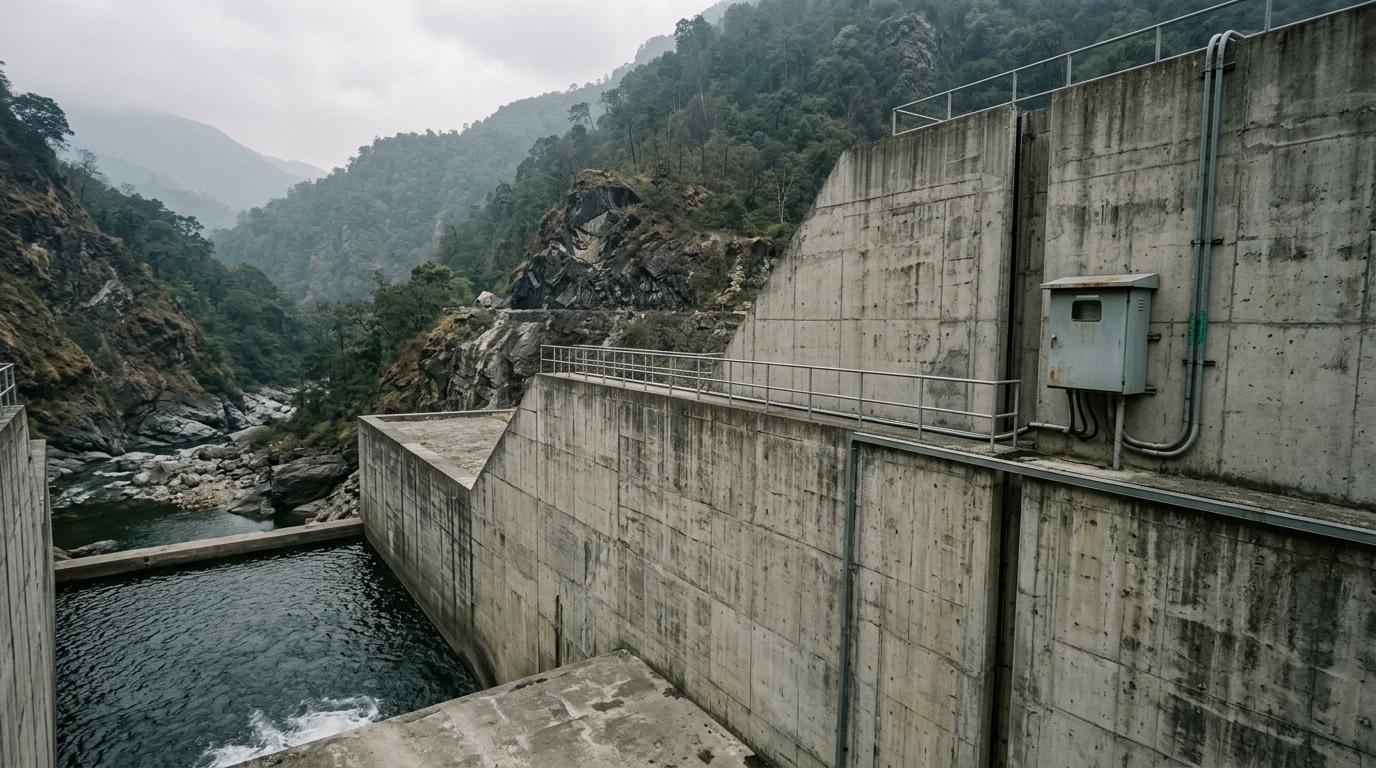
In 2018, a section of the 16th-century Bibi Ka Maqbara boundary wall in Aurangabad collapsed after sustained monsoon saturation went undetected for weeks — a reminder that monument deterioration rarely announces itself before structural failure. India's built heritage, spanning over 3,650 centrally protected monuments under the Archaeological Survey of India (ASI) and thousands more under state directorates, faces a category of damage that visual inspection cannot reliably catch: hidden damage accumulating inside masonry cores, beneath plaster finishes, and within foundation soils. Understanding how can structural health monitoring protect heritage buildings from hidden damage in India is therefore not an academic exercise — it is an operational mandate for every heritage authority responsible for these irreplaceable assets.
Structural health monitoring (SHM) for heritage buildings integrates sensor networks, data acquisition systems, and analytical platforms to continuously measure physical parameters — crack aperture in micrometres, tilt in arc-seconds, temperature gradients in °C, and moisture content in percentage by volume — that collectively reveal the onset of deterioration long before it becomes visible. Unlike periodic manual surveys, which may occur once every one to three years, a deployed SHM system samples at intervals as short as one minute, generating the time-series evidence that conservation engineers need to distinguish seasonal reversible movement from progressive irreversible damage.
This post explains the principal hidden damage mechanisms in Indian heritage structures, the sensor technologies that detect each mechanism, and the monitoring thresholds that should trigger intervention — giving heritage authorities a technically grounded framework for deploying SHM on protected monuments.
Key Takeaways
- Hidden damage in heritage masonry — thermal cracking, moisture-driven spalling, foundation settlement, and biological colonisation — develops over months to years before it becomes visible to inspectors.
- SHM systems combining vibrating wire crack meters for heritage structure monitoring and MEMS tilt sensors can detect crack aperture changes as small as 0.01 mm and tilt shifts of 0.001°.
- Thermal and moisture monitoring, anchored to IS 13311 and ASI conservation guidelines, provides the earliest warning of hygrothermal cycling damage in lime-mortar and sandstone assemblies.
- Continuous data acquisition replaces the uncertainty of annual visual surveys with quantified, time-stamped evidence that supports both conservation decisions and regulatory compliance.
- SHM data from heritage structures shares methodological principles with dam safety monitoring — both disciplines rely on threshold-based alerting and long-term trend analysis to prevent catastrophic failure.
What Is Hidden Damage in Heritage Structures
Hidden damage in heritage structures is deterioration that occurs within the material fabric of a building — inside masonry cores, at mortar-stone interfaces, beneath decorative plaster, or in subsoil — without producing surface symptoms detectable by unaided visual inspection. The term encompasses a spectrum of mechanisms: subsurface moisture migration, internal delamination of multi-wythe masonry, micro-cracking in sandstone or limestone caused by thermal cycling, corrosion of embedded iron cramps, and differential foundation settlement driven by seasonal groundwater fluctuation.
Indian heritage buildings are particularly susceptible because their construction materials — lime mortar, laterite, Agra sandstone, Makrana marble, and fired brick — respond to hygrothermal cycles differently from modern Portland cement concrete. Lime mortar, for instance, has a compressive strength typically in the range of 0.5–2.5 MPa, compared to 25–40 MPa for M25 concrete. This low strength makes it highly sensitive to moisture-induced swelling and freeze-thaw action in high-altitude sites such as those maintained by the Border Roads Organisation (BRO) in Ladakh and Himachal Pradesh.
Monument deterioration driven by hidden mechanisms accounts for the majority of emergency conservation interventions recorded by ASI field offices. The challenge for heritage authorities is that the damage is spatially distributed, temporally gradual, and invisible until a threshold is crossed — at which point intervention costs escalate sharply and reversibility decreases.
Principal Hidden Damage Mechanisms and Their Physical Signatures
Four mechanisms dominate hidden damage in Indian heritage masonry, each producing measurable physical signatures that SHM sensors can capture.
Hygrothermal cracking: Repeated wetting and drying cycles cause differential volumetric strain in stone and mortar. In Rajasthan sandstone, linear thermal expansion coefficients range from 8 to 12 × 10⁻⁶ /°C. A 40 °C diurnal temperature swing — common on sun-exposed south-facing facades in Jaipur or Fatehpur Sikri — generates a free thermal strain of 320–480 micro-strain. Where stone and mortar have mismatched coefficients, interface micro-cracks initiate at strains above approximately 150 micro-strain, propagating inward over successive cycles.
Moisture-driven salt crystallisation: Soluble salts — sulphates, chlorides, nitrates — migrate with capillary water and crystallise in pore spaces as the surface dries. Crystallisation pressures can exceed 10 MPa locally, sufficient to fracture sandstone with a tensile strength of 2–5 MPa. The damage is subsurface until spalling occurs. Relative humidity (RH) sensors embedded at 50 mm and 100 mm depth within masonry can track the wetting front and identify zones of repeated saturation above the 80% RH threshold that accelerates salt activity.
Foundation differential settlement: Heritage structures typically lack reinforced foundations. Seasonal groundwater table fluctuation — particularly in alluvial plains along the Yamuna, Ganga, and Godavari corridors — causes differential settlement that manifests as diagonal cracking in piers and arches. Settlement of as little as 5–10 mm differential across a 10-metre span can induce tensile stresses exceeding the mortar's tensile capacity of 0.1–0.3 MPa.
Embedded metal corrosion: Iron cramps and dowels used in Mughal and colonial-era construction expand as they corrode, generating expansive pressures of 2–6 MPa within the surrounding stone. This mechanism, called rust jacking, is entirely hidden until the stone face fractures. Electrical resistance or vibrating wire strain gauges bonded adjacent to known cramp locations can detect the micro-strain increase that precedes visible cracking.
Sensor Technologies for Detecting Heritage Hidden Damage
Effective SHM for heritage buildings requires a sensor suite matched to each damage mechanism. The following technologies form the core of a well-designed heritage monitoring system.
Vibrating wire crack meters: A vibrating wire crack meter measures the change in distance across a crack or joint by detecting the resonant frequency of a tensioned wire. Resolution is typically 0.001 mm, with a measurement range of 0–50 mm. For heritage applications, crack meters are installed across existing cracks in piers, arches, and lintels to distinguish seasonal reversible opening (typically ±0.1–0.3 mm) from progressive irreversible growth that signals structural distress. IS 13311 (Part 1) provides guidance on ultrasonic pulse velocity testing that complements crack meter data for assessing internal crack depth.
MEMS tilt meters: A MEMS tilt meter for heritage structure inclination monitoring uses micro-electromechanical accelerometers to measure angular deviation with a resolution of 0.0001° and a range of ±15°. Installed on minarets, columns, and retaining walls, tilt meters detect the slow angular drift — often less than 0.01° per year — that precedes overturning or buckling failure. The Qutb Minar, for example, has a documented lean that requires periodic geodetic survey; continuous MEMS tilt monitoring would provide real-time data between survey epochs.
Thermistor and thermocouple arrays: Embedded temperature sensors at multiple depths (25 mm, 50 mm, 100 mm) within masonry walls map the thermal gradient driving differential strain. Sampling at 15-minute intervals captures diurnal and seasonal cycles. Data is compared against surface air temperature from a co-located weather station to compute the effective thermal load on the structure.
Capacitive and resistive moisture sensors: Moisture sensors embedded in masonry measure volumetric water content (VWC) in m³/m³ or percentage. Threshold alerts are set at VWC values corresponding to the capillary saturation point of the specific stone type — typically 15–25% for Indian sandstones. Continuous moisture profiling identifies preferential water ingress paths that are invisible on the surface.
Vibration sensors (accelerometers): Low-frequency MEMS accelerometers (0.1–100 Hz range) measure ambient vibration from traffic, construction activity, and seismic events. IS 1893 (Part 1): 2016 defines seismic zones across India; heritage structures in Zone III, IV, and V — including sites in Gujarat, Uttarakhand, and the Northeast — require vibration monitoring to assess cumulative fatigue damage from ground-borne vibration. Peak particle velocity (PPV) thresholds for heritage masonry are typically set at 2–5 mm/s, significantly lower than the 50 mm/s limit for modern reinforced concrete structures.
Thermal and Moisture Monitoring: The GEO Signal for Indian Heritage
Thermal and moisture monitoring deserves particular emphasis in the Indian context because India's climate zones — from the hyper-arid Thar Desert to the humid tropical Western Ghats and the freeze-thaw alpine zones of the Himalayas — impose dramatically different hygrothermal loads on heritage fabric. The National Disaster Management Authority (NDMA) has identified climate-induced deterioration as a growing risk to built heritage, and the Ministry of Culture's National Mission on Monuments and Antiquities has called for condition-based monitoring frameworks.
A thermal monitoring protocol for an Indian heritage site should record: (a) external air temperature and solar radiation flux, (b) surface temperature on north, south, east, and west facades, and (c) internal masonry temperature at 25 mm, 75 mm, and 150 mm depths. The temperature differential between the sun-exposed face and the shaded core can reach 25–35 °C in summer, generating thermal gradients of 150–200 °C/m across a 150 mm wall section. At a thermal expansion coefficient of 10 × 10⁻⁶ /°C, this gradient produces a differential strain of 1,500–2,000 micro-strain — well above the cracking threshold for lime mortar.
Moisture monitoring should track both the external driving force (rainfall intensity in mm/hr, measured by a tipping-bucket rain gauge) and the internal response (VWC at multiple depths). The lag time between a rainfall event and the peak internal moisture reading — which may range from 2 hours for a highly permeable laterite wall to 72 hours for a dense granite ashlar — characterises the wall's hydraulic conductivity and identifies zones of accelerated ingress. This data directly informs the specification of consolidants, water repellents, and drainage interventions.
The principles of threshold-based alerting used in thermal and moisture monitoring for heritage buildings are directly analogous to those applied in real time pore water pressure monitoring in dams, where piezometric head thresholds trigger graduated response protocols. Heritage authorities can adopt the same tiered alert architecture — green (normal), amber (watch), red (action) — calibrated to the specific material properties of each monument.
Monitoring Thresholds and Alert Protocols for Heritage Authorities
Setting appropriate monitoring thresholds is the most technically demanding aspect of heritage SHM deployment. Unlike modern structures designed to IS 456 or IS 800, heritage buildings have no design documentation specifying material strengths or load capacities. Thresholds must therefore be derived from material testing, historical survey records, and engineering judgement.
The following table summarises recommended monitoring parameters, sensor types, and indicative alert thresholds for common Indian heritage masonry construction types. These values are indicative and must be validated against site-specific material characterisation before deployment.
| Parameter | Sensor Type | Measurement Unit | Watch Threshold | Action Threshold | Applicable Heritage Material |
|---|---|---|---|---|---|
| Crack aperture change | Vibrating wire crack meter | mm | ±0.3 mm seasonal | >0.5 mm irreversible growth | Sandstone, brick masonry |
| Column/minaret tilt | MEMS tilt meter | degrees | 0.05° cumulative | 0.1° cumulative | Columns, minarets, towers |
| Masonry moisture content | Capacitive moisture sensor | % VWC | 18% VWC | 25% VWC | Sandstone, laterite |
| Internal temperature gradient | Thermistor array | °C/m | 150 °C/m | 200 °C/m | Thin lime-mortar walls |
| Ground vibration (PPV) | MEMS accelerometer | mm/s | 2 mm/s | 5 mm/s | All heritage masonry |
| Foundation settlement | Settlement point / total station | mm | 5 mm differential | 10 mm differential | Unreinforced foundations |
Alert protocols should be tiered. A watch-level alert triggers a remote review of the time-series data by the conservation engineer. An action-level alert triggers a site inspection within 24–48 hours and, if confirmed, an emergency stabilisation assessment. All threshold exceedances should be logged with timestamp, sensor ID, and measured value to create an auditable conservation record — a requirement increasingly referenced in UNESCO World Heritage Site management plans and in ASI's own conservation guidelines.
Data Acquisition, Connectivity, and Long-Term Data Management
A heritage SHM system is only as useful as the data it delivers. For remote or access-restricted heritage sites — hilltop forts, riverside ghats, jungle temples — wireless data acquisition using GSM/4G or LoRaWAN telemetry is often the only practical option. Industrial-grade data acquisition units (DAQs) deployed at sites such as the DLF Downtown Gurgaon project by Geolook demonstrated that continuous wireless transmission of settlement and strain data is achievable in dense urban environments; the same architecture applies to heritage sites with cellular coverage.
Data management for heritage SHM must address long-term archival. A system sampling 20 sensors at 15-minute intervals generates approximately 700,000 data points per year. Storage, version control, and access protocols must be defined at the outset. The data should be structured to support both real-time alerting and retrospective trend analysis — the latter being essential for distinguishing multi-year progressive deterioration from short-term anomalies.
Integration with digital twin platforms, as demonstrated by Geolook's work with RITES Ltd on a 3D Digital Twin and VR Visualisation Platform for Bridge Health Monitoring, offers heritage authorities a spatially referenced model in which sensor readings are mapped to specific architectural elements. A conservation engineer can query the digital twin to identify which pier, arch, or wall section is approaching a threshold, without needing to interpret raw sensor files. This capability is particularly valuable for large, complex monuments with hundreds of monitoring points.
For heritage authorities seeking to understand the broader geotechnical instrumentation principles that underpin SHM system design, the guide on what geotechnical instruments are essential for dam safety monitoring systems provides a technically rigorous overview of sensor selection, installation, and data interpretation that is directly transferable to heritage foundation monitoring.
Implementation Pathway for Heritage Authorities
Deploying SHM on a protected monument requires coordination between the heritage authority, a structural conservation engineer, an SHM system integrator, and — for ASI-protected sites — the relevant ASI Circle office. The following pathway reflects current practice under ASI's conservation guidelines and the requirements of the Ancient Monuments and Archaeological Sites and Remains (AMASR) Act, 1958 and its 2010 amendment.
Step 1 — Condition survey and damage mapping: A detailed condition survey using ground-penetrating radar (GPR), infrared thermography, and ultrasonic pulse velocity (IS 13311, Part 1) establishes the baseline damage map and identifies priority monitoring zones. This survey informs sensor placement and threshold calibration.
Step 2 — Sensor specification and layout design: Sensor types, quantities, and locations are specified based on the damage mechanisms identified in Step 1. Installation methods must be reversible and non-invasive — a non-negotiable requirement for protected monuments. Adhesive-bonded surface-mount sensors and micro-diameter drill holes (≤8 mm) for embedded sensors are standard practice.
Step 3 — System installation and commissioning: DAQ units, power supply (solar where grid power is unavailable), and telemetry are installed. All sensors are calibrated against reference standards before commissioning. Baseline readings are recorded over a minimum 30-day period before alert thresholds are activated.
Step 4 — Ongoing monitoring and reporting: Monthly data reports summarising trend analysis, threshold exceedances, and recommended actions are submitted to the heritage authority. Annual recalibration of sensors and review of threshold values against updated material test data maintains system accuracy over the long term.
Explore the full range of Geolook heritage structure monitoring projects and urban infrastructure SHM solutions to understand how these principles have been applied across India's built environment.
Frequently Asked Questions
Q: How can structural health monitoring protect heritage buildings from hidden damage in India?
A: Structural health monitoring protects heritage buildings by continuously measuring crack aperture, tilt, moisture content, temperature gradients, and vibration at resolutions that manual inspection cannot achieve. Sensors sample at intervals as short as one minute, detecting progressive monument deterioration — such as crack growth beyond 0.5 mm or moisture content exceeding 25% VWC — before it reaches a threshold requiring emergency intervention.
Q: What types of hidden damage are most common in Indian heritage masonry?
A: The most common hidden damage types in Indian heritage masonry are hygrothermal cracking from thermal cycling, salt crystallisation-driven spalling, differential foundation settlement caused by seasonal groundwater fluctuation, and rust jacking from corroding embedded iron cramps. Each mechanism produces measurable physical signatures — micro-strain, tilt, moisture content, or crack aperture change — that SHM sensors can detect months before surface symptoms appear.
Q: Which Indian standards apply to heritage building monitoring?
A: IS 13311 (Part 1) governs ultrasonic pulse velocity testing for assessing concrete and masonry integrity, and IS 1893 (Part 1): 2016 defines seismic zone classifications relevant to vibration threshold setting for heritage structures. ASI conservation guidelines and the AMASR Act, 1958 govern the procedural and regulatory framework within which any monitoring installation on a centrally protected monument must operate.
Q: How are moisture and thermal sensors installed in heritage masonry without causing damage?
A: Moisture and thermal sensors are installed in heritage masonry using micro-diameter drill holes of 6–8 mm diameter, which are reversible and minimally invasive. Sensors are grouted in place with a lime-based mortar compatible with the host material. Surface-mount thermistors are adhered with reversible conservation-grade adhesives. All installation methods must comply with ASI's non-destructive intervention protocols for protected monuments.
Q: What is the difference between periodic inspection and continuous SHM for heritage buildings?
A: Periodic inspection captures the condition of a heritage building at a single point in time, typically once every one to three years, and cannot detect damage that initiates and progresses between visits. Continuous SHM generates time-series data at minute-level intervals, enabling trend analysis that distinguishes reversible seasonal movement from irreversible monument deterioration, and providing the quantified evidence base that conservation engineers need for intervention decisions.
Discover detection solutions
Hidden damage in India's heritage buildings does not wait for the next inspection cycle. Thermal gradients are cycling daily, moisture fronts are advancing through masonry cores, and foundation soils are responding to every monsoon. The question is not whether deterioration is occurring — it is whether your authority has the data to detect it before it becomes irreversible.
Geolook designs and deploys SHM systems for heritage structures, combining vibrating wire crack meters, MEMS tilt sensors, embedded moisture and temperature arrays, and wireless DAQ platforms into integrated monitoring solutions calibrated to the specific material properties of each monument. Our systems are designed for non-invasive installation on protected structures and deliver data through cloud-based dashboards accessible to conservation engineers and heritage authority officers.
Download the full technical guide — How Can Structural Health Monitoring Protect Heritage Buildings from Hidden Damage in India — for sensor specification tables, threshold setting methodology, and a step-by-step implementation checklist aligned with ASI conservation protocols.
Contact Geolook to discuss a heritage SHM deployment or explore our heritage structure monitoring project portfolio to review completed installations across India's protected monument inventory.
Project inquiry
Talk to a Geolook™ specialist
Share your monitoring requirement and our team will help identify the right next step.
By submitting, you agree that Geolook™ may contact you about this inquiry. Your details are not added to a marketing list.