Underground Structure Instrumentation: Monitoring Caverns & Stations
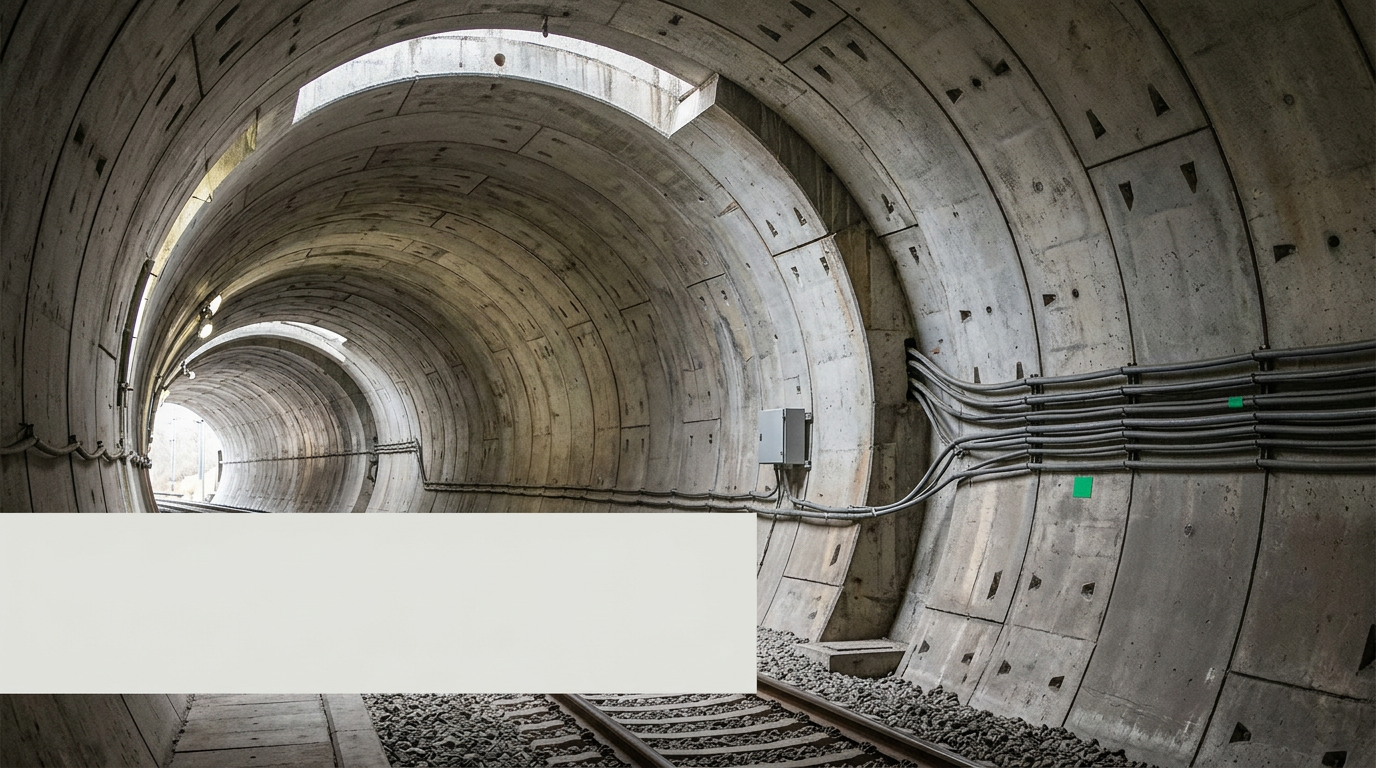
In October 2023, a section of the under-construction Silkyara–Barkot tunnel on NH-134 in Uttarakhand collapsed, trapping 41 workers for 17 days and exposing a critical gap in real-time geomechanical surveillance of underground structures in India. The incident prompted MORTH to accelerate mandatory instrumentation protocols for all tunnels under construction. For geotechnical engineers working on caverns, metro stations, and underground highway tunnels, underground structure instrumentation is no longer a value-add — it is a contractual and safety imperative. This guide covers sensor selection by structure type and excavation depth, monitoring parameters, Indian Standards applicability, and the data architecture required to convert raw readings into actionable geomechanical intelligence.
Key Takeaways
- Underground structure instrumentation encompasses the full suite of sensors, data acquisition systems, and telemetry deployed to track stress, deformation, groundwater, and seismic response in subsurface excavations.
- Sensor selection must be depth-stratified: instruments appropriate for a 15 m cut-and-cover metro box differ significantly from those required at a 300 m deep cavern.
- IS 1892 (site investigation), IS 2720 (soil testing), and IS 1893 (seismic design) collectively govern the geotechnical baseline against which monitoring data is benchmarked.
- NATM-based tunnels require continuous convergence and crown settlement monitoring; caverns additionally demand multi-point borehole extensometers and rock stress cells.
- Automated, threshold-triggered alerting — not periodic manual readings — is the standard expected by NHAI, RVNL, and MORTH for critical underground assets.
What Is Underground Structure Instrumentation
Underground structure instrumentation is the systematic deployment of geotechnical and structural sensors within or adjacent to subsurface excavations — tunnels, caverns, metro stations, shafts, and adits — to measure deformation, stress, pore pressure, and dynamic response throughout construction and the operational life of the structure.
The discipline draws from both geotechnical instrumentation (borehole extensometers, piezometers, inclinometers) and structural sensing (vibrating-wire strain gauges, load cells, accelerometers), integrating them through a common data acquisition and telemetry backbone. In India, the regulatory framework is anchored in IS 1892:1979 for subsurface investigation, IS 2720 for in-situ soil testing, and MORTH's Specifications for Road and Bridge Works (5th Revision) for highway tunnels. For seismic-prone corridors — particularly the Himalayan and Western Ghat alignments — IS 1893 (Part 1):2016 defines the design basis earthquake against which dynamic monitoring thresholds are set.
Explore Geolook's underground structure monitoring solutions for a full overview of sensor suites and system architectures deployed across Indian tunnel projects.
Why Cavern Instrumentation Demands a Different Approach
A metro station cavern excavated at 20–40 m depth in urban alluvium presents a fundamentally different geomechanical environment from a hydroelectric powerhouse cavern at 200–400 m depth in competent granite or gneiss. In the former, primary concerns are surface settlement (typically monitored to ±1 mm resolution), lateral wall deflection, and pore-pressure response in adjacent aquifers. In the latter, in-situ stress magnitudes can exceed 10–15 MPa, making rock stress measurement and microseismic monitoring the dominant instrumentation priorities.
Cavern instrumentation for large underground powerhouses — such as those constructed under CWC guidelines for hydroelectric projects — typically mandates multi-point borehole extensometers (MPBX) with 4–6 anchors per hole, vibrating-wire stress cells embedded in shotcrete linings, and convergence monitoring arrays at every 10–15 m of cavern length. The ICOLD Bulletin 68 on monitoring of dams and their foundations provides internationally recognised benchmarks that Indian dam engineers routinely reference alongside CWC guidelines.
For structural health monitoring for bridges dams and tunnels india, the instrumentation philosophy must account for the full asset lifecycle — from first blast to 100-year operational design life.
Depth-Specific Sensor Selection for Underground Monitoring
Depth is the single most consequential variable in underground monitoring sensor selection. It governs overburden stress, groundwater head, temperature gradients, and access constraints for installation and maintenance. The following framework, aligned with Indian practice and MORTH tunnel construction guidelines, provides a structured basis for instrument selection.
Shallow zone (0–30 m depth): Typical for cut-and-cover metro boxes, underpasses, and shallow NATM headings. Primary instruments include surface settlement points (precise levelling to 0.1 mm), inclinometers in casing (reading lateral displacement to 0.02 mm/0.5 m gauge length), vibrating-wire piezometers (range 0–200 kPa, resolution 0.025% FS), and tiltmeters on retaining walls (resolution ±0.001°). Automated total stations provide 3D displacement vectors on adjacent structures.
Intermediate zone (30–150 m depth): Characteristic of NATM highway tunnels, metro running tunnels, and rail tunnels. Instruments include convergence monitoring via reflector targets and robotic total stations, crown settlement extensometers, shotcrete strain gauges (vibrating-wire, range ±3,000 micro-strain), rock bolt load cells (capacity 500–1,000 kN), and multi-point borehole extensometers with 3–4 anchors. Groundwater monitoring shifts to standpipe or vibrating-wire piezometers rated to 500–700 kPa.
Deep zone (150 m and below): Relevant for deep metro shafts, hydroelectric caverns, and strategic underground facilities. Instruments include hydraulic pressure cells for in-situ stress measurement, MPBX with 6 anchors per borehole, microseismic arrays (accelerometers, sensitivity ≥0.001 mm/s²), fibre-optic distributed strain sensing (DSS) along tunnel linings, and deep-seated piezometers rated to 2,000–5,000 kPa. Temperature compensation is mandatory at these depths due to geothermal gradients of approximately 25–30°C per km in the Indian shield.
Geolook's tunnel monitoring instrumentation systems are configured to address all three depth zones, with sensor specifications matched to the geomechanical regime of each project.
Sensor Selection Matrix by Structure Type
The table below maps primary underground structure types to their mandatory and recommended instrumentation, aligned with Indian Standards and agency guidelines.
| Structure Type | Depth Range (m) | Primary Sensors | Secondary / Supplementary Sensors | Governing Standard / Agency |
|---|---|---|---|---|
| Cut-and-Cover Metro Box | 0–25 | Inclinometer, settlement point, VW piezometer | Tiltmeter, strain gauge on struts, automated total station | IS 1892, DMRC guidelines |
| NATM Highway Tunnel | 20–300 | Convergence targets, crown extensometer, shotcrete strain gauge | Rock bolt load cell, piezometer, surface settlement array | MORTH Spec. 5th Rev., IS 1893 |
| Metro Running Tunnel (TBM) | 10–50 | Segment strain gauge, surface settlement point, piezometer | Automated total station, tiltmeter on adjacent structures | IS 1892, RVNL/DMRC spec. |
| Underground Metro Station Cavern | 15–50 | MPBX, convergence array, VW stress cell in lining | Microseismic sensor, groundwater level logger | IS 1892, IS 1893 Part 1 |
| Hydroelectric Powerhouse Cavern | 100–500 | MPBX (6-anchor), hydraulic pressure cell, microseismic array | Fibre-optic DSS, temperature sensor, drainage flow meter | CWC guidelines, ICOLD Bulletin 68 |
| Railway Tunnel (NATM/Drill-Blast) | 50–500 | Convergence monitoring, crown settlement, rock bolt load cell | VW piezometer, shotcrete strain gauge, seismic monitor | RVNL spec., IS 1893, RDSO guidelines |
| Underground Shaft / Adit | 10–200 | Inclinometer, settlement point, VW piezometer | Load cell on shaft lining, tiltmeter | IS 1892, IS 2720 |
NATM Tunnel Monitoring: Lessons from NH-44 Ramban–Banihal
The Ramban–Banihal tunnel corridor on NH-44 in Jammu & Kashmir traverses one of India's most geologically complex alignments — Eocene flysch sequences with shear zones, high overburden exceeding 1,000 m at certain chainage points, and active seismicity in Seismic Zone IV per IS 1893. Geolook deployed real-time structural health monitoring across five tunnels in this corridor in association with DRAIPL, with review meetings conducted at the NHAI Regional Office to align alert thresholds with NHAI's operational protocols.
The instrumentation suite included vibrating-wire convergence monitoring at 10 m intervals, crown settlement extensometers, shotcrete strain gauges embedded at the invert and crown, and piezometers in the surrounding rock mass. Data was transmitted via a cellular telemetry backbone to a centralised dashboard, enabling NHAI engineers to track deformation trends in near-real-time rather than relying on weekly manual readings. Threshold-based SMS and email alerts were configured at 80% and 100% of design-allowable convergence values, providing a two-stage warning protocol consistent with MORTH's tunnel safety framework.
This project demonstrates the operational value of automated underground monitoring in high-overburden, seismically active corridors where manual inspection cycles are insufficient to capture rapid geomechanical events.
Digital Twin Integration for Underground Structure Instrumentation
Sensor data alone does not constitute monitoring intelligence. The transformation of raw readings — micro-strain values, mm of convergence, kPa of pore pressure — into geomechanical understanding requires a model-based interpretation layer. Digital twin platforms, which maintain a continuously updated numerical model of the underground structure calibrated against live sensor feeds, represent the current frontier of underground monitoring practice.
The MIT-WPU Tunnel Health Monitoring and Digital Twin Excellence Centre in Pune, inaugurated by Hon'ble Minister Sh. Nitin Gadkari, is India's first dedicated research and training facility for tunnel digital twin technology. The centre provides geotechnical engineers with hands-on exposure to sensor integration, data pipeline architecture, and model-updating workflows — capabilities that are increasingly specified by NHAI, RVNL, and MORTH in tunnel contracts.
A digital twin for an underground structure ingests convergence, strain, piezometric, and seismic data streams, updates the finite element or distinct element model in near-real-time, and generates forward predictions of deformation under anticipated loading scenarios. This enables engineers to distinguish between normal consolidation behaviour and anomalous deformation trajectories that warrant intervention — a distinction that is impossible to make from raw sensor readings alone.
For engineers working on IoT-enabled tunnel projects, the post on tunnel monitoring with IoT sensors provides a detailed treatment of sensor-to-cloud data architecture.
Data Acquisition Architecture for Underground Monitoring Systems
The data acquisition (DAQ) architecture for underground structure instrumentation must address three constraints that are largely absent in surface monitoring: limited power availability, restricted wireless propagation in confined spaces, and the need for intrinsically safe equipment in tunnels where explosive atmospheres may be present during construction.
Vibrating-wire sensors — the workhorse of geotechnical instrumentation — output a frequency signal (typically 400–6,000 Hz) that is highly immune to cable resistance variations and electromagnetic interference, making them well-suited to the long cable runs (up to 500 m) common in deep tunnels. Multiplexed dataloggers with 16–64 channels per unit are typically deployed at intermediate stations along the tunnel, with data aggregated to a surface master unit via RS-485 or fibre-optic backbone.
For metro station caverns in urban environments, where surface access is constrained and cable routing is complex, wireless sensor nodes operating on 900 MHz or 2.4 GHz mesh protocols offer installation flexibility. However, signal propagation in curved tunnels requires careful repeater placement, typically every 100–150 m of tunnel length.
Fibre-optic distributed sensing — using Brillouin or Rayleigh scattering — enables continuous strain and temperature profiling along the full length of a tunnel lining from a single interrogator unit, with spatial resolution of 0.5–1.0 m and strain resolution of ±2 micro-strain. This technology is increasingly specified for long tunnels where discrete sensor arrays would require impractical cable management.
Browse Geolook's geotechnical and structural sensor catalogue for full specifications of vibrating-wire, MEMS, and fibre-optic instruments suited to underground applications.
Metro Station and Urban Underground Monitoring Considerations
Urban underground monitoring introduces constraints that rural tunnel projects do not face: proximity to existing foundations, live utility corridors, vibration-sensitive heritage structures, and the reputational consequences of visible surface disturbance. For metro station caverns and cut-and-cover boxes in Indian cities, the monitoring scope typically extends well beyond the excavation boundary to include adjacent buildings, utilities, and road surfaces.
DMRC and other metro rail corporations specify surface settlement monitoring grids at 5–10 m spacing within the zone of influence (typically 2–3 times the excavation depth on each side). Tiltmeters on adjacent building facades, with resolution of ±0.001° and data logging at 15-minute intervals, provide early warning of differential settlement that could indicate inadequate ground support or dewatering-induced consolidation.
Vibration monitoring — using triaxial accelerometers or geophones — is mandatory adjacent to heritage structures and hospitals, with alert thresholds typically set at 5 mm/s peak particle velocity (PPV) per IS 2974 and DIN 4150 criteria. For metro construction monitoring in dense urban corridors, the integration of vibration, settlement, and groundwater data into a single dashboard is essential for coordinated response to geotechnical events.
Engineers working on metro rail instrumentation will also find detailed guidance in the post on structural instrumentation for metro rail projects in indian cities, which covers sensor specifications and data management protocols for DMRC, CMRL, and BMRCL projects.
Frequently Asked Questions
Q: What is underground structure instrumentation and why is it required for tunnels in India?
A: Underground structure instrumentation is the deployment of geotechnical and structural sensors within subsurface excavations to measure deformation, stress, pore pressure, and seismic response during construction and operation. In India, MORTH specifications and NHAI guidelines mandate instrumentation for all highway tunnels, and IS 1893 requires seismic monitoring in Zones III–V, making it a contractual and safety requirement rather than an optional enhancement.
Q: Which sensors are most critical for NATM tunnel monitoring?
A: The most critical sensors for NATM tunnel monitoring are convergence monitoring targets, crown settlement extensometers, and vibrating-wire shotcrete strain gauges. Convergence readings at 10 m intervals, combined with crown settlement data, allow engineers to verify that the ground-support interaction is following the design load-deformation curve and to trigger secondary lining installation at the correct time per MORTH tunnel construction specifications.
Q: How does excavation depth affect piezometer selection for underground monitoring?
A: Excavation depth directly determines the hydrostatic head a piezometer must measure, which governs its pressure range and sensor type. Shallow zones (0–30 m) typically use standpipe or low-range vibrating-wire piezometers rated to 200 kPa. Intermediate depths (30–150 m) require instruments rated to 500–700 kPa. Deep caverns and shafts below 150 m demand high-range vibrating-wire or pneumatic piezometers rated to 2,000–5,000 kPa with temperature compensation.
Q: What Indian Standards govern geotechnical instrumentation for underground structures?
A: IS 1892:1979 governs subsurface investigation for foundations and underground structures, IS 2720 covers in-situ soil testing methods, and IS 1893 (Part 1):2016 defines seismic design parameters that set dynamic monitoring thresholds. For highway tunnels, MORTH's Specifications for Road and Bridge Works (5th Revision) provides construction-phase instrumentation requirements, while CWC guidelines govern hydroelectric cavern monitoring.
Q: What is the role of a digital twin in underground structure instrumentation?
A: A digital twin in underground structure instrumentation is a continuously updated numerical model of the subsurface structure that ingests live sensor data — convergence, strain, pore pressure, seismic — to calibrate model parameters and generate forward deformation predictions. It enables engineers to distinguish normal consolidation behaviour from anomalous trends requiring intervention, and is increasingly specified by NHAI and RVNL for critical tunnel assets in India.
Consult specialist
Underground structure instrumentation is a discipline where sensor selection errors, inadequate data acquisition architecture, or poorly set alert thresholds can have irreversible consequences. Whether you are designing the monitoring scheme for a Himalayan NATM tunnel, a metro station cavern in an urban corridor, or a deep hydroelectric powerhouse, the instrumentation plan must be matched to the specific geomechanical regime, depth, and regulatory requirements of your project.
Geolook's geotechnical instrumentation engineers have deployed monitoring systems across highway tunnels on NH-44 in Jammu & Kashmir and contributed to India's first tunnel digital twin research centre at MIT-WPU in Pune. We work directly with NHAI, RVNL, BRO, and EPC contractors to design, supply, install, and commission underground monitoring systems that meet MORTH specifications and deliver actionable data from day one of excavation.
Download the Underground Structure Instrumentation Technical Guide for depth-specific sensor selection tables, DAQ architecture schematics, and alert threshold frameworks, or contact Geolook's underground monitoring specialists to discuss your project requirements.
Project inquiry
Talk to a Geolook™ specialist
Share your monitoring requirement and our team will help identify the right next step.
By submitting, you agree that Geolook™ may contact you about this inquiry. Your details are not added to a marketing list.