Geotechnical Sensor Comparison: VW vs MEMS vs Fiber Optic
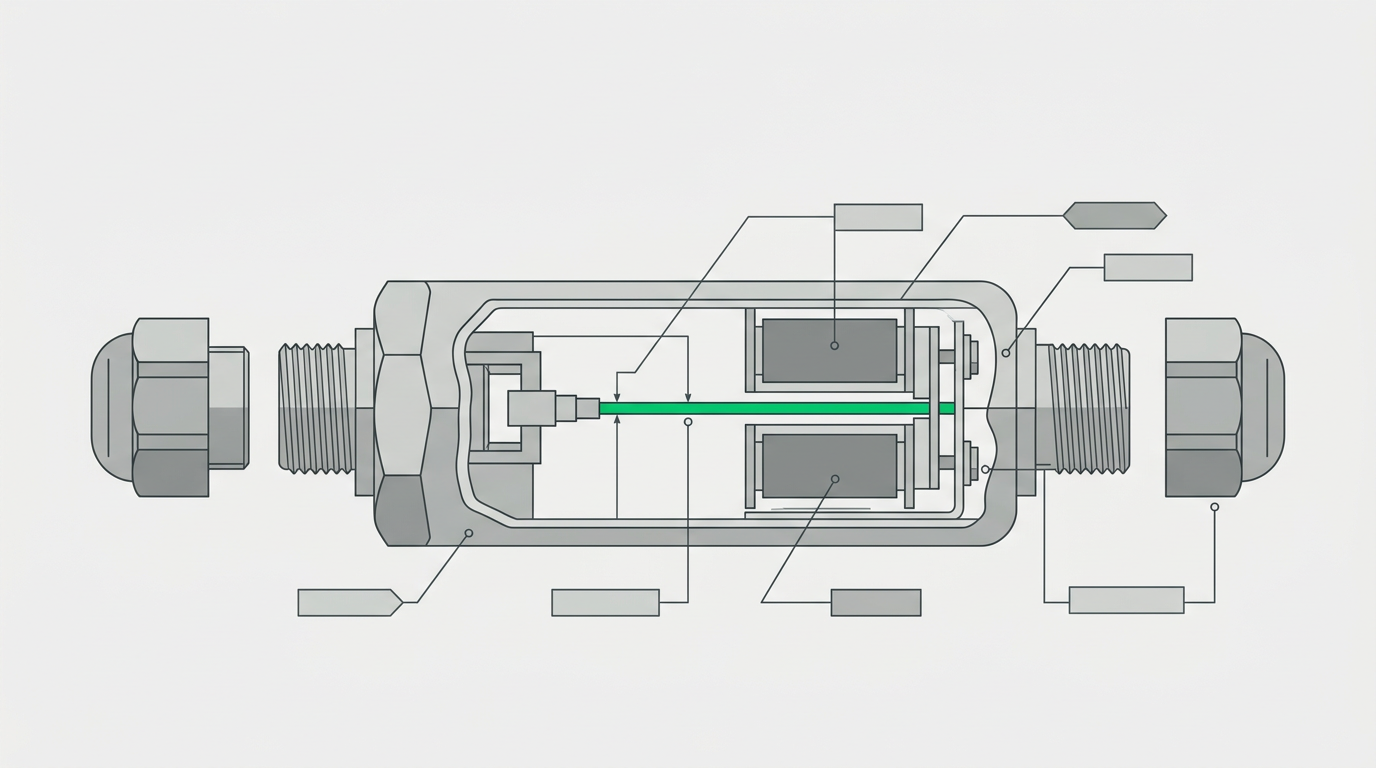
In August 2018, the Malin landslide in Maharashtra had already demonstrated how inadequate subsurface monitoring leaves engineers without actionable data until failure is imminent. Across Indian infrastructure projects governed by IS 1892 and IS 2720, the choice of geotechnical sensor technology is not a procurement afterthought — it is a design decision that determines whether your monitoring system delivers reliable strain, pore pressure, or displacement data over the project lifecycle. This geotechnical sensor comparison addresses the three dominant transducer families — vibrating wire (VW), MEMS accelerometer-based sensors, and fiber optic (FO) distributed sensing — and provides a vendor-neutral framework for selecting the right technology against your project's measurement objective, installation environment, and data acquisition architecture.
Whether you are specifying instrumentation for a deep excavation in Gurgaon, a bridge health monitoring system for an IIT research programme, or a high-rise settlement array for an EPC contractor, the selection criteria differ materially. Understanding those differences is the starting point for a defensible specification.
Key Takeaways
- Vibrating wire sensors offer long-term stability and low drift, making them the default choice for static geotechnical parameters such as pore pressure, earth pressure, and strain in concrete — applications governed by IS 2720 and IS 13311.
- MEMS sensors excel in dynamic measurement environments — seismic response, tilt, and vibration — where frequency response above 1 Hz and low power consumption are priorities, particularly relevant to IS 1893 seismic zone compliance.
- Fiber optic distributed sensing provides spatially continuous strain and temperature profiles over kilometres of cable, making it uniquely suited to long linear assets such as tunnels, embankments, and pipelines where discrete sensor spacing would leave gaps.
- No single transducer family dominates all use cases; hybrid sensor arrays combining VW and MEMS or FO and VW are increasingly specified on complex Indian infrastructure projects.
- Data acquisition system compatibility — signal conditioning, sampling rate, and telemetry protocol — must be evaluated alongside sensor technology, not after it.
What Is a Geotechnical Sensor Comparison Framework?
A geotechnical sensor comparison framework is a structured engineering methodology for evaluating transducer technologies against defined measurement objectives, environmental constraints, installation conditions, and lifecycle cost parameters specific to a given civil or geotechnical project. It moves the selection decision from brand preference to measurable technical criteria: frequency response, resolution, long-term drift, gauge length, temperature compensation range, and compatibility with Indian Standard test protocols.
For procurement teams at organisations such as NHAI, RVNL, or CWC, a documented comparison framework also provides audit-trail justification for specification choices — increasingly important under the Dam Safety Act 2021 and MORTH instrumentation guidelines for national highway projects.
The three technology families covered in this post — VW, MEMS, and fiber optic — represent the instrumentation options most commonly specified on Indian infrastructure projects today. Each operates on a fundamentally different physical transduction principle, and that difference drives every downstream decision about installation, cabling, data acquisition, and maintenance.
Vibrating Wire Sensors: Principles, Strengths, and Limitations
A vibrating wire sensor measures strain or pressure by detecting the resonant frequency of a tensioned steel wire. As the wire's tension changes in response to the measured parameter — pore water pressure, earth pressure, concrete strain, or joint movement — its natural frequency shifts. The readout unit converts that frequency shift to engineering units using a calibration polynomial. Typical resolution is 0.025% full scale, with long-term drift figures generally below 0.1% full scale per year for quality instruments operating within their rated temperature range.
VW piezometers remain the instrument of choice for pore pressure measurement in embankment dams, retaining walls, and deep excavations across India, consistent with CWC guidelines and IS 7894 for dam safety monitoring. Their key advantages are immunity to long cable resistance effects — the frequency signal is not attenuated by cable lengths up to several hundred metres — and proven multi-decade field performance in aggressive soil environments.
Limitations are equally important to document. VW sensors are quasi-static instruments: their practical upper measurement frequency is approximately 1 Hz, making them unsuitable for dynamic load monitoring, seismic response measurement, or traffic-induced vibration studies. They also require individual cable runs from each sensor to the data acquisition unit, which creates significant cabling cost and complexity on large arrays. For a project such as the L&T Constructions Noida Realty Green, Sector-120 high-rise, where Geolook deployed integrated sensor analytics for building settlement monitoring, VW settlement cells and piezometers provided the long-term baseline data that the project's structural health monitoring system required.
Explore the technical specifications of vibrating wire sensors for geotechnical and structural monitoring to understand calibration requirements and signal conditioning options before specifying cable lengths and DAQ channel counts.
MEMS Sensors: Dynamic Response and Digital Integration
MEMS (Micro-Electro-Mechanical Systems) sensors measure acceleration, tilt, or inclination using microscale inertial elements fabricated on silicon substrates. In geotechnical applications, MEMS inclinometers and accelerometers are used for slope movement monitoring, retaining wall tilt, pile head displacement, and seismic response characterisation. Their frequency response typically extends from DC to several hundred Hz, making them the appropriate technology wherever IS 1893 seismic zone requirements demand dynamic structural response data.
MEMS sensors output a digital or analogue voltage signal rather than a frequency, which means cable resistance and electromagnetic interference must be managed — particularly in environments with high-voltage power lines or variable-frequency drives. Modern MEMS inclinometers with I²C or RS-485 digital outputs largely mitigate this concern, and their compatibility with standard IoT data acquisition platforms simplifies integration into cloud-based monitoring dashboards.
Power consumption is a significant MEMS advantage for remote deployments. A MEMS tilt sensor operating in low-power mode can run on a small solar-charged battery array for months, enabling wireless sensor nodes on slopes, embankments, and bridge abutments where mains power is unavailable. This characteristic is directly relevant to the transport infrastructure monitoring solutions that Geolook deploys on highway and railway projects across India.
The limitation of MEMS technology in geotechnical contexts is long-term drift and temperature sensitivity. MEMS accelerometers used as static tilt sensors accumulate offset drift over months to years, requiring periodic recalibration or reference correction. For permanent settlement monitoring over a five-to-ten-year project lifecycle, VW or fiber optic sensors typically offer superior stability. For a detailed VW vs MEMS sensors comparison covering resolution, drift, and application mapping, see our dedicated technical guide on vw vs mems sensors.
Fiber Optic Distributed Sensing: Continuous Spatial Coverage
Fiber optic sensing encompasses several distinct measurement techniques — Fiber Bragg Grating (FBG) point sensors, Brillouin Optical Time Domain Reflectometry (BOTDR) for distributed strain and temperature, and Distributed Acoustic Sensing (DAS) for dynamic events. In geotechnical engineering, the most significant capability is distributed strain measurement: a single optical fiber cable bonded to a structure or embedded in soil can return strain readings at spatial intervals as fine as 0.25 m over cable lengths of several kilometres.
This spatial continuity is transformative for long linear assets. A tunnel lining instrumented with a distributed fiber optic cable provides a continuous strain profile along its full length, identifying localised deformation zones that a discrete VW strain gauge array — with sensors spaced at 5 m to 10 m intervals — might miss entirely. For the Ramban-Banihal NH-44 tunnel monitoring programme in J&K, where real-time SHM is deployed across five NATM tunnels in association with DRAIPL and NHAI, the ability to detect localised convergence and lining distress along the full tunnel axis is a core monitoring requirement that distributed sensing addresses directly.
FBG point sensors offer the precision of discrete measurement — resolution to 1 micro-strain is achievable — with the immunity to electromagnetic interference that is inherent to optical systems. They are increasingly specified for bridge deck strain monitoring, pile load testing, and concrete structure monitoring under IS 13311 protocols.
The primary barriers to wider fiber optic adoption on Indian projects are interrogator cost, installation skill requirements, and the fragility of optical fiber in high-strain or mechanically aggressive environments. Splicing and connector management in field conditions require trained technicians, and interrogator units represent a higher capital cost than VW readout boxes or MEMS data loggers. However, for projects where spatial coverage or electromagnetic immunity is non-negotiable, the technology is the correct specification choice regardless of unit cost.
Sensor Technology Comparison: VW, MEMS, and Fiber Optic for Geotechnical Applications
The table below presents a structured geotechnical sensor comparison across the parameters most relevant to Indian infrastructure project specification. Values are indicative of typical commercial instruments; project-specific calibration certificates and manufacturer datasheets must be reviewed before final specification.
| Parameter | Vibrating Wire (VW) | MEMS | Fiber Optic (FBG / BOTDR) |
|---|---|---|---|
| Measurement type | Static / quasi-static (pore pressure, strain, earth pressure, settlement) | Dynamic and static (tilt, acceleration, inclination) | Static and distributed (strain, temperature, deformation profile) |
| Typical resolution | 0.025% full scale; ~0.1 kPa for piezometers | 0.001° tilt; 1 mg acceleration | 1 micro-strain (FBG); 2 micro-strain (BOTDR) |
| Frequency response | DC to ~1 Hz | DC to several hundred Hz | DC to ~1 kHz (FBG); DC to ~10 kHz (DAS) |
| Long-term drift | Low (<0.1% FS/year for quality instruments) | Moderate (offset drift requires periodic recalibration) | Very low (FBG); negligible for passive fiber |
| Cable / installation complexity | Individual cable per sensor; long runs acceptable | Digital bus (RS-485, I²C); multi-drop possible | Single fiber for distributed; specialist splicing required |
| EMI immunity | High (frequency signal) | Moderate (voltage signal; digital outputs improve immunity) | Complete (optical signal) |
| Spatial coverage | Discrete point measurement | Discrete point measurement | Continuous along cable length (BOTDR: up to several km) |
| Power requirement | Low (passive sensor; power only at readout) | Very low (µW to mW in sleep mode) | Moderate (interrogator unit; typically mains or large battery) |
| Typical Indian application | Dam piezometers, deep excavation, raft settlement, retaining walls | Slope inclinometers, bridge tilt, seismic response (IS 1893 zones) | Tunnel lining, long embankments, bridge deck strain, pile monitoring |
| Relative capital cost (sensor unit) | Low to moderate | Low to moderate | Moderate to high (FBG); high (interrogator for BOTDR) |
| Relevant Indian Standard / guideline | IS 2720, IS 7894, CWC dam safety guidelines | IS 1893, IS 13920 | IS 13311 (concrete monitoring); IRC SP-35 (bridge instrumentation) |
For a broader sensor technology comparison covering structural health monitoring applications beyond geotechnical instrumentation, the post on comparing sensor technologies for structural health monitoring india provides additional context on sensor selection for bridges, buildings, and industrial structures.
Selecting the Right Sensor for Your Project: A Decision Framework
The sensor technology comparison table above identifies capability differences, but the selection decision requires mapping those capabilities to your project's specific measurement objectives. The following decision logic applies to the majority of Indian geotechnical and structural monitoring projects.
Use VW sensors when: your primary measurement parameters are pore water pressure, total earth pressure, concrete strain, or settlement; your monitoring duration exceeds two years; your site has significant electromagnetic interference from construction plant or power infrastructure; and your data acquisition system uses standard VW readout modules or multi-channel dataloggers. The IIT-Mandi bridge health monitoring accessories supply programme used VW-based instrumentation precisely because long-term stability and compatibility with standard bridge monitoring DAQ systems were the governing requirements.
Use MEMS sensors when: your measurement objective includes dynamic response — seismic acceleration, traffic-induced vibration, or real-time tilt monitoring with alert thresholds; your deployment requires wireless or battery-powered nodes; or your project involves slope movement monitoring where periodic manual inclinometer surveys are being replaced with automated continuous measurement. MEMS inclinometers installed in in-place inclinometer (IPI) arrays are now standard practice for automated slope monitoring on highway projects under MORTH guidelines.
Use fiber optic sensing when: your asset is a long linear structure — tunnel, embankment, pipeline, or bridge deck — where spatial continuity of measurement is required; your environment has extreme electromagnetic interference that would compromise VW or MEMS signal integrity; or your project requires simultaneous strain and temperature measurement from a single cable installation. The distributed nature of BOTDR sensing makes it particularly valuable for post-tensioned concrete structures where tendon duct grouting quality and long-term prestress loss need to be characterised along the full tendon length.
Hybrid arrays: Many complex projects specify more than one technology. A deep excavation in an urban environment might use VW piezometers for pore pressure, MEMS inclinometers for retaining wall tilt, and VW strain gauges on the strutting system — each technology selected for the parameter it measures most reliably. The DLF Downtown Gurgaon project with Ahluwalia Constructions, where Geolook deployed industrial-grade DAQ and real-time settlement monitoring, is an example of a multi-parameter monitoring system where sensor selection was driven by measurement objective rather than technology preference.
Review the full range of geotechnical and structural sensors available from Geolook to cross-reference sensor specifications against your project's measurement requirements before finalising your instrumentation schedule.
Data Acquisition and Telemetry: The Layer That Connects Sensors to Decisions
Sensor technology selection cannot be finalised without simultaneously specifying the data acquisition system (DAQ). A VW sensor array requires a DAQ with frequency-to-voltage conversion and multiplexed channel scanning; a MEMS array with RS-485 digital output requires a DAQ with serial communication ports and configurable polling rates; a fiber optic FBG array requires a dedicated optical interrogator with wavelength-division multiplexing capability. Mismatches between sensor output type and DAQ input specification are among the most common — and most avoidable — instrumentation errors on Indian infrastructure projects.
Sampling rate requirements are equally critical. For static geotechnical monitoring — settlement, pore pressure, earth pressure — sampling intervals of 15 minutes to 1 hour are typically sufficient, and low-power DAQ units with GPRS or NB-IoT telemetry are appropriate. For dynamic monitoring — seismic response, traffic load effects, or blast vibration monitoring near construction sites — sampling rates of 200 Hz to 1000 Hz are required, and the DAQ must have sufficient onboard storage and processing capability to handle continuous high-frequency data streams.
Cloud-based data management platforms that ingest data from heterogeneous sensor arrays — combining VW, MEMS, and FO channels — are now available and increasingly specified on large Indian infrastructure projects. These platforms enable threshold-based alerting, trend analysis, and remote diagnostics without requiring site visits for routine data retrieval. Selecting a geotechnical datalogger with multi-sensor protocol support at the outset of a project avoids costly retrofitting when the monitoring scope expands.
Project Context: Sensor Selection in Practice
Two Geolook project references illustrate how the sensor technology comparison framework translates into real specification decisions.
At the IIT-Mandi bridge health monitoring programme, the academic and research context demanded instrumentation with traceable calibration, long-term stability, and compatibility with the institute's data acquisition infrastructure. VW-based accessories — strain gauges, displacement transducers, and tilt sensors — were supplied to meet these requirements, with calibration documentation aligned to IRC SP-35 bridge instrumentation guidelines. The project demonstrates that sensor selection for research-grade monitoring must satisfy both measurement accuracy requirements and institutional audit standards.
At L&T Constructions Noida Realty Green, Sector-120, the high-rise construction context required settlement monitoring across multiple raft foundation zones with real-time data integration into the project's SHM analytics platform. The sensor array combined VW settlement cells for absolute settlement measurement with integrated DAQ providing continuous data telemetry to the site monitoring dashboard. The selection of VW technology was driven by the multi-year monitoring duration, the need for low-maintenance operation during the construction phase, and the requirement for data compatibility with the project's structural health monitoring reporting framework.
For a comprehensive overview of how different sensor types are deployed across Indian SHM projects, the post on SHM sensor types and their applications in Indian infrastructure provides additional project-level context.
Frequently Asked Questions
Q: What is the main difference between VW and MEMS sensors in geotechnical monitoring?
A: Vibrating wire sensors measure static parameters — pore pressure, earth pressure, and strain — by detecting resonant frequency shifts in a tensioned wire, offering low long-term drift and EMI immunity. MEMS sensors measure dynamic parameters — tilt, acceleration, and inclination — using microscale inertial elements, offering higher frequency response and lower power consumption but greater susceptibility to long-term offset drift in static applications.
Q: When should fiber optic sensors be specified instead of vibrating wire sensors?
A: Fiber optic sensors should be specified when spatial continuity of measurement is required along a linear asset — such as a tunnel lining, embankment, or bridge deck — where discrete VW sensors would leave unmonitored gaps. FO sensing is also preferred in environments with extreme electromagnetic interference, or where simultaneous strain and temperature measurement from a single cable installation is required under IS 13311 or IRC SP-35 protocols.
Q: Are MEMS inclinometers suitable for long-term slope monitoring on Indian highway projects?
A: MEMS inclinometers are suitable for automated continuous slope monitoring when installed in in-place inclinometer arrays with periodic reference correction to manage offset drift. For MORTH-compliant highway slope monitoring, MEMS IPI systems provide real-time tilt data with threshold-based alerting, replacing manual inclinometer surveys. Long-term absolute accuracy requires drift correction protocols documented in the monitoring plan.
Q: What data acquisition system is compatible with a mixed VW and MEMS sensor array?
A: A mixed VW and MEMS sensor array requires a multi-protocol DAQ unit that supports both frequency-based VW signal conditioning and digital serial communication — typically RS-485 or SDI-12 — for MEMS sensors. Multi-channel dataloggers with configurable input modules are available for this purpose. Sampling rate, channel count, telemetry protocol, and power budget must all be specified before selecting the DAQ hardware.
Q: Which Indian Standards govern geotechnical sensor selection and installation?
A: Geotechnical sensor selection and installation in India is governed by IS 1892 for site investigation, IS 2720 for soil testing methods, IS 7894 and CWC guidelines for dam instrumentation, IS 13311 for concrete monitoring, and IS 1893 for seismic zone compliance. Bridge instrumentation follows IRC SP-35 and IRC SP-37. The Dam Safety Act 2021 mandates instrumentation standards for large dams under CWC oversight.
Get tech recommendation
Selecting the right sensor technology for your geotechnical or structural monitoring project requires matching transducer physics to measurement objectives — not defaulting to the most familiar instrument type. Whether your project involves pore pressure monitoring in a dam embankment, dynamic tilt measurement on a highway slope, or distributed strain sensing in a tunnel lining, the sensor technology comparison framework in this post provides the engineering basis for a defensible specification.
Geolook's instrumentation team works with consulting engineers and procurement leads across NHAI, RVNL, EPC contractors, and research institutions to develop project-specific sensor schedules, DAQ architectures, and monitoring plans aligned to Indian Standard requirements and project lifecycle objectives.
Contact Geolook's instrumentation engineers for a project-specific sensor technology recommendation — bring your measurement objectives, site conditions, and monitoring duration, and we will provide a structured sensor selection rationale you can include in your specification document.
Project inquiry
Talk to a Geolook™ specialist
Share your monitoring requirement and our team will help identify the right next step.
By submitting, you agree that Geolook™ may contact you about this inquiry. Your details are not added to a marketing list.