Geotechnical Monitoring System for Metro Tunnel Construction India
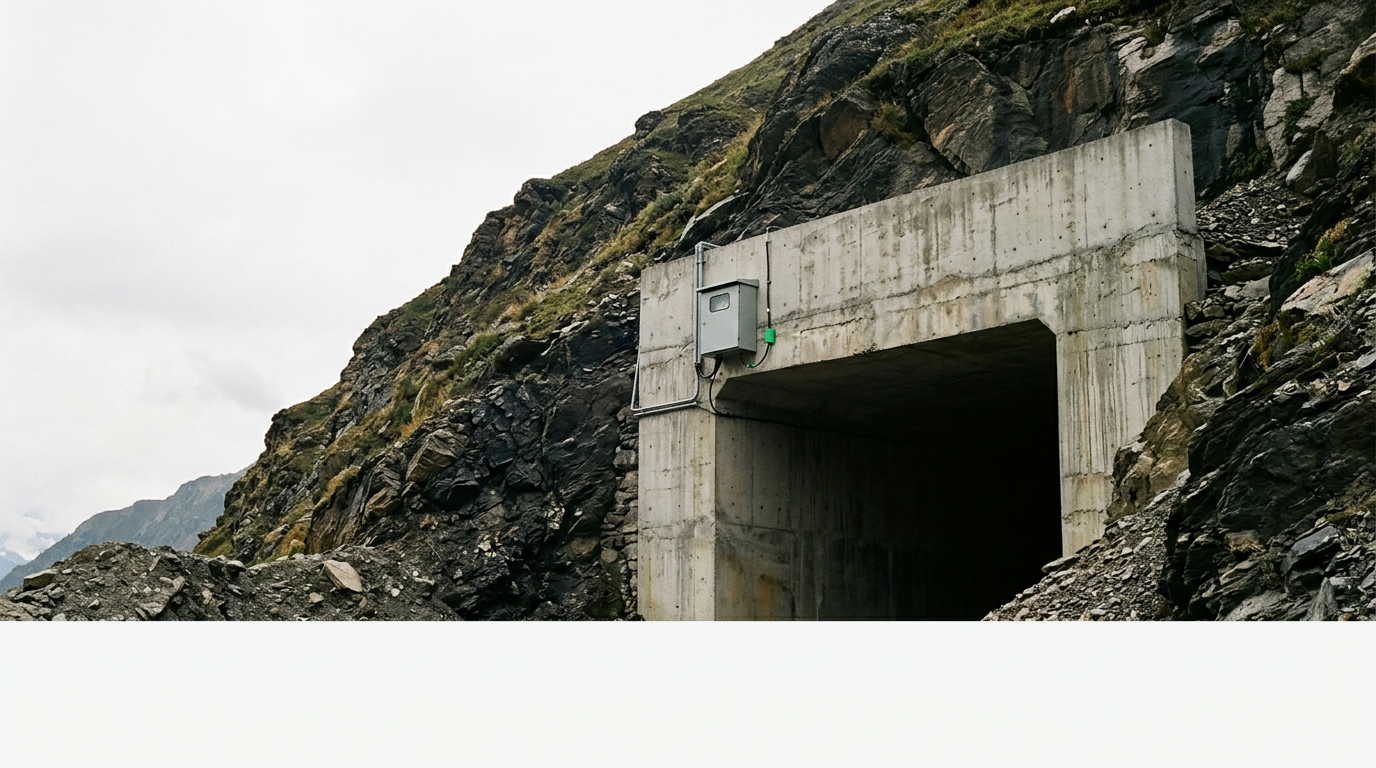
In October 2023, a section of the Pune Metro tunnel face experienced unexpected ground settlement during excavation through soft alluvial strata, forcing a temporary suspension of TBM advance and triggering emergency grouting operations — a reminder that urban tunnelling in India carries consequences measured not just in cost overruns but in public safety. For metro EPC contractors operating under DMRC, BMRC, or CMRL concession agreements, a well-specified geotechnical monitoring system for metro tunnel construction india is not optional instrumentation; it is a contractual and engineering necessity. This guide provides a phase-wise checklist of instrumentation, sensor specifications, data thresholds, and compliance anchors that procurement and project teams can use from pre-construction through tunnel breakthrough.
Key Takeaways
- A geotechnical monitoring system for metro tunnel construction india must be active before the first excavation cycle, not installed reactively after ground movement is observed.
- NATM monitoring requires convergence readings at intervals no greater than every excavation round, typically every 1–5 metres of advance, with alert thresholds defined in the geotechnical baseline report.
- Metro tunnel sensors — including vibrating wire piezometers, multi-point borehole extensometers, and surface settlement points — must be selected against IS 1892 site investigation data and the project's ground model.
- DMRC and BMRC standard specifications mandate third-party instrumentation and monitoring (I&M) agencies independent of the main contractor, with data submitted to the employer's representative in near-real-time.
- Digital twin integration, as demonstrated at the MIT-WPU Tunnel Health Monitoring & Digital Twin Excellence Centre in Pune, is increasingly specified in Tier-1 metro contracts to enable predictive intervention rather than reactive repair.
What Is a Geotechnical Monitoring System for Metro Tunnel Construction?
A geotechnical monitoring system for metro tunnel construction is an integrated network of subsurface and surface sensors, data acquisition hardware, and analytical software deployed to measure ground deformation, pore-water pressure, structural strain, and vibration in real time throughout the tunnel excavation and lining installation sequence.
In the Indian metro context, this system must address three simultaneous risk domains: the tunnel itself (lining convergence, crown settlement, invert heave), the surrounding ground mass (pore pressure dissipation, lateral earth pressure on diaphragm walls), and third-party assets above and adjacent to the alignment (building tilt, utility settlement, pile integrity). Each domain demands a different sensor type, sampling rate, and alert protocol. The system architecture must therefore be designed holistically at the pre-construction stage, not assembled piecemeal as excavation proceeds.
For a deeper look at how IoT connectivity transforms raw sensor data into actionable alerts, see our post on tunnel monitoring with IoT sensors for real-time underground infrastructure intelligence.
Regulatory and Contractual Framework: DMRC, BMRC, and Indian Standards
DMRC's General Conditions of Contract and the associated Employer's Requirements for underground packages explicitly require the contractor to submit an Instrumentation and Monitoring Plan (IMP) for approval before commencing any excavation. BMRC Phase-3 contracts follow a similar structure, referencing the IEC and FIDIC Yellow Book obligations for design-build packages. Both agencies align their geotechnical trigger levels — green, amber, and red — with the observational method principles described in Eurocode 7, adapted to Indian ground conditions.
From the Indian Standards side, IS 1892:1979 (Subsurface Investigation for Foundations) governs the baseline site investigation that informs sensor placement. IS 2720 (Methods of Test for Soils) provides the laboratory parameters — undrained shear strength, consolidation coefficients — that feed the settlement prediction models against which monitoring data is benchmarked. For tunnel lining concrete, IS 13311 covers ultrasonic pulse velocity testing, relevant when embedded sensors are used to assess early-age concrete quality in the initial support shotcrete.
Seismic considerations under IS 1893 (Part 1):2016 are particularly relevant for metro tunnels in Zone III and Zone IV cities such as Delhi, Bengaluru, and Chennai, where peak ground acceleration values influence both the design of the primary lining and the specification of accelerometer sensitivity in the monitoring system.
Phase-Wise Geotechnical Monitoring Checklist for Metro Tunnels
Phase 1 — Pre-Construction (6–12 months before TBM launch or NATM commencement)
- Complete IS 1892-compliant borehole investigation at minimum one borehole per 50 m of alignment in urban zones, with SPT N-values, undisturbed samples for triaxial testing, and groundwater table mapping.
- Install baseline inclinometers in diaphragm walls or secant pile shafts at launch and reception shafts; record at least 30 days of baseline readings before any excavation.
- Establish surface settlement monitoring array: precise levelling benchmarks at 5 m centres directly above the tunnel centreline and at 10 m centres in the transverse settlement trough zone (typically ±2.5i, where i is the trough width parameter from Gaussian settlement curve analysis).
- Install vibrating wire piezometers (VWPs) at tunnel invert level and 3 m above crown in permeable strata; baseline pore pressure readings required for minimum 14 days.
- Survey and document all third-party structures within 2× tunnel diameter of the alignment; install tiltmeters and crack gauges on vulnerable buildings per the project's third-party protection plan.
Phase 2 — TBM Drive or NATM Excavation
- For NATM monitoring: install convergence measurement targets (reflective prisms or tape extensometer anchors) at each monitoring section, typically every 5 m in competent rock and every 1–2 m in weak ground or mixed face conditions. Measure within 2 hours of each excavation round.
- Monitor crown settlement using borehole extensometers (MPBX) with a minimum of 3 anchors per hole at depths corresponding to tunnel crown, springline, and 2× diameter above crown.
- Log face extrusion using a single-point rod extensometer installed ahead of the face in NATM drives through weak ground; alert threshold typically 30–50 mm depending on ground class.
- For TBM drives: monitor face pressure (earth pressure balance or slurry pressure) against the calculated minimum support pressure derived from the ground model; deviations exceeding ±20 kPa from the target face pressure must trigger an immediate review.
- Sample and log TBM operational parameters — thrust force (kN), torque (kNm), penetration rate (mm/rev), foam injection volume — at 1-minute intervals; correlate with ground model to detect unexpected geological transitions.
- Maintain continuous VWP readings; a pore pressure rise exceeding 10 kPa above baseline at tunnel crown level is a standard amber trigger in DMRC contracts.
Phase 3 — Lining Installation and Ring Build
- Monitor segmental lining convergence using automated total stations (ATS) or digital convergence meters at every 10th ring initially, reducing to every 25th ring once ground behaviour is confirmed stable.
- Embed vibrating wire strain gauges in critical lining segments at locations identified in the structural design — typically at crown, haunches, and invert — to verify that hoop stress remains within design limits.
- Continue surface settlement monitoring at full frequency until the settlement rate drops below 0.5 mm per week for three consecutive weeks.
Phase 4 — Post-Construction and Handover
- Maintain a residual monitoring programme for minimum 12 months post-breakthrough, with monthly precise levelling of surface benchmarks and quarterly inclinometer readings.
- Compile the as-built monitoring database and submit to the employer's representative; this forms part of the tunnel's structural health monitoring baseline for the operational phase.
- Decommission or transfer sensors to the permanent SHM system as specified in the O&M contract.
For a comprehensive view of how these phases integrate into a broader infrastructure monitoring programme, refer to our resource on structural health monitoring for bridges dams and tunnels india.
Metro Tunnel Sensors: Selection Criteria and Specifications
Sensor selection for a metro tunnel environment must account for the aggressive combination of high humidity (often 95–100% RH), groundwater ingress, vibration from TBM operations, and the electromagnetic interference generated by traction power systems in adjacent running tunnels. The following sensor types form the core of any credible metro tunnel monitoring system.
Vibrating Wire Piezometers (VWPs): Measure pore-water pressure in kPa. Typical range 0–700 kPa; resolution 0.025% full scale. Preferred over pneumatic piezometers for automated data acquisition because the vibrating wire signal is immune to cable resistance errors over long lead lengths.
Multi-Point Borehole Extensometers (MPBX): Measure axial displacement at multiple depths from a single borehole. Rod extensometers with magnetic reed switch or vibrating wire transducers; resolution typically 0.01 mm; range ±50 mm. Critical for detecting differential settlement between tunnel crown and surface.
Inclinometers: Measure lateral ground displacement in mm per metre of depth. Servo-accelerometer probes with sensitivity of 0.01 mm/500 mm gauge length. In-place inclinometers (IPI) allow automated continuous monitoring without manual probe insertion, essential in active TBM zones.
Vibrating Wire Strain Gauges: Embedded in shotcrete or precast segments to measure micro-strain (με). Typical range ±3000 με; resolution 1 με. Used to verify that lining thrust and bending moment remain within the design envelope.
Automated Total Stations (ATS): Measure 3D displacement of prism targets to sub-millimetre accuracy (typically ±0.3 mm at 100 m). Essential for convergence monitoring in NATM drives and for tracking surface settlement arrays in real time.
Accelerometers / Geophones: Monitor blast or TBM-induced vibration in mm/s² or mm/s (peak particle velocity). Alert thresholds for adjacent structures are typically set at 5 mm/s PPV for residential buildings and 10 mm/s PPV for reinforced concrete structures, consistent with IS 2974 guidance on machine foundation vibration.
Explore the full range of geotechnical and structural sensors for underground infrastructure available for metro tunnel projects.
NATM Monitoring: Trigger Levels and Response Protocol
NATM monitoring is the systematic measurement of ground and lining deformation during New Austrian Tunnelling Method excavation, used to verify that the ground-support interaction is performing within the design assumptions of the observational method.
In Indian metro projects, NATM is typically applied in rock sections (such as the granite and gneiss encountered on BMRC corridors in Bengaluru) and in mixed-face conditions at station box transitions. The monitoring plan must define three trigger levels — often called Action Levels 1, 2, and 3 — with specific response actions for each.
A typical trigger level framework for a 6 m diameter metro tunnel in Class III rock (Q-system rating 1–4) might be:
- Action Level 1 (Alert): Crown settlement >10 mm or convergence rate >2 mm/day. Response: increase monitoring frequency to twice daily; notify site engineer.
- Action Level 2 (Warning): Crown settlement >20 mm or convergence rate >5 mm/day. Response: halt excavation advance; review support design; install additional rock bolts or increase shotcrete thickness.
- Action Level 3 (Alarm): Crown settlement >30 mm or any reading approaching the design maximum deformation. Response: immediate evacuation of face area; emergency support installation; geotechnical engineer on site within 2 hours.
These thresholds must be derived from the project-specific ground model and the structural capacity of the primary support, not adopted generically from other projects. The Ramban-Banihal NH-44 tunnel project in Jammu & Kashmir, where Geolook deployed real-time SHM across five tunnels in association with DRAIPL and conducted regular review meetings with the NHAI Regional Office, demonstrated that project-specific trigger calibration — accounting for the highly variable Siwalik shale and sandstone encountered on that alignment — is essential to avoid both false alarms and missed warnings.
For metro-specific instrumentation strategies across Indian cities, see our detailed resource on structural instrumentation for metro rail projects in indian cities.
Sensor Technology Comparison for Metro Tunnel Monitoring Applications
The table below compares the principal sensor technologies used in a geotechnical monitoring system for metro tunnel construction, evaluated against the criteria most relevant to metro EPC procurement decisions.
| Sensor Type | Measured Parameter | Typical Resolution | Automation Suitability | Metro Tunnel Environment Suitability | Primary Application in Metro Tunnels |
|---|---|---|---|---|---|
| Vibrating Wire Piezometer | Pore-water pressure (kPa) | 0.025% FS (~0.17 kPa at 700 kPa range) | High — direct datalogger integration | Excellent — immune to cable resistance drift | Groundwater drawdown monitoring, face stability assessment |
| In-Place Inclinometer (IPI) | Lateral displacement (mm) | 0.01 mm/500 mm gauge | High — continuous automated logging | Good — requires protection from TBM vibration | Diaphragm wall deflection, ground movement profiling |
| Multi-Point Borehole Extensometer | Axial displacement (mm) | 0.01 mm | High — VW or potentiometric transducer | Excellent — sealed borehole installation | Crown settlement, differential movement between strata |
| Vibrating Wire Strain Gauge | Strain (micro-strain, με) | 1 με | High — multiplexed datalogger | Excellent — embedded in concrete or steel | Lining hoop stress, shotcrete load verification |
| Automated Total Station (ATS) | 3D displacement (mm) | ±0.3 mm at 100 m | High — robotic, scheduled scanning | Good — requires clear line of sight to prisms | Convergence monitoring, surface settlement arrays |
| Geophone / Accelerometer | Vibration velocity (mm/s) or acceleration (mm/s²) | 0.1 mm/s PPV | High — event-triggered logging | Excellent — ruggedised industrial units available | Blast monitoring, TBM-induced vibration on adjacent structures |
| Manual Tape Extensometer | Convergence (mm) | ±0.1 mm | Low — manual reading required | Moderate — labour-intensive in active tunnel | NATM convergence in low-automation contracts |
Digital Twin Integration and Real-Time Data Management
The volume of data generated by a fully instrumented metro tunnel drive — potentially hundreds of sensor channels logging at 1–15 minute intervals across a 2–5 km drive — cannot be managed effectively through manual spreadsheet review. Metro EPC contractors and their I&M agencies are increasingly required to deliver data through web-based dashboards that provide the employer's representative with real-time visibility of all trigger levels, trend plots, and alert notifications.
The MIT-WPU Tunnel Health Monitoring & Digital Twin Excellence Centre in Pune, inaugurated by Hon'ble Minister Sh. Nitin Gadkari, represents India's most advanced institutional framework for developing and validating these digital monitoring capabilities. The centre integrates physical sensor data with finite element ground models to create a living digital twin of the tunnel structure — one that updates in real time as excavation proceeds and flags deviations between predicted and observed behaviour before they reach action level thresholds.
For metro EPC contractors, the practical implication is that the data management platform must be specified alongside the sensor hardware, not procured separately after installation. Key requirements include: secure cloud or on-premise data storage with minimum 99.5% uptime; automated SMS and email alerts when any channel crosses an action level; audit-trail logging of all manual overrides or sensor maintenance events; and export capability in formats compatible with the employer's BIM or GIS platform.
Learn more about how Geolook's underground infrastructure monitoring solutions integrate sensor networks with real-time data platforms for metro and highway tunnel projects.
Common Instrumentation Failures and How to Prevent Them
Even well-specified monitoring systems fail in practice when installation quality, cable management, and maintenance protocols are not enforced. The following failure modes are documented repeatedly in post-project reviews of metro tunnel I&M programmes in India.
Cable damage during TBM advance: Sensor cables routed along the tunnel inwall without adequate armoured conduit are routinely severed by TBM backup gantry movement. Prevention: use steel-wire armoured (SWA) cables in conduit from sensor head to the nearest junction box; route cables in the upper third of the tunnel profile away from gantry travel paths.
Piezometer desaturation: VWPs installed in low-permeability clay without adequate de-airing of the filter tip will give erroneous readings for weeks after installation. Prevention: saturate filter tips under vacuum before installation; use a bentonite-sand seal above the filter zone to prevent short-circuit drainage.
Benchmark instability: Surface settlement benchmarks founded on shallow fill or disturbed ground will move independently of tunnel-induced settlement, corrupting the dataset. Prevention: found benchmarks on driven steel rods to a minimum depth of 1.5 m below the zone of seasonal moisture variation, typically 2–3 m in Indian alluvial plains.
Data gaps during shift changes: Manual reading programmes that depend on a single trained technician per shift are vulnerable to gaps when that individual is absent. Prevention: automate all critical channels; reserve manual reading as a backup verification method, not the primary data source.
Trigger level drift: Action levels set at project inception are sometimes informally relaxed by site teams under schedule pressure without formal geotechnical review. Prevention: embed trigger level change control in the IMP approval process; any revision requires written sign-off from the geotechnical engineer of record and the employer's representative.
For a broader perspective on sensor system design for urban underground projects, see our guide on what sensors and systems are used in tunnel health monitoring for urban metro projects.
Procurement Checklist for Metro EPC Contractors
When tendering or subcontracting a geotechnical monitoring system for metro tunnel construction, the following items should be confirmed before contract award.
- Instrumentation and Monitoring Plan (IMP) scope: confirm it covers pre-construction baseline, construction phase, and post-construction residual monitoring periods with defined sensor types, quantities, locations, and reading frequencies for each phase.
- Sensor calibration certificates: all sensors must have traceable factory calibration certificates; VWPs and strain gauges should be re-calibrated if stored for more than 12 months before installation.
- Data acquisition system (DAQ) specification: confirm channel capacity, sampling rate (minimum 1 Hz for dynamic sensors; 1/15 min for static sensors), onboard data storage (minimum 30 days without network connectivity), and communication protocol (RS-485, SDI-12, or 4G/LTE).
- Third-party independence: confirm the I&M agency is contractually independent of the main contractor and has direct reporting obligations to the employer's representative.
- Alert notification protocol: confirm automated SMS/email alerts are configured for all action level breaches, with documented escalation contacts and response time commitments.
- Data ownership and retention: confirm raw data files are owned by the employer and retained for minimum 10 years post-construction, consistent with standard infrastructure asset management practice.
Explore the complete range of tunnel monitoring instrumentation and data acquisition systems that Geolook supplies for metro and highway tunnel projects across India.
Frequently Asked Questions
Q: What is a geotechnical monitoring system for metro tunnel construction in India?
A: A geotechnical monitoring system for metro tunnel construction in India is an integrated network of subsurface sensors, data acquisition units, and analytical software that measures ground deformation, pore-water pressure, lining strain, and vibration in real time throughout excavation and lining installation. It enables EPC contractors and employers to verify that ground behaviour remains within design assumptions and to trigger intervention before thresholds are breached.
Q: Which Indian Standards govern geotechnical instrumentation for metro tunnels?
A: IS 1892:1979 governs subsurface investigation that informs sensor placement, while IS 2720 provides soil test parameters used to calibrate settlement prediction models. IS 13311 applies to ultrasonic testing of tunnel lining concrete. Seismic instrumentation requirements are referenced against IS 1893 (Part 1):2016, particularly for metro alignments in seismic Zone III and Zone IV cities such as Delhi and Bengaluru.
Q: What are the standard trigger levels for NATM monitoring in Indian metro projects?
A: NATM monitoring trigger levels in Indian metro projects are project-specific values derived from the geotechnical baseline report and the primary support design. A typical three-level framework sets Action Level 1 at crown settlement exceeding 10 mm or convergence rate exceeding 2 mm/day, Action Level 2 at 20 mm or 5 mm/day, and Action Level 3 at 30 mm or any reading approaching the design maximum deformation, each with defined response actions.
Q: How many sensors are typically required for a 1 km metro tunnel drive?
A: The sensor count for a 1 km metro tunnel drive depends on ground conditions, proximity to third-party structures, and the employer's specification, but a typical urban TBM drive might include 8–12 VWP installations, 4–6 MPBX boreholes, 6–10 inclinometer casings at shafts and sensitive zones, 80–120 surface settlement points, and continuous ATS monitoring of 20–30 convergence prisms inside the tunnel.
Q: Does DMRC require an independent instrumentation and monitoring agency?
A: DMRC's standard underground contract specifications require the instrumentation and monitoring agency to be independent of the main contractor, with direct data submission obligations to the employer's representative. This independence requirement is intended to prevent the informal relaxation of trigger levels under schedule pressure and to ensure that monitoring data is reported without conflict of interest.
Request tunnel quote
Geolook supplies and commissions complete geotechnical monitoring systems for metro tunnel construction across India — from pre-construction baseline instrumentation through real-time NATM monitoring and post-construction handover. Our systems are deployed on live metro and highway tunnel projects and are designed to meet DMRC, BMRC, and NHAI I&M specification requirements.
If you are preparing a tender, reviewing an IMP, or need a sensor and DAQ specification for an upcoming metro package, our geotechnical instrumentation team can provide a project-specific proposal within five working days.
Contact Geolook to request a tunnel monitoring quote or technical consultation
Project inquiry
Talk to a Geolook™ specialist
Share your monitoring requirement and our team will help identify the right next step.
By submitting, you agree that Geolook™ may contact you about this inquiry. Your details are not added to a marketing list.