Continuous Dam Deformation Monitoring During Monsoon: Sensors & Alerts
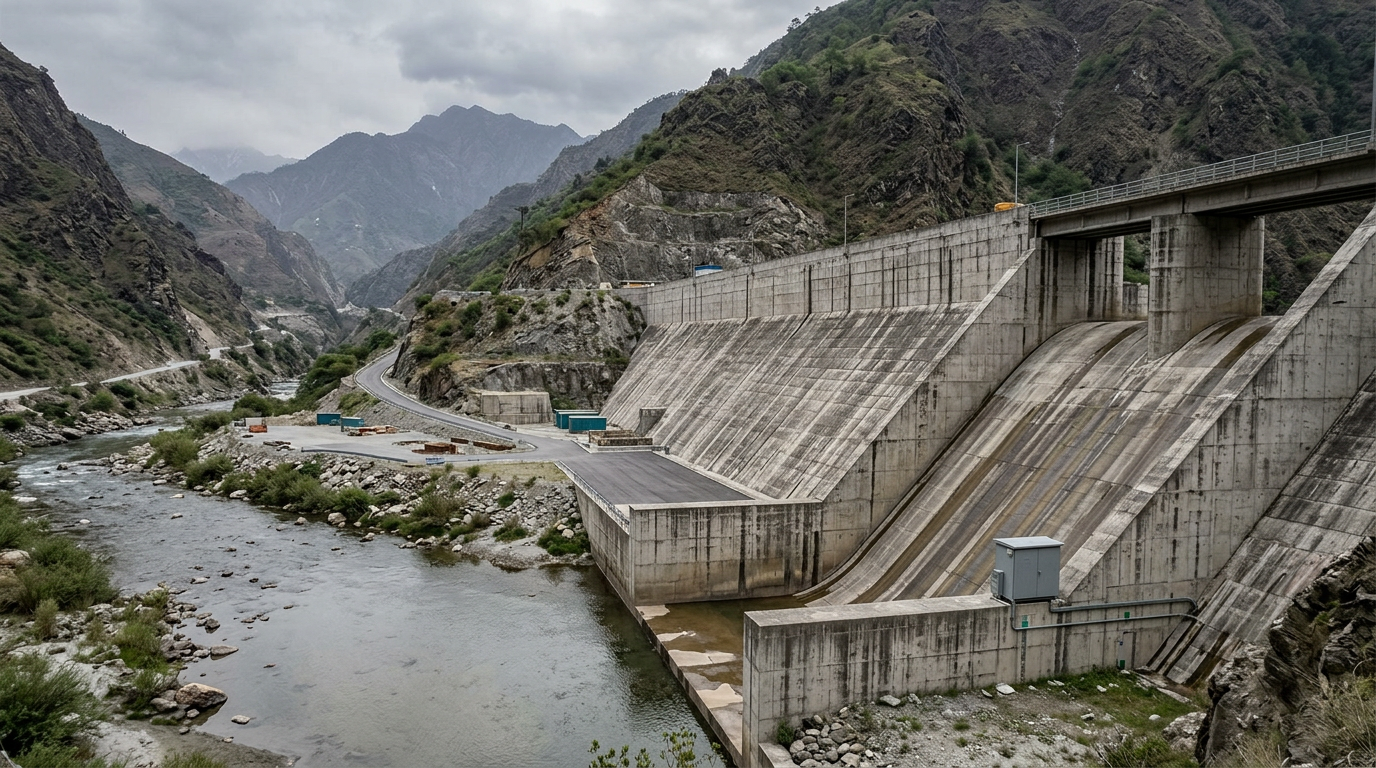
In August 2018, the Mullaperiyar dam in Kerala—already under scrutiny for structural age—faced unprecedented reservoir levels as the state recorded its worst floods in nearly a century, displacing over a million people and forcing emergency spillway operations across multiple dams. The episode exposed a critical gap: many dam operators lacked the real-time deformation data needed to make defensible release decisions under rapidly changing hydraulic loads. Continuous dam deformation monitoring during monsoon is not a supplementary measure; under the Dam Safety Act 2021 and CWC guidelines, it is a statutory obligation for all large dams. This post explains the sensor systems, alert thresholds, and operational protocols that dam operators and CWC officials need to implement before the next monsoon season begins.
Key Takeaways
- Continuous dam deformation monitoring during monsoon must cover settlement, horizontal displacement, seepage, and pore water pressure simultaneously—no single sensor type is sufficient.
- The Dam Safety Act 2021 mandates instrumentation and regular safety reviews for all large dams; CWC guidelines specify minimum sensor categories and data-logging frequencies.
- Alert thresholds should be set in three tiers—attention, warning, and alarm—referenced against IS 7894 and dam-specific design tolerances.
- Vibrating wire sensors remain the preferred transducer technology for long-term embankment and concrete dam monitoring due to signal stability over extended cable runs in humid conditions.
- Automated data acquisition with SMS/email alerts reduces response latency from hours to minutes during high-rainfall events when manual readings are operationally unsafe.
What Is Continuous Dam Deformation Monitoring During Monsoon?
Continuous dam deformation monitoring during monsoon is the uninterrupted, automated measurement of a dam's structural movements—including vertical settlement, horizontal displacement, internal strain, seepage flow, and pore water pressure—throughout the June–September high-rainfall period, with data transmitted in real time to a central platform for threshold-based alerting.
Indian dams experience their most severe hydraulic loading during monsoon. Reservoir levels can rise several metres within 24–48 hours following a cloudburst in the catchment. Embankment dams respond with increased seepage gradients; concrete gravity dams experience uplift pressure changes at the foundation interface. Without continuous instrumentation, operators are effectively blind to the early deformation signatures that precede distress—signatures that may appear 12–72 hours before any visible surface manifestation.
IS 7894 (Code of Practice for Safety of Dams) and the CWC Dam Safety Organisation's instrumentation guidelines both recognise that periodic manual readings—typically fortnightly or monthly—are inadequate during monsoon. The recommended logging interval for critical parameters during high-reservoir conditions is 15 minutes or less. For comprehensive dam monitoring sensor systems that meet these logging requirements, the instrumentation must be designed for continuous, unattended operation in high-humidity, flood-prone environments.
Monsoon Dam Monitoring: Why the Season Changes Everything
Monsoon dam monitoring differs from dry-season observation in three fundamental ways: loading rate, access constraints, and data volume. During monsoon, reservoir inflow can exceed design flood estimates in extreme years—the 2018 Kerala event saw inflows at Idukki reservoir approach 5,000 m³/s. Manual survey crews cannot safely access crest monuments or downstream slope markers when water is overtopping spillway piers or when access roads are submerged. And the volume of meaningful data—pore pressure readings, seepage measurements, tiltmeter outputs—multiplies when conditions change hourly rather than weekly.
Pore water pressure is the most time-sensitive parameter during monsoon. A rapid rise in phreatic surface within an earthfill embankment reduces effective stress and can initiate internal erosion within hours. Vibrating wire piezometers installed at multiple elevations within the embankment cross-section provide the continuous pore pressure profile needed to detect this condition. The vibrating wire transducer outputs a frequency signal (typically 400–6,000 Hz range) that is immune to the long-cable resistance errors that plague voltage-output sensors in field installations—a critical advantage when cable runs from the embankment toe to the instrument house exceed 200 m.
Settlement is equally important. An embankment dam that settles more than its design allowance under full reservoir load may be experiencing internal consolidation anomalies or, more seriously, localised shear. VW liquid settlement gauges installed along the embankment crest and at the downstream berm provide continuous differential settlement data without requiring line-of-sight access—a significant operational advantage when monsoon fog and rain make optical survey impractical for days at a time.
Sensor Selection for Monsoon Deformation Monitoring
A complete monsoon instrumentation scheme for a large embankment dam typically integrates six sensor categories. Each addresses a distinct failure mode identified in the CWC Dam Safety Review Panel checklist and IS 7894 Annex provisions.
- Vibrating Wire Piezometers: Measure pore water pressure in kPa at discrete elevations within the embankment or foundation. Standard range: 0–700 kPa; accuracy ±0.1% FS. Install in clusters of three at the upstream shell, core, and downstream shell for each monitored cross-section.
- VW Liquid Settlement Gauges: Measure differential settlement in mm between a reference point and sensor locations along the crest. Resolution: 0.1 mm. Particularly suited to earthfill dams where surface monuments cannot be reliably surveyed during monsoon.
- Tiltmeters / Inclinometers: Biaxial tiltmeters on the crest and downstream face measure angular rotation in arc-seconds; in-place inclinometers in vertical casings measure lateral displacement profiles in mm at 0.5 m depth intervals. Critical for detecting horizontal movement toward the downstream toe.
- Seepage Measurement Weirs with VW Pressure Transducers: Quantify seepage flow in litres per minute at the downstream toe drainage blanket. A sudden increase in seepage—particularly turbid seepage—is a primary indicator of internal erosion per ICOLD Bulletin 164.
- Crack Meters / Joint Meters: VW crack meters across transverse cracks in concrete dams or at the core-shell interface in earthfill dams measure crack opening in mm. Range: typically ±25 mm; resolution 0.025 mm.
- Strong-Motion Accelerometers: Measure peak ground acceleration in mm/s² at the dam base and crest. Required under IS 1893 (Part 1) for dams in seismic zones III–V. During monsoon, even a moderate seismic event can trigger liquefaction in saturated embankment materials.
All sensors should be connected to a datalogger with onboard memory capable of storing at least 30 days of data at 15-minute intervals, with GPRS/4G telemetry for real-time transmission. Solar-plus-battery power with a minimum 72-hour battery backup is essential for sites where grid power fails during storms.
Sensor Performance Comparison for Dam Deformation Monitoring
The table below compares the principal sensor technologies used in continuous dam deformation monitoring during monsoon across parameters relevant to Indian field conditions.
| Parameter | Vibrating Wire (VW) | MEMS / Capacitive | Optical Fibre (DFOS) | Pneumatic | Hydraulic (Liquid Settlement) |
|---|---|---|---|---|---|
| Signal stability over long cable runs (>200 m) | Excellent — frequency output unaffected by resistance | Moderate — voltage drift over long runs | Excellent — immune to EMI | Good — pressure tube not affected by cable resistance | Excellent — hydrostatic principle |
| Resolution (settlement / pressure) | 0.025% FS typical | 0.01% FS (high-end units) | 1 mm strain resolution over distributed sensing | 0.1% FS typical | 0.1 mm typical |
| Suitability for continuous automated logging | High — standard datalogger compatible | High | High — requires dedicated interrogator | Low — requires manual readout or pneumatic multiplexer | High |
| Performance in high-humidity / submerged conditions | High — hermetically sealed transducers available | Moderate — moisture ingress risk | High — fibre is inert | Moderate — tube blockage risk | High — fluid-filled system |
| Cost per measurement point (relative) | Moderate | Moderate–High | Low per metre (distributed), High for interrogator | Low | Moderate |
| Typical Indian field deployment maturity | Very high — widely used per CWC instrumentation manuals | Growing — used in urban SHM | Emerging — pilot deployments | Declining — being replaced by VW | High — standard for embankment settlement |
For most Indian large dams operating under CWC oversight, vibrating wire technology remains the baseline choice for piezometers, settlement gauges, crack meters, and load cells due to its proven long-term stability, compatibility with standard dataloggers, and established maintenance protocols within dam safety organisations.
Alert Threshold Framework for Dam Settlement Monsoon Events
Dam settlement monsoon events require a structured, three-tier alert framework rather than a single alarm threshold. The three tiers—Attention, Warning, and Alarm—correspond to escalating response actions and are consistent with the CWC Dam Safety Review Panel's recommended instrumentation response protocol.
The following checklist defines threshold criteria for each tier across the primary deformation parameters. Actual numerical thresholds must be established by the dam's designer or a qualified geotechnical engineer based on the dam-specific design report, foundation conditions, and reservoir operating rules.
- Attention Level: Any single parameter exceeds 50% of the design-basis threshold. Action: Increase logging frequency to 5-minute intervals; notify dam safety officer; initiate visual inspection of downstream face and toe drain.
- Warning Level: Any single parameter exceeds 75% of the design-basis threshold, or two parameters simultaneously exceed 50%. Action: Notify CWC Regional Office and State Dam Safety Authority; convene emergency review; prepare for controlled reservoir drawdown if pore pressure trend is rising.
- Alarm Level: Any parameter exceeds the design-basis threshold, or rate of change exceeds 2× the historical monsoon average for that parameter. Action: Immediate notification to District Collector and NDMA; initiate Emergency Action Plan (EAP) per Dam Safety Act 2021 Section 10; consider downstream evacuation.
| Parameter | Unit | Attention (50% threshold) | Warning (75% threshold) | Alarm (100% threshold / rate trigger) | Relevant Standard |
|---|---|---|---|---|---|
| Crest settlement (cumulative) | mm | Dam-specific (typically 25–50 mm) | Dam-specific (typically 37–75 mm) | Dam-specific; rate >5 mm/day triggers alarm | IS 7894, CWC instrumentation manual |
| Pore water pressure (phreatic level) | kPa | 50% of design phreatic line | 75% of design phreatic line | Exceeds design phreatic line or rises >10 kPa/hour | IS 7894 |
| Horizontal displacement (inclinometer) | mm | 10 mm cumulative | 15 mm cumulative | 20 mm cumulative or >2 mm/day rate | CWC Dam Safety Review Panel |
| Seepage flow at toe | L/min | 2× baseline dry-season flow | 3× baseline dry-season flow | 5× baseline or turbid seepage observed | ICOLD Bulletin 164, IS 7894 |
| Crack opening (transverse crack) | mm | 2 mm opening | 5 mm opening | 10 mm opening or >0.5 mm/day rate | IS 7894 |
Automated SMS and email alerts should be configured at each tier boundary. The alert message must include the parameter name, current reading with unit, threshold breached, timestamp, and the dam name—sufficient information for the receiving officer to initiate the correct response without needing to log into the platform first.
Data Acquisition and Telemetry Architecture for Monsoon Conditions
A monsoon-resilient data acquisition architecture for continuous dam deformation monitoring must account for three failure scenarios common during Indian monsoon: grid power outage, GPRS network congestion, and physical access loss to the instrument house.
The recommended architecture uses a distributed datalogger network with one primary logger per instrumented cross-section, connected via shielded twisted-pair cable to all VW sensors in that section. Each logger stores data locally on non-volatile memory and transmits via GPRS/4G to a cloud server every 15 minutes. A secondary satellite modem (VSAT or Iridium SBD) provides a fallback communication path when cellular networks are congested—a documented problem during major flood events when network traffic spikes. Solar panels with a 150 Ah battery bank provide a minimum 5-day power autonomy at full logging frequency.
The central platform should present data on a dashboard with colour-coded status indicators for each sensor, time-series plots with threshold lines overlaid, and an automated report generator that produces a daily PDF summary for the dam safety officer. Integration with the CWC's National Dam Safety Authority (NDSA) data portal, as envisaged under the Dam Safety Act 2021, requires the platform to support standard data exchange formats.
For a broader understanding of how instrumentation integrates into a complete dam safety programme, the dam safety monitoring overview covers sensor selection, data management, and regulatory compliance across dam types. Additionally, understanding real time pore water pressure monitoring in dams is essential for configuring the piezometer network correctly before monsoon onset.
Pre-Monsoon Instrumentation Readiness Checklist
Dam operators should complete the following checklist by 31 May each year—before the onset of the southwest monsoon—to ensure the continuous dam deformation monitoring system is fully operational for the high-risk season.
- Sensor verification: Read all VW sensors manually and compare against automated logger readings. Discrepancy >0.5% FS requires sensor inspection or replacement.
- Cable and connector inspection: Inspect all junction boxes for water ingress; replace desiccant packs; re-seal any conduit entries showing cracking or corrosion.
- Datalogger clock synchronisation: Synchronise all logger clocks to IST via GPS or NTP. Time-stamp errors corrupt cross-parameter correlation analysis.
- Telemetry test: Confirm GPRS/4G data transmission is live; test satellite fallback modem; verify data is appearing correctly on the central platform.
- Power system check: Test solar panel output (minimum 80% of rated wattage); verify battery bank capacity; test automatic switchover from solar to battery.
- Alert configuration review: Confirm all three-tier thresholds are correctly entered in the platform; send a test alert to all registered mobile numbers and email addresses; update contact list for current monsoon season staff.
- Baseline data archival: Archive the most recent 12-month dataset as the pre-monsoon baseline. Alert thresholds for rate-of-change parameters are calculated relative to this baseline.
- Emergency Action Plan (EAP) review: Confirm the EAP is current per Dam Safety Act 2021 requirements; verify that alert tier actions in the EAP match the platform's automated notification logic.
- Seepage measurement weir calibration: Clean and calibrate all V-notch or rectangular weirs at the downstream toe; record dry-season baseline flow in L/min for each weir.
- Inclinometer casing inspection: Lower a dummy probe through each inclinometer casing to confirm no obstruction or casing deformation from the previous monsoon season.
For hydropower dam operators, the instrumentation requirements intersect with generation safety obligations. The energy sector dam and reservoir monitoring solutions framework addresses the specific monitoring needs of run-of-river and storage hydropower projects operating under monsoon inflow variability.
Regulatory Obligations Under the Dam Safety Act 2021 and IS 7894
The Dam Safety Act 2021 (No. 35 of 2021) establishes a statutory framework that directly governs instrumentation requirements for large dams in India. Section 10 requires every dam owner to prepare and implement a Dam Safety Plan, which must include an instrumentation and monitoring component. The National Committee on Dam Safety (NCDS) and State Dam Safety Organisations (SDSOs) are empowered to inspect dams and direct remedial action, including instrumentation upgrades.
IS 7894:1975 (reaffirmed 2018), the Code of Practice for Safety of Dams, specifies minimum instrumentation categories for earthfill, rockfill, and concrete dams. For earthfill dams above 30 m height, IS 7894 requires piezometers, settlement gauges, and seepage measurement as mandatory. For concrete gravity dams, uplift pressure measurement at the foundation and joint meters at contraction joints are additionally required.
CWC's Dam Safety Organisation has published instrumentation guidelines that specify sensor placement density: for embankment dams, a minimum of three instrumented cross-sections for dams between 30–60 m height, and five cross-sections for dams above 60 m. Each cross-section requires piezometers at a minimum of three elevations.
Non-compliance with instrumentation requirements identified during a Dam Safety Review Panel inspection can result in restricted reservoir operation—a significant consequence for irrigation and hydropower projects. Operators who have not yet established automated monitoring should review the how do vibrating wire strain gauges compare to mems sensors for dam monitoring in india analysis to make an informed sensor selection decision before the next procurement cycle.
Understanding the working principles of the primary sensors is equally important for procurement and maintenance staff. The vibrating wire piezometer working principle guide explains the frequency-based measurement mechanism, temperature correction requirements, and calibration procedures that underpin reliable pore pressure data.
Frequently Asked Questions
Q: What is continuous dam deformation monitoring during monsoon?
A: Continuous dam deformation monitoring during monsoon is the automated, uninterrupted measurement of a dam's structural movements—including settlement, horizontal displacement, pore water pressure, and seepage—throughout the June–September high-rainfall period, with data logged at intervals of 15 minutes or less and transmitted in real time for threshold-based alerting. It is mandated under the Dam Safety Act 2021 for all large dams in India.
Q: Which sensors are most critical for monsoon dam monitoring in Indian earthfill dams?
A: Vibrating wire piezometers are the most critical sensors for monsoon dam monitoring in Indian earthfill dams because they continuously measure pore water pressure in kPa at multiple elevations within the embankment, detecting phreatic surface rise before it becomes visible at the surface. VW liquid settlement gauges and in-place inclinometers are the next priority, measuring crest settlement in mm and lateral displacement profiles respectively. IS 7894 mandates all three categories for large embankment dams.
Q: How often should sensor data be logged during monsoon high-reservoir conditions?
A: Sensor data should be logged at a maximum interval of 15 minutes during monsoon high-reservoir conditions, and reduced to 5-minute intervals when any parameter reaches the Attention threshold. CWC instrumentation guidelines recommend more frequent logging when reservoir level is within 2 m of Full Reservoir Level or when inflow rates exceed 500 m³/s, as deformation responses can develop rapidly under these hydraulic loads.
Q: What are the three alert tiers in a dam deformation monitoring system?
A: The three alert tiers in a dam deformation monitoring system are Attention, Warning, and Alarm, corresponding to 50%, 75%, and 100% of design-basis thresholds respectively. Each tier triggers a defined response: Attention initiates increased logging and visual inspection; Warning requires notification of CWC Regional Office and possible drawdown preparation; Alarm activates the Emergency Action Plan under Dam Safety Act 2021 Section 10, which may include downstream evacuation.
Q: Is satellite telemetry necessary for dam monitoring during monsoon?
A: Satellite telemetry is not mandatory but is strongly recommended as a fallback communication path for dam monitoring during monsoon because cellular GPRS/4G networks frequently experience congestion or outage during major flood events, precisely when real-time deformation data is most critical. A secondary satellite modem—VSAT or Iridium SBD—ensures data continuity and alert delivery even when terrestrial networks fail, at a marginal additional cost relative to the consequence of a missed alarm.
Set up monsoon alerts
Monsoon onset is not the time to commission new instrumentation—it is the time to activate a system that has already been verified, calibrated, and integrated with your Emergency Action Plan. If your dam's monitoring infrastructure has gaps in sensor coverage, data logging continuity, or alert configuration, the window to address them is now.
Geolook's dam instrumentation team works with dam operators and CWC officials to audit existing sensor networks, identify coverage gaps against IS 7894 and CWC instrumentation guidelines, and deploy or upgrade systems before the southwest monsoon. Our scope covers vibrating wire piezometers, VW liquid settlement gauges, inclinometers, seepage weir instrumentation, and automated dataloggers with multi-tier alert configuration.
To discuss your dam's monsoon monitoring readiness, contact the Geolook dam safety instrumentation team or explore the full range of dam monitoring sensor systems and dataloggers available for immediate deployment.
Project inquiry
Talk to a Geolook™ specialist
Share your monitoring requirement and our team will help identify the right next step.
By submitting, you agree that Geolook™ may contact you about this inquiry. Your details are not added to a marketing list.