Bridge Safety Monitoring for NHAI Projects: Compliance & Sensors
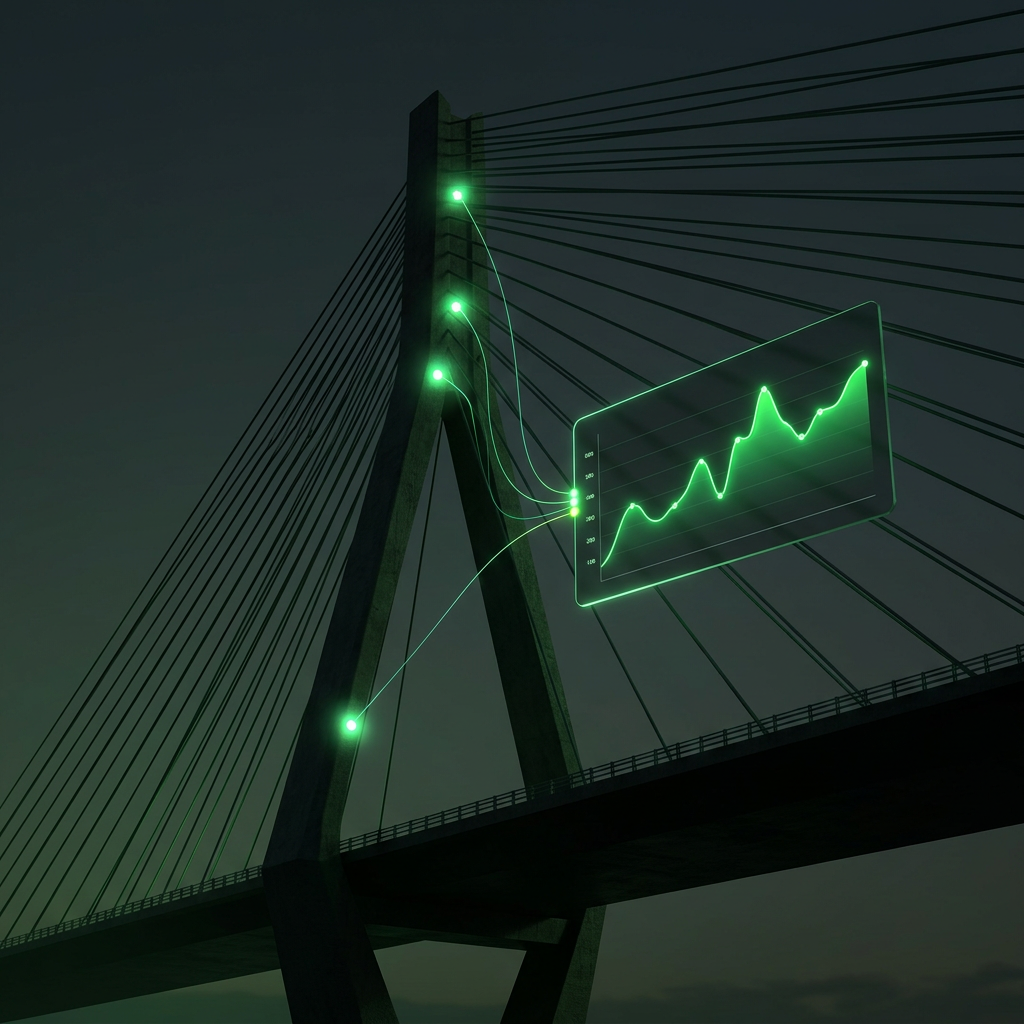
The collapse of the Majerhat Bridge in 2018 and the subsequent audit of over 160,000 structures under the Indian Bridge Management System (IBMS) underscored a critical shift in national infrastructure policy. For NHAI consultants and EPC contractors, bridge safety monitoring for NHAI projects is no longer a discretionary safety measure but a regulatory mandate driven by MORTH circulars and IRC guidelines. As traffic loads increase and environmental stressors accelerate carbonation and chloride ingress, the transition from visual inspection to automated Structural Health Monitoring (SHM) is essential for maintaining the serviceability limit state (SLS) of national highway assets.
Effective bridge safety monitoring for NHAI projects requires a deep understanding of structural mechanics, sensor physics, and the specific compliance frameworks established by the Indian Roads Congress (IRC). This guide examines the technical requirements for instrumentation, data acquisition, and long-term health assessment for major bridges, including cable-stayed and extra-dosed structures.
Regulatory Framework and IRC Compliance
The technical foundation for bridge monitoring in India is governed by several key documents. IRC:SP:35 (Guidelines for Inspection and Maintenance of Bridges) and IRC:114 (Guidelines for Seismic Design of Road Bridges) provide the baseline for structural evaluation. Furthermore, IRC:112 for concrete bridges and IRC:24 for steel structures dictate the permissible stress levels and deflection limits that monitoring systems must track. For NHAI projects, compliance with the MORTH Specifications for Road and Bridge Works (5th Revision) is mandatory, particularly Section 2700 which covers the repair and rehabilitation of structures.
Geolook aligns its monitoring protocols with these standards, ensuring that every sensor deployed—whether measuring strain in micro-strain or vibration in mm/s2—contributes to a verifiable record of structural integrity. Our strategic advisor, Sandeep Gupta (IRSE), brings extensive expertise in cable-stayed and extra-dosed bridge engineering, ensuring that monitoring regimes for complex long-span structures meet the highest technical benchmarks required by NHAI and Indian Railways.
Essential Sensors for National Highway Bridge Monitoring
A comprehensive SHM system for a major bridge involves a multi-modal sensor array designed to capture both global and local structural responses. The primary physical parameters include:
- Strain Measurement: Vibrating wire strain gauges or foil-type gauges are used to monitor live load stresses and long-term creep/shrinkage. These are typically calibrated to measure changes in micro-strain with a resolution of 1.0 με.
- Deflection and Displacement: Linear Variable Differential Transformers (LVDTs) or laser-based systems track vertical and horizontal movements at expansion joints and bearings.
- Tilt and Inclination: High-precision MEMS-based tiltmeters monitor the verticality of piers and the rotation of pylon heads, critical for extra-dosed bridges.
- Vibration and Acceleration: Force-balance accelerometers measure the dynamic response of the deck under traffic or seismic loads, allowing for the calculation of natural frequencies and damping ratios.
- Environmental Factors: Anemometers, temperature sensors, and humidity probes correlate structural movements with thermal expansion and wind loading.
For specialized applications, such as those involving bridge health monitoring accessories, Geolook has supplied critical components to institutions like IIT-Mandi, supporting advanced research into structural response under Himalayan seismic conditions.
Data Acquisition and Wireless Integration
Modern NHAI projects increasingly favor wireless data acquisition systems (DAQ) to reduce the complexity and vulnerability of long cable runs. Wireless DAQs, such as those deployed by Neeladari Buildtech for their bridge health monitoring systems, utilize low-power wide-area network (LPWAN) protocols to transmit data from remote sensor nodes to a central gateway. This is particularly advantageous for long-span bridges where cable attenuation and lightning strikes pose significant risks to signal integrity.
The DAQ must be capable of high-frequency sampling, often exceeding 100 Hz for dynamic analysis, while maintaining low-noise performance. For static measurements like pier settlement or thermal expansion, lower sampling rates are sufficient. The integration of industrial-grade DAQs ensures that data is timestamped and synchronized across the entire structure, a prerequisite for accurate modal analysis.
Digital Twins and VR Visualization in SHM
The evolution of bridge safety monitoring for NHAI projects now includes the use of 3D Digital Twins and Virtual Reality (VR). Working with RITES Ltd, Geolook has developed 3D Digital Twin and VR Visualization Platforms for Bridge Health Monitoring Systems. These platforms allow engineers to visualize sensor data within a spatially accurate 3D model of the bridge. By overlaying real-time stress and displacement data onto the digital twin, maintenance teams can identify localized hotspots and predict potential failure modes before they manifest as visible cracks.
This technology is also utilized for training. In collaboration with MIT-WPU, Geolook delivered an immersive VR-based SHM training platform for BRO Officers at the College of Military Education, Pune. Such tools are vital for NHAI consultants to conduct virtual inspections and simulate various load scenarios, enhancing the decision-making process for structural interventions.
Comparison of Bridge Monitoring Methodologies
The following table compares the technical parameters of traditional inspection versus automated SHM for NHAI bridge projects.
| Parameter | Visual Inspection (IRC:SP:35) | Automated SHM (Geolook) |
|---|---|---|
| Data Frequency | Bi-annual or Annual | Real-time (up to 200 Hz) |
| Measurement Type | Qualitative/Subjective | Quantitative (kN, MPa, mm) |
| Detection Capability | Surface defects only | Sub-surface and structural changes |
| Labor Requirement | High (Manual access) | Low (Remote monitoring) |
| Predictive Analytics | Not possible | AI-driven trend analysis |
| Compliance Record | Manual logbooks | Digital, tamper-proof database |
Best Practices for NHAI Bridge Instrumentation
To ensure the longevity and reliability of a bridge monitoring system, several best practices must be observed during the design and installation phases:
- Sensor Redundancy: Critical nodes should have redundant sensors to prevent data gaps in the event of a component failure.
- Environmental Protection: All outdoor sensors and junction boxes must meet IP67 or IP68 ratings to withstand the Indian monsoon and high ambient temperatures.
- Baseline Calibration: Establish a clear baseline of structural behavior immediately after construction or rehabilitation to serve as a reference for all future data.
- Automated Alerting: Configure the SHM software to trigger multi-level alerts (Warning, Action, Emergency) based on predefined thresholds derived from IRC:112 or IRC:6 load calculations.
- Integration with IBMS: Ensure that the data format is compatible with the Indian Bridge Management System for seamless reporting to NHAI regional offices.
For more detailed technical insights, engineers can refer to our blog on bridge structural monitoring or explore our comparison of SHM sensor types.
Case Study: Strategic Bridge Monitoring Excellence
While Geolook has executed diverse projects such as the real-time SHM for the Ramban-Banihal NH-44 Tunnels in association with DRAIPL, our bridge-specific expertise is highlighted by our work with RITES and Neeladari Buildtech. By deploying wireless DAQs and 3D visualization platforms, we provide NHAI consultants with a comprehensive view of structural health. These systems are designed to handle the rigorous demands of national highway traffic, providing the data necessary to extend the service life of critical infrastructure while ensuring public safety.
Frequently Asked Questions
Q: What are the primary IRC codes for bridge safety monitoring?
A: The primary codes include IRC:SP:35 for inspection and maintenance, IRC:112 for concrete bridge design and limit state monitoring, and IRC:114 for seismic health assessment. These standards define the permissible limits for structural deformation, stress, and vibration that an automated monitoring system must track to ensure compliance with NHAI safety mandates.
Q: How does a Digital Twin enhance bridge health monitoring?
A: A Digital Twin is a high-fidelity virtual representation of the physical bridge that integrates real-time sensor data into a 3D structural model. This allows engineers to visualize stress distribution, identify localized fatigue, and run predictive simulations. It transforms raw data into actionable insights, facilitating proactive maintenance and reducing the risk of catastrophic structural failure.
Q: Why is wireless data acquisition preferred for NHAI bridge projects?
A: Wireless data acquisition eliminates the need for extensive cabling, which is prone to damage from environmental factors, lightning, and vandalism. It reduces installation time and costs while providing the flexibility to place sensors in hard-to-reach locations. Modern wireless protocols ensure high data integrity and low power consumption, making them ideal for long-term structural health monitoring.
Q: What physical units are typically monitored in bridge SHM?
A: Bridge SHM systems monitor several physical units including micro-strain (με) for stress analysis, millimeters (mm) for displacement and crack width, degrees or arc-seconds for tilt, and millimeters per second squared (mm/s2) or 'g' for acceleration. These quantitative measurements allow engineers to verify that the bridge is operating within its designed serviceability and ultimate limit states.
Q: What is the role of an extra-dosed bridge specialist in SHM?
A: An extra-dosed bridge specialist, such as our advisor Sandeep Gupta (IRSE), provides the domain expertise required to design monitoring regimes for complex cable-supported structures. They define critical sensor locations for stay cables, pylons, and deck segments, ensuring that the SHM system captures the unique load-sharing behavior between the cables and the girder as per IRC:112 guidelines.
Project inquiry
Talk to a Geolook™ specialist
Share your monitoring requirement and our team will help identify the right next step.
By submitting, you agree that Geolook™ may contact you about this inquiry. Your details are not added to a marketing list.