VW vs MEMS Sensors: Which Technology for Your Monitoring Project?
In August 2018, the Nandigama overpass on NH-65 in Andhra Pradesh collapsed during construction, killing workers and triggering a CBI inquiry into structural oversight failures. Post-incident reviews consistently pointed to the absence of real-time instrumentation capable of detecting early deformation signals. The sensor technology chosen for a monitoring programme — vibrating wire or MEMS — is not a procurement afterthought; it directly determines what you can detect, how early, and under what site conditions. This guide resolves the vw vs mems sensors question with a structured, application-driven framework for consulting engineers and procurement leads working on Indian infrastructure projects.
For a broader orientation on instrumentation categories before diving into this comparison, see our overview of SHM sensor types used in structural health monitoring.
Key Takeaways
- Vibrating wire (VW) sensors excel in long-term static monitoring — strain, pore pressure, load — where drift over months or years must remain below ±0.1% full scale.
- MEMS sensors are preferred for dynamic monitoring — vibration, modal analysis, seismic response — where frequency response up to several hundred Hz and low per-unit cost matter more than multi-year stability.
- Neither technology is universally superior; the correct choice depends on measurand type, required frequency response, cable run length, power budget, and project duration.
- Indian Standard IS 1893 (seismic) and IRC SP-35 (bridge instrumentation) implicitly favour different sensor classes depending on the monitoring objective.
- Hybrid deployments — VW for quasi-static parameters, MEMS for dynamic response — are increasingly standard on complex structures such as cable-stayed bridges and high-rise cores.
What Are VW and MEMS Sensors?
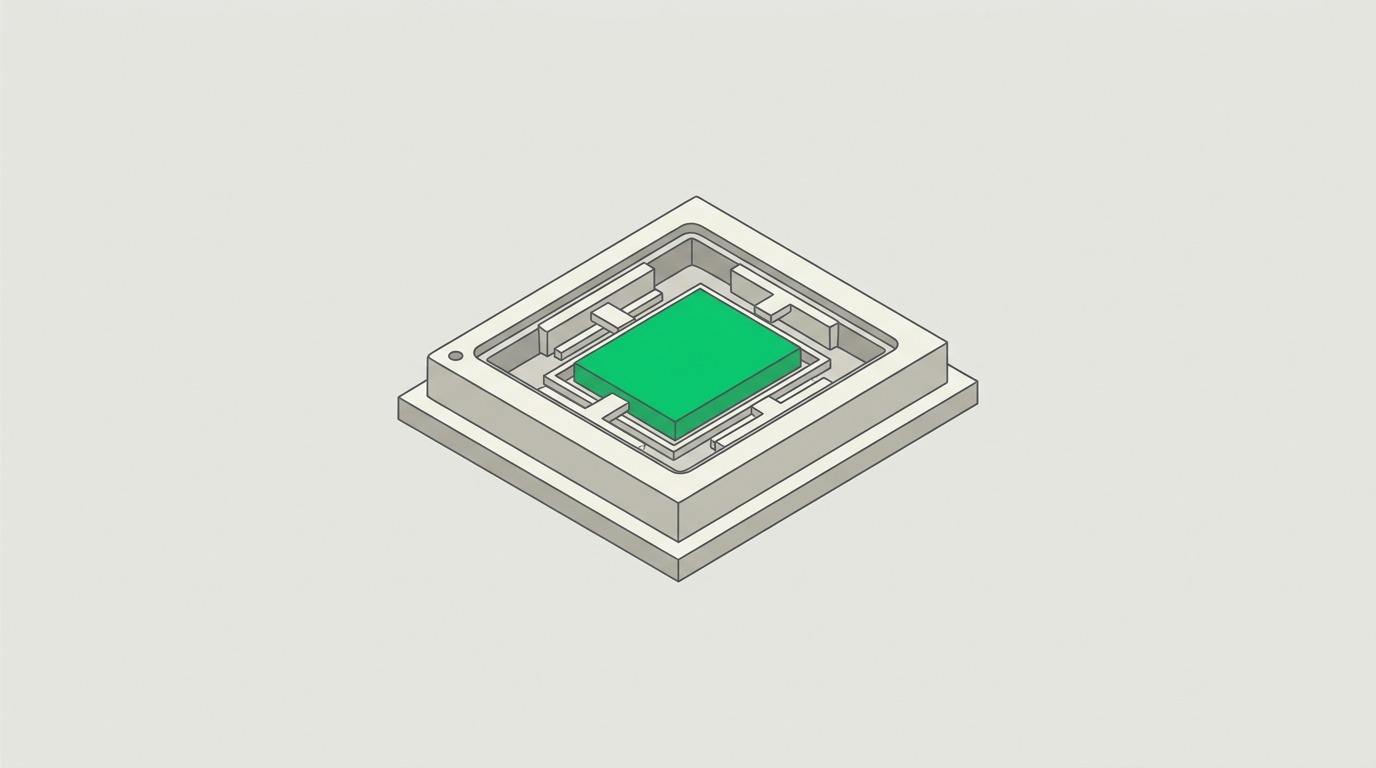
A vibrating wire sensor measures the resonant frequency of a tensioned steel wire whose frequency shifts proportionally with the physical parameter — strain, pressure, displacement, or load — applied to it, converting that frequency to an engineering unit via a calibration polynomial. MEMS (Micro-Electro-Mechanical Systems) sensors use microfabricated silicon structures — typically a proof mass suspended on etched flexures — whose capacitive or piezoresistive output changes with acceleration, tilt, or pressure.
Both sensor families have decades of field validation. The engineering question is not which is better in the abstract, but which measurand, bandwidth, and environmental profile each serves. Understanding this distinction is the foundation of any credible sensor comparison SHM exercise.
For a deeper look at how these and other sensor families are deployed across geotechnical and structural applications, the geotechnical sensor comparison guide covers piezometers, inclinometers, load cells, and extensometers in the same framework.
Physical Principles and Signal Characteristics
Vibrating wire operating principle. The wire is excited by a coil, and the return frequency — typically in the range of 400 Hz to 6,000 Hz depending on wire tension — is measured by a period-counting readout. Because frequency is an inherently noise-immune signal, VW sensors tolerate long cable runs (up to several hundred metres) with negligible signal degradation. Thermal compensation is achieved via an embedded thermistor, and the output is reported in digits (Hz²) or converted to micro-strain (µε), kPa, or kN depending on sensor type.
MEMS operating principle. A MEMS accelerometer or inclinometer produces an analogue voltage or digital output (I²C, SPI, or RS-485) proportional to acceleration (m/s² or mm/s²) or tilt (degrees or mrad). High-end MEMS accelerometers achieve noise floors below 1 µg/√Hz and frequency responses from DC to 1,000 Hz or beyond, making them suitable for modal testing, ambient vibration surveys, and seismic event capture. However, MEMS sensors — particularly lower-cost MEMS inclinometers — are susceptible to zero-offset drift over time, which can accumulate to several millidegrees per year without periodic recalibration.
Signal conditioning. VW readouts require a frequency counter or period-averaging circuit; MEMS sensors require analogue-to-digital conversion or a digital interface driver. Modern dataloggers handle both, but the sampling rate ceiling differs: VW systems are typically polled at 1 Hz to 1/60 Hz for quasi-static monitoring, while MEMS systems can stream at 200 Hz or higher for dynamic capture.
VW vs MEMS Sensors: Head-to-Head Technical Comparison
The table below summarises the principal engineering parameters for the vibrating wire vs MEMS decision. Values reflect published sensor specifications and field performance data from instrumentation literature; project-specific performance will vary with installation quality and environmental conditions.
| Parameter | Vibrating Wire (VW) | MEMS |
|---|---|---|
| Primary measurands | Strain (µε), pore pressure (kPa), load (kN), displacement (mm), tilt (°) | Acceleration (m/s², mm/s²), tilt (°, mrad), pressure (kPa), strain (µε) |
| Typical resolution | 0.025% full scale (strain); 0.035 kPa (piezometer) | 1 µg–10 µg (accelerometer); 0.001°–0.01° (inclinometer) |
| Long-term drift | Very low; ±0.1% full scale over 10+ years typical | Moderate to significant; zero-offset drift 0.01°–0.1°/year for MEMS tilt |
| Frequency response | Quasi-static; effective bandwidth <1 Hz | DC to 1,000 Hz+ (accelerometer); DC to ~10 Hz (MEMS tilt) |
| Cable run tolerance | Excellent; 500 m+ with standard twisted-pair shielded cable | Limited for analogue output; digital MEMS (RS-485) tolerates longer runs |
| Power consumption | Very low; µW during sleep, mW during excitation | Low to moderate; continuous digital MEMS draws 5–50 mW |
| Temperature sensitivity | Compensated via embedded thermistor; ±0.5°C accuracy typical | Higher sensitivity; requires factory or field temperature compensation |
| Dynamic event capture | Not suitable; cannot capture seismic or impact events | Designed for dynamic events; captures seismic waveforms per IS 1893 requirements |
| Unit cost (indicative) | Higher per sensor; lower system cost for small channel counts | Lower per sensor; cost advantage grows with channel count |
| Typical project lifespan | 10–25 years embedded (dam, tunnel, bridge) | 3–10 years typical; longer for industrial-grade MEMS |
This structured comparison is the core of any rigorous vw vs mems sensors evaluation. Procurement teams should map each row against their project's monitoring objectives before specifying sensor type.
Application-Specific Decision Framework
Bridges. IRC SP-35 recommends continuous monitoring of strain, deflection, and bearing load on major bridges. For long-term strain and load monitoring on girders, bearings, and cables, VW strain gauges and load cells are the standard choice because embedded sensors must remain stable for the bridge's service life — often 50–100 years. Dynamic parameters — natural frequency, damping ratio, modal shapes — require MEMS accelerometers. At IIT-Mandi, Geolook supplied bridge health monitoring accessories for a research programme where both sensor families were integrated to capture quasi-static and dynamic response simultaneously. For cable-stayed and extra-dosed bridges, where cable force monitoring (VW load cells) and deck vibration monitoring (MEMS accelerometers) are both mandatory, hybrid deployment is the only technically defensible approach.
High-rise buildings and deep excavations. Settlement monitoring during construction — a critical requirement under IS 1892 for foundations — is dominated by VW piezometers and VW settlement cells because pore pressure and total stress readings must remain stable over multi-year construction programmes. At the L&T Constructions Noida Realty Green, Sector-120 project, Geolook deployed integrated sensor analytics for high-rise monitoring where settlement and structural response data were captured continuously. MEMS tilt sensors are increasingly used on high-rise cores for real-time sway monitoring, provided the drift specification is verified against the monitoring period.
Tunnels. Convergence monitoring in NATM tunnels uses VW strain gauges embedded in shotcrete and VW load cells on rock bolts — both require long-term stability in a high-humidity, vibration-prone environment. MEMS accelerometers are used for blast vibration monitoring during construction, where peak particle velocity (PPV) in mm/s must be recorded per DGMS guidelines.
Dams and embankments. The Dam Safety Act 2021 and CWC guidelines mandate continuous pore pressure and seepage monitoring. VW piezometers embedded in dam bodies are the industry standard for this application; their long-term stability and immunity to cable-induced noise over runs of 200–500 m make MEMS pressure sensors impractical for most dam instrumentation schemes.
Seismic and dynamic monitoring. IS 1893 Part 1 (2016) defines seismic zones and response spectra that govern structural design. Post-earthquake structural assessment requires strong-motion accelerometers — a MEMS domain — capable of recording acceleration time-histories at 200 Hz or higher. VW sensors cannot serve this function.
For a comprehensive view of how these sensor choices map to transport infrastructure projects, see our structural monitoring solutions for transport infrastructure.
Environmental and Installation Considerations
Temperature range. VW sensors are specified for operating temperatures from −20°C to +80°C in most catalogue variants, with thermistor-compensated output. MEMS sensors have similar temperature ranges but exhibit larger zero-offset shifts with temperature cycling, which is significant in outdoor Indian environments where diurnal temperature swings can exceed 20°C.
Humidity and ingress protection. Both sensor families are available in IP67 or IP68 variants for submersible applications. VW piezometers are routinely installed in boreholes at depths of 20–50 m. MEMS sensors in outdoor enclosures require careful attention to connector sealing, as moisture ingress into the analogue signal path introduces noise floors that can mask small structural signals.
Electromagnetic interference (EMI). VW sensors transmit a frequency signal, which is inherently resistant to EMI on cable runs. MEMS analogue voltage outputs are susceptible to EMI from power lines, generators, and welding equipment common on active construction sites. Digital MEMS (RS-485 Modbus) largely eliminates this vulnerability.
Installation permanence. VW sensors embedded in concrete or grouted into boreholes are essentially permanent — removal is destructive. MEMS sensors mounted on structural surfaces can be repositioned, making them preferable for temporary monitoring campaigns or phased construction monitoring where sensor locations change with construction sequence.
To understand how datalogger selection interacts with sensor type choice, see our guide to structural monitoring dataloggers and data acquisition systems.
Hybrid Sensor Deployments: When to Use Both
The most technically complete monitoring systems on complex Indian infrastructure projects deploy VW and MEMS sensors in complementary roles rather than treating the choice as binary. This is not over-engineering; it reflects the reality that a single sensor technology cannot simultaneously satisfy the requirements for long-term quasi-static stability and high-frequency dynamic capture.
A representative hybrid architecture for a major bridge might include: VW strain gauges (resolution ±1 µε) on critical girder sections for long-term load redistribution tracking; VW load cells (resolution ±0.1 kN) on bearing assemblies; MEMS accelerometers (noise floor <5 µg/√Hz, bandwidth 0.1–200 Hz) at deck mid-span and pier tops for ambient vibration-based modal analysis; and MEMS tilt sensors (resolution 0.001°) on pier caps for differential settlement detection. RITES Ltd engaged Geolook for a 3D Digital Twin and VR Visualisation Platform for Bridge Health Monitoring that integrates multi-sensor data streams — a deployment where the data architecture must accommodate both the slow-polling VW channels and the high-rate MEMS channels within a unified dashboard.
For a full taxonomy of sensor technologies deployed in Indian SHM practice, the article on comparing sensor technologies for structural health monitoring india provides application-mapped guidance across bridge, tunnel, dam, and building asset classes.
Procurement Checklist: Specifying the Right Sensor
Procurement leads and consulting engineers specifying sensors for Indian infrastructure projects should work through the following decision criteria before issuing a technical specification or bill of quantities:
- Define the measurand and required bandwidth. If the parameter is strain, pressure, load, or displacement and the monitoring period exceeds 12 months, VW is the default. If the parameter is acceleration, vibration, or dynamic tilt, MEMS is the default.
- Specify the required resolution and accuracy. State values in engineering units — µε, kPa, mm/s², degrees — not as percentage of a competitor's datasheet. Reference IS 1893, IRC SP-35, or CWC guidelines as the basis for accuracy requirements where applicable.
- Assess cable run length and signal conditioning. Runs exceeding 100 m with analogue MEMS output require active signal conditioning or conversion to digital protocol. VW runs of 300–500 m are routine with standard shielded cable.
- Confirm the monitoring duration. For embedded sensors with a design life exceeding 5 years, specify VW for quasi-static parameters and industrial-grade MEMS (not consumer-grade) for dynamic parameters. Request long-term drift specifications in writing.
- Evaluate the datalogger compatibility. Confirm that the proposed datalogger supports both VW frequency measurement (Hz² or digit output) and MEMS digital or analogue input at the required sampling rate. Mixed-technology deployments require a datalogger with configurable channel types.
- Request calibration certificates traceable to NABL-accredited laboratories. This is a minimum requirement for sensors used in statutory monitoring under the Dam Safety Act 2021 or for bridge monitoring under IRC SP-35.
For a complete view of sensor options available for Indian SHM projects, browse the structural and geotechnical sensors for SHM projects catalogue.
Frequently Asked Questions
Q: What is the main difference between VW and MEMS sensors in structural health monitoring?
A: Vibrating wire sensors measure quasi-static parameters — strain, pressure, load — with very low long-term drift, making them suitable for embedded, multi-year monitoring. MEMS sensors measure dynamic parameters — acceleration, vibration, tilt — with high frequency response up to several hundred Hz. The choice depends on whether the monitoring objective is long-term static stability or dynamic event capture, not on one technology being superior overall.
Q: Can MEMS sensors replace VW piezometers for dam pore pressure monitoring?
A: MEMS sensors are generally not recommended as direct replacements for VW piezometers in dam pore pressure monitoring. VW piezometers offer long-term stability over 10–25 years with drift typically below ±0.1% full scale, which is required under CWC guidelines and the Dam Safety Act 2021. MEMS pressure sensors are suitable for shorter-duration or surface-mounted applications where periodic recalibration is feasible.
Q: What sampling rate is required for seismic monitoring under IS 1893?
A: IS 1893 Part 1 (2016) governs seismic design loads but does not prescribe a specific sampling rate for monitoring instruments. Strong-motion recording practice in India typically uses 100–200 samples per second to capture the frequency content of earthquake ground motion up to 50–100 Hz. This bandwidth requirement is met by MEMS accelerometers and cannot be met by VW sensors, which are limited to quasi-static polling rates.
Q: How do I specify long-term drift for MEMS tilt sensors in a procurement document?
A: Specify MEMS tilt sensor drift as a maximum zero-offset change in millidegrees per year at the operating temperature range of the site, and require the manufacturer to provide test data supporting the stated value. For monitoring periods exceeding 24 months, require a field recalibration protocol. Consumer-grade MEMS inclinometers may drift 0.05°–0.1° per year; industrial-grade units should be specified at less than 0.01° per year for critical structural applications.
Q: Is a hybrid VW and MEMS deployment cost-effective for a typical Indian bridge project?
A: A hybrid deployment is cost-effective when the bridge requires both long-term load and strain tracking — served by VW sensors — and periodic or continuous dynamic assessment for modal analysis or seismic response — served by MEMS accelerometers. The incremental cost of adding MEMS accelerometers to an existing VW-based system is modest relative to the additional diagnostic capability, particularly for bridges on NH corridors where IRC SP-35 recommends comprehensive instrumentation.
Get sensor recommendation
Selecting between VW and MEMS sensors — or specifying a hybrid deployment — requires matching sensor physics to monitoring objectives, site conditions, and project duration. Generic specifications lead to either over-engineered systems with unnecessary cost or under-specified systems that miss critical signals.
Geolook's instrumentation engineers work with consulting engineers and procurement teams to develop sensor specifications grounded in Indian Standard requirements, site-specific environmental conditions, and datalogger compatibility. Whether your project involves bridge health monitoring under IRC SP-35, deep excavation pore pressure tracking under IS 1892, or seismic response monitoring under IS 1893, the sensor selection process should begin with a structured technical review — not a catalogue.
Contact Geolook for a project-specific sensor recommendation and receive a written technical justification for the proposed sensor mix, including resolution, drift, and bandwidth specifications referenced to applicable Indian Standards.
Project inquiry
Talk to a Geolook™ specialist
Share your monitoring requirement and our team will help identify the right next step.
By submitting, you agree that Geolook™ may contact you about this inquiry. Your details are not added to a marketing list.