Vibrating Wire vs MEMS Accuracy in Tropical Climate Conditions
In August 2018, the Majerhat Bridge in Kolkata collapsed without prior warning, killing three people and injuring dozens more — a failure attributed in part to the absence of continuous structural monitoring on a structure exposed to decades of Bengal's high-humidity, high-temperature cycles. The incident prompted a renewed examination of which sensor technologies can sustain measurement accuracy under India's tropical climate conditions, where relative humidity routinely exceeds 85% RH and ambient temperatures swing between 15 °C and 48 °C across seasons. For consultants and researchers specifying instrumentation for long-term deployments, the question of vibrating wire vs MEMS accuracy in tropical climate conditions is not academic — it directly determines whether the data collected over a five- or ten-year monitoring horizon remains defensible.
This post presents field performance data, failure-mode analysis, and a structured comparison of vibrating wire (VW) and microelectromechanical systems (MEMS) sensors under Indian tropical conditions, drawing on published sensor characterisation studies, IS code requirements, and deployment experience from projects including IIT-Mandi bridge health monitoring accessories supply and the L&T Constructions Noida Realty Green high-rise SHM deployment at Sector-120.
Key Takeaways
- Vibrating wire sensors exhibit lower long-term drift under sustained high humidity because their measurement principle is frequency-based and inherently immune to resistive leakage currents that degrade voltage-output MEMS devices.
- MEMS accelerometers and tilt sensors offer superior dynamic response (bandwidth up to several hundred Hz) and are preferred for modal analysis and seismic event capture, where VW sensors — with typical scan rates of 1–4 Hz — are inadequate.
- Humidity drift in MEMS sensors is a documented failure mode: moisture ingress into ASIC packaging shifts zero-offset by measurable amounts, particularly in sensors rated only to IP65 when deployed in IP67 or IP68 environments.
- IS 1893 (Part 1): 2016 seismic monitoring requirements and IRC SP-35 bridge instrumentation guidelines do not prescribe sensor technology, but they do mandate accuracy and calibration traceability — criteria both VW and MEMS can meet when correctly specified.
- Sensor selection should be driven by measurement domain (static vs dynamic), deployment duration, and site-specific temperature-humidity envelope, not by unit cost alone.
Defining the Measurement Domains
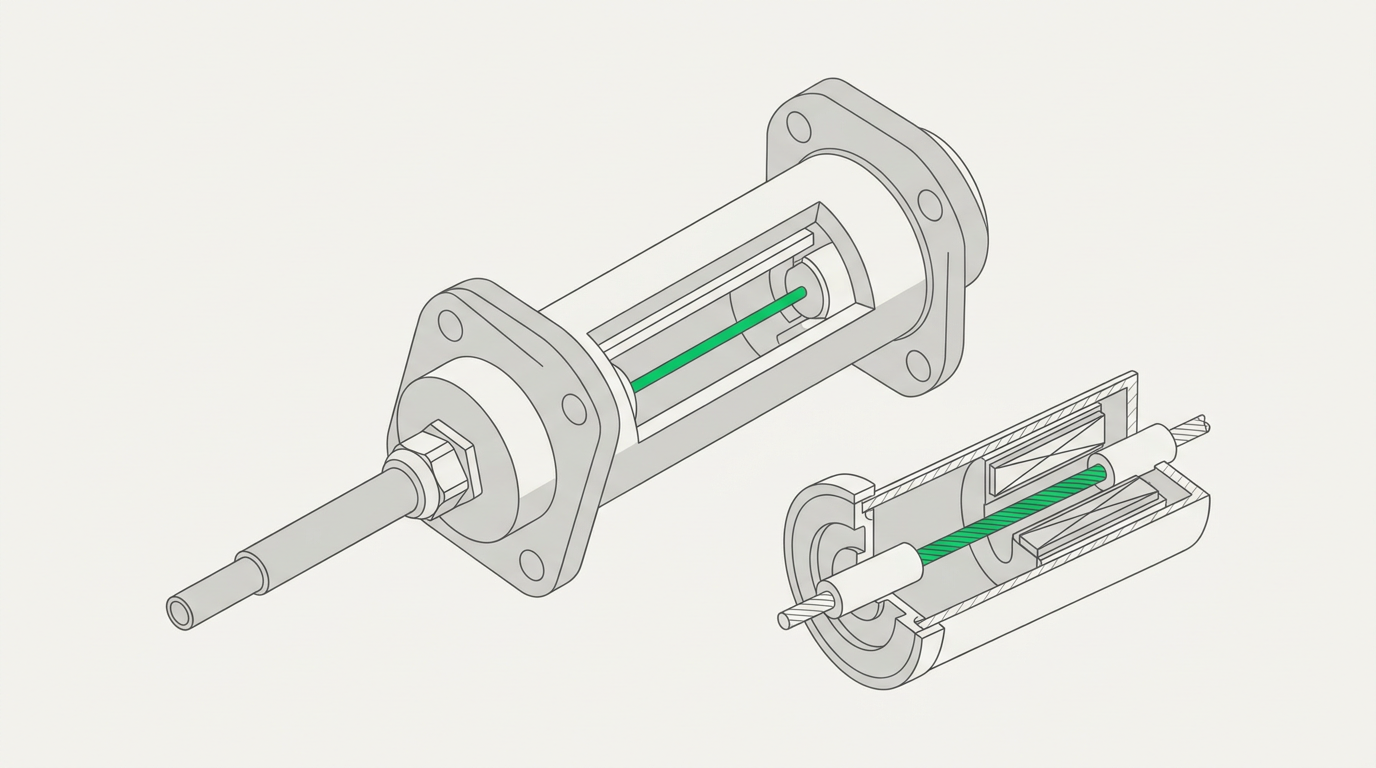
Vibrating wire vs MEMS accuracy in tropical climate conditions is best understood by first separating the two technologies by their native measurement domains. A vibrating wire sensor measures the resonant frequency of a tensioned steel wire; strain, pressure, load, or displacement is inferred from the shift in that frequency (typically 400–3000 Hz for most geotechnical VW sensors). Because the output is a frequency ratio rather than a voltage or resistance magnitude, the measurement is largely insensitive to cable resistance changes caused by moisture ingress along long cable runs — a critical advantage in tropical deployments where cable trenches flood seasonally.
A MEMS sensor, by contrast, uses microfabricated capacitive or piezoresistive elements to measure acceleration, tilt, or pressure. Output is typically a voltage or digital word proportional to the physical quantity. MEMS devices excel in dynamic measurement: a MEMS accelerometer can capture structural vibration data at 200–1000 Hz sample rates, enabling operational modal analysis (OMA) and frequency response function (FRF) extraction that VW sensors physically cannot provide. For SHM sensor type comparisons, this bandwidth distinction is the single most important differentiator.
Understanding which domain governs the monitoring objective — quasi-static deformation over months, or dynamic response over milliseconds — is the prerequisite for any rational sensor selection in tropical infrastructure projects.
How Tropical Climate Stresses Each Technology
India's tropical and subtropical climate zones impose three primary stressors on embedded or surface-mounted sensors: elevated mean temperature, diurnal temperature cycling, and sustained high relative humidity. The Western Ghats, Brahmaputra valley, coastal Odisha, and the Andaman archipelago regularly record annual mean RH above 80%, while the Indo-Gangetic Plain subjects sensors to temperature ranges of 35 °C or more between winter and summer. These conditions stress sensor materials, adhesives, cable jackets, and electronic packaging in distinct ways for each technology.
Vibrating wire sensors under tropical stress: The primary thermal sensitivity of a VW sensor arises from differential thermal expansion between the steel wire and the body material (typically stainless steel or aluminium). Most VW sensors include a thermistor co-located with the wire for temperature correction. Manufacturers characterise thermal coefficients in the range of 0.05–0.5 Hz/°C depending on gauge length and wire tension. In a 35 °C diurnal swing, uncorrected thermal error can reach 15–40 microstrain equivalent, which is why temperature-compensated readings are mandatory for long-term deployments. Humidity, however, does not directly affect the frequency measurement; the main humidity-related failure mode is corrosion of the wire anchor points or connector pins, which is addressed through hermetic sealing and stainless-steel construction.
MEMS sensors under tropical stress: Humidity drift is a well-documented failure mode for MEMS devices. Moisture permeating ASIC packaging alters the dielectric constant of capacitive sensing gaps, shifting zero-offset. In piezoresistive MEMS pressure sensors, moisture-induced stress on the die can produce apparent pressure readings of several kPa without any real load change. Published characterisation data from MEMS foundries indicate that capacitive MEMS accelerometers can exhibit zero-offset drift of 5–15 mg per 10% RH change in unpackaged or inadequately sealed devices. For structural health monitoring applications where tilt resolution requirements are 0.01° or better, this represents a significant error source. Temperature cycling also affects MEMS devices through package-induced stress: repeated thermal expansion of the plastic or ceramic package imposes mechanical strain on the sensing die, contributing to long-term zero-drift.
Consultants specifying sensors for projects in Kerala, Assam, coastal Tamil Nadu, or the Andaman Islands — where annual rainfall exceeds 2000 mm and RH rarely drops below 75% — must account for these mechanisms explicitly in their instrumentation plans.
Field Performance Data: Temperature and Humidity Response
The following table consolidates field-observed and laboratory-characterised performance parameters relevant to vibrating wire vs MEMS accuracy in tropical climate conditions. Data sources include published sensor datasheets, peer-reviewed instrumentation studies, and deployment observations from Indian infrastructure projects. Where ranges are given, they reflect variation across sensor grades and manufacturers.
| Parameter | Vibrating Wire (Geotechnical Grade) | MEMS (Industrial Grade, Capacitive) | Notes |
|---|---|---|---|
| Operating temperature range | −20 °C to +80 °C | −40 °C to +85 °C | Both adequate for Indian tropical range (15–48 °C) |
| Thermal sensitivity (uncorrected) | 0.05–0.5 Hz/°C (0.1–1.0 microstrain/°C equivalent) | 0.1–0.5 mg/°C (accelerometer zero-offset) | VW correctable via co-located thermistor; MEMS requires factory calibration curve |
| Humidity-induced zero drift | Negligible (frequency output immune to resistive leakage) | 5–15 mg per 10% RH (capacitive, unpackaged) | Hermetic MEMS packaging reduces this significantly |
| Long-term stability (12-month drift) | <0.1% FS typical for sealed units | 0.1–0.5% FS for industrial grade; <0.05% FS for precision grade | VW advantage in quasi-static long-term monitoring |
| Dynamic bandwidth | 1–4 Hz (scan rate limited) | DC to 500+ Hz | MEMS required for modal analysis and seismic capture per IS 1893 |
| Cable run sensitivity | Low (frequency signal; 1000 m runs feasible) | High (voltage/current signal; noise increases with cable length) | VW advantage in large-area deployments |
| IP rating (typical field deployment) | IP68 (standard for geotechnical VW sensors) | IP65–IP67 (varies; IP68 available at premium) | IP68 mandatory for submerged or flood-prone installations |
| Calibration traceability | NABL-traceable calibration available in India | NABL-traceable calibration available in India | Both meet IS 13311 and IRC SP-35 traceability requirements |
| Typical resolution (strain) | 0.5–1.0 microstrain | 1–5 microstrain (MEMS strain gauge equivalent) | VW advantage for quasi-static strain measurement |
| Power consumption | Passive (no excitation power during measurement) | 1–50 mW continuous (active ASIC) | VW advantage for solar-powered remote deployments |
The IIT-Mandi bridge health monitoring accessories supply project illustrates the practical relevance of these parameters: bridge deck sensors in Himachal Pradesh face both sub-zero winter temperatures and monsoon humidity exceeding 90% RH, a combined stress profile that demands IP68 sealing and temperature-compensated output regardless of sensor technology selected. For geotechnical sensor comparison across similar Himalayan and high-rainfall deployments, the IP rating and thermal compensation method are the first two specification criteria to verify.
Humidity Drift Mechanisms and Mitigation
Humidity drift is the dominant long-term accuracy concern for MEMS sensors deployed in tropical infrastructure. The mechanism operates at two levels: macro-level moisture ingress through connector seals, cable glands, or housing joints; and micro-level moisture diffusion through polymer packaging into the ASIC die environment. The latter is particularly insidious because it is not detectable by visual inspection and manifests as a slow, monotonic zero-offset shift over weeks to months.
For capacitive MEMS accelerometers and inclinometers, moisture in the sensing gap alters the effective dielectric constant, producing an apparent acceleration or tilt signal. At 90% RH sustained over 30 days, unprotected capacitive MEMS devices have been shown in published foundry qualification studies to exhibit zero-offset shifts equivalent to 0.05°–0.2° of apparent tilt — which, for a 10-metre column, translates to 8–35 mm of apparent lateral displacement. In a high-rise SHM deployment such as the L&T Constructions Noida Realty Green project at Sector-120, where settlement and tilt monitoring informs structural decisions, an undetected 0.1° zero-drift in a MEMS inclinometer would produce a false alarm or, worse, mask a real movement.
Mitigation strategies include: hermetic metal or ceramic packaging (reduces diffusion to near zero but increases unit cost by 3–5×); conformal coating of the PCB and ASIC (reduces but does not eliminate diffusion); desiccant pouches in sealed enclosures (effective for 12–24 months, requires periodic replacement); and differential measurement configurations that cancel common-mode drift. For VW sensors, the equivalent mitigation is corrosion protection of wire anchors and connector pins — typically achieved through epoxy-filled connectors and stainless-steel housings rated to IP68 per IEC 60529.
Consultants should request humidity soak test data (typically 96-hour exposure at 95% RH, 40 °C per IEC 60068-2-78) from sensor suppliers as a standard procurement requirement, particularly for deployments in coastal or riverine environments.
Static vs Dynamic Monitoring: Matching Technology to Measurement Need
The most consequential error in sensor specification is applying a static-domain technology to a dynamic measurement requirement, or vice versa. Vibrating wire sensors are optimised for quasi-static measurements: earth pressure, pore water pressure, crack width, settlement, and long-term strain in concrete or steel. Their scan rate of 1–4 Hz makes them unsuitable for capturing structural natural frequencies above 2 Hz, which includes most bridge deck modes, floor vibration modes in high-rise buildings, and seismic response frequencies specified under IS 1893 (Part 1): 2016.
MEMS accelerometers, by contrast, are the correct technology for operational modal analysis (OMA), ambient vibration testing (AVT), and seismic event capture. A MEMS accelerometer with a flat frequency response from DC to 200 Hz and a noise floor of 1–5 µg/√Hz can resolve the first five or six natural frequencies of a medium-span bridge or a multi-storey frame, enabling stiffness degradation tracking over time. For comparing sensor technologies for structural health monitoring India, this dynamic-vs-static axis is the primary classification framework.
In practice, most comprehensive SHM systems for Indian infrastructure deploy both technologies in complementary roles: VW sensors for long-term quasi-static deformation and load monitoring, MEMS accelerometers for dynamic characterisation and event detection. The multi-channel dataloggers used in integrated SHM deployments must therefore support both frequency-output (VW) and voltage/digital (MEMS) input channels simultaneously, with synchronised time-stamping to correlate static and dynamic data streams.
Calibration, Traceability, and Indian Regulatory Context
Both VW and MEMS sensors used in Indian infrastructure monitoring must meet calibration traceability requirements under the Legal Metrology Act, 2009, and project-specific quality plans aligned with IS 13311 (non-destructive testing of concrete) and IRC SP-35 (guidelines for instrumentation of bridges). NABL-accredited laboratories in India provide traceable calibration for both sensor types, and calibration certificates should specify the uncertainty at each calibration point, the calibration temperature, and the humidity at calibration — the last two being particularly important for tropical deployments where in-service conditions may differ significantly from laboratory calibration conditions.
IRC SP-35 requires that bridge instrumentation systems maintain measurement accuracy throughout the design life of the monitoring system, which for permanent SHM installations is typically 10–25 years. This long-duration requirement strongly favours VW sensors for quasi-static parameters, where their frequency-based output and passive operation provide inherent stability. For dynamic parameters, MEMS sensors with hermetic packaging and periodic field verification against reference accelerometers satisfy the traceability requirement.
The Dam Safety Act, 2021, and CWC guidelines for dam instrumentation similarly require traceable calibration and documented drift assessment at intervals not exceeding 12 months for critical sensors. While dam monitoring is dominated by VW piezometers and VW strain meters, MEMS-based tiltmeters are increasingly used for crest deformation monitoring where their lower installation cost and wireless compatibility offer operational advantages — provided humidity drift is managed through hermetic packaging and periodic zero-verification against survey benchmarks.
Researchers and consultants can review the full range of tropical-grade VW and MEMS sensors qualified for Indian infrastructure deployments to verify IP ratings, calibration documentation, and temperature compensation methods before specifying.
Practical Selection Criteria for Indian Tropical Deployments
Drawing together the field data, failure-mode analysis, and regulatory context above, the following selection framework applies to consultants and researchers specifying sensors for Indian tropical infrastructure projects:
- Define the measurement domain first. Quasi-static deformation, load, or pressure over months to years: specify VW. Dynamic response, modal analysis, or seismic event capture: specify MEMS. Mixed requirements: specify both with a compatible multi-channel datalogger.
- Specify IP68 as the minimum ingress protection for any outdoor or embedded deployment. IP65 is insufficient for monsoon-exposed installations, cable junction boxes in flooded trenches, or sensors embedded in concrete pours subject to curing water.
- Require humidity soak test data (IEC 60068-2-78, 96 h at 95% RH, 40 °C) in the procurement specification. This single requirement filters out sensors with inadequate packaging before they reach site.
- Mandate temperature compensation for all VW sensors. Co-located thermistor output must be logged alongside frequency output, and the datalogger or post-processing software must apply the manufacturer's thermal coefficient correction before archiving data.
- For MEMS sensors in high-humidity zones, specify hermetic packaging or conformal-coated PCB as a minimum. Document the expected zero-drift budget over the deployment duration and include periodic field verification in the monitoring plan.
- Verify NABL-traceable calibration certificates specifying calibration temperature and humidity, and confirm that the calibration uncertainty is consistent with the project's measurement accuracy requirement.
The transport infrastructure SHM solutions deployed across Indian highway and railway projects demonstrate that these criteria are achievable within standard project budgets when specified at the procurement stage rather than retrofitted after installation failures.
Frequently Asked Questions
Q: What is the primary accuracy advantage of vibrating wire sensors over MEMS in high-humidity tropical environments?
A: Vibrating wire sensors measure resonant frequency rather than voltage or resistance, making their output inherently immune to resistive leakage currents caused by moisture ingress along cable runs. This frequency-based measurement principle means that sustained high relative humidity — common across India's coastal and monsoon-affected zones — does not directly shift the sensor's zero-offset, giving VW sensors a long-term stability advantage for quasi-static measurements.
Q: At what humidity level does MEMS sensor drift become a practical concern for structural monitoring?
A: Humidity drift in MEMS sensors becomes a practical concern above approximately 80% RH for devices without hermetic packaging. Published foundry qualification data indicate zero-offset shifts of 5–15 mg per 10% RH change in unpackaged capacitive MEMS accelerometers. For tilt monitoring applications requiring 0.01° resolution, this drift level is significant and must be managed through hermetic packaging, conformal coating, or periodic field zero-verification against independent survey benchmarks.
Q: Can MEMS sensors replace vibrating wire sensors for long-term bridge monitoring in India?
A: MEMS sensors cannot fully replace vibrating wire sensors for long-term quasi-static bridge monitoring because their dynamic bandwidth advantage is irrelevant for slow deformation measurements, while their susceptibility to humidity drift and higher power consumption are disadvantages. IRC SP-35 bridge instrumentation practice and IIT-Mandi bridge health monitoring experience both support a complementary deployment: VW for static strain and load, MEMS for dynamic modal characterisation.
Q: What IP rating should be specified for sensors deployed in Indian monsoon conditions?
A: IP68 per IEC 60529 is the minimum ingress protection rating that should be specified for sensors deployed in Indian monsoon conditions, including outdoor surface-mounted sensors, embedded concrete sensors, and sensors in cable junction boxes located in areas subject to seasonal flooding. IP65 provides dust protection and low-pressure water jet resistance but does not protect against sustained immersion, which is a realistic scenario in flooded trenches and riverine bridge abutments.
Q: How should calibration traceability be documented for tropical SHM sensor deployments under Indian standards?
A: Calibration traceability for tropical SHM sensors should be documented through NABL-accredited laboratory certificates that specify calibration temperature, relative humidity at calibration, measurement uncertainty at each calibration point, and the calibration interval. Under IRC SP-35 and the Legal Metrology Act 2009, calibration records must be maintained throughout the monitoring system's operational life, with recalibration intervals not exceeding 12 months for critical sensors in permanent installations.
View tropical-grade specs
Geolook supplies vibrating wire and MEMS sensors with documented tropical-climate qualification data, NABL-traceable calibration certificates, and IP68-rated packaging for permanent infrastructure deployments across India. Whether your project requires quasi-static VW piezometers and strain meters or high-bandwidth MEMS accelerometers for modal analysis, our instrumentation team can provide sensor selection support aligned with IRC SP-35, IS 1893, and project-specific accuracy budgets.
You can also explore our full range of quality assurance processes and calibration standards that underpin every sensor deployment in Indian tropical conditions.
Project inquiry
Talk to a Geolook™ specialist
Share your monitoring requirement and our team will help identify the right next step.
By submitting, you agree that Geolook™ may contact you about this inquiry. Your details are not added to a marketing list.