Structural Health Monitoring Explained: What, How & Why
The collapse of the Morandi Bridge in Genoa, Italy, in 2018, which resulted in 43 fatalities, underscores the critical importance of proactive infrastructure monitoring. In India, ensuring the safety and longevity of our bridges, tunnels, and buildings requires advanced techniques like structural health monitoring. This guide explains what structural health monitoring is, how SHM systems work, and why they are essential for modern infrastructure management.
Key Takeaways
- Structural health monitoring (SHM) provides real-time data on the condition of structures, enabling proactive maintenance and preventing catastrophic failures.
- An SHM system typically involves sensors, data acquisition, data transmission, data processing, and structural assessment.
- Implementing SHM can lead to improved safety, reduced maintenance costs, and extended lifespan of infrastructure.
- Digital twins, enhanced by structural monitoring data, offer advanced visualization and analysis capabilities for infrastructure management.
- Indian standards and guidelines, such as those from IRC and IS codes, emphasize the importance of structural monitoring for bridges and other critical infrastructure.
What is Structural Health Monitoring?
Structural health monitoring (SHM) is the process of implementing a damage detection strategy for engineering structures, providing real-time data on their condition and performance.
In simpler terms, what is SHM? It's like a check-up for bridges, tunnels, buildings, and other critical infrastructure. By using sensors and data analysis, SHM systems can detect damage or deterioration early on, allowing for timely repairs and preventing potential disasters. This proactive approach is crucial for ensuring the safety and longevity of our infrastructure.
The SHM System Process
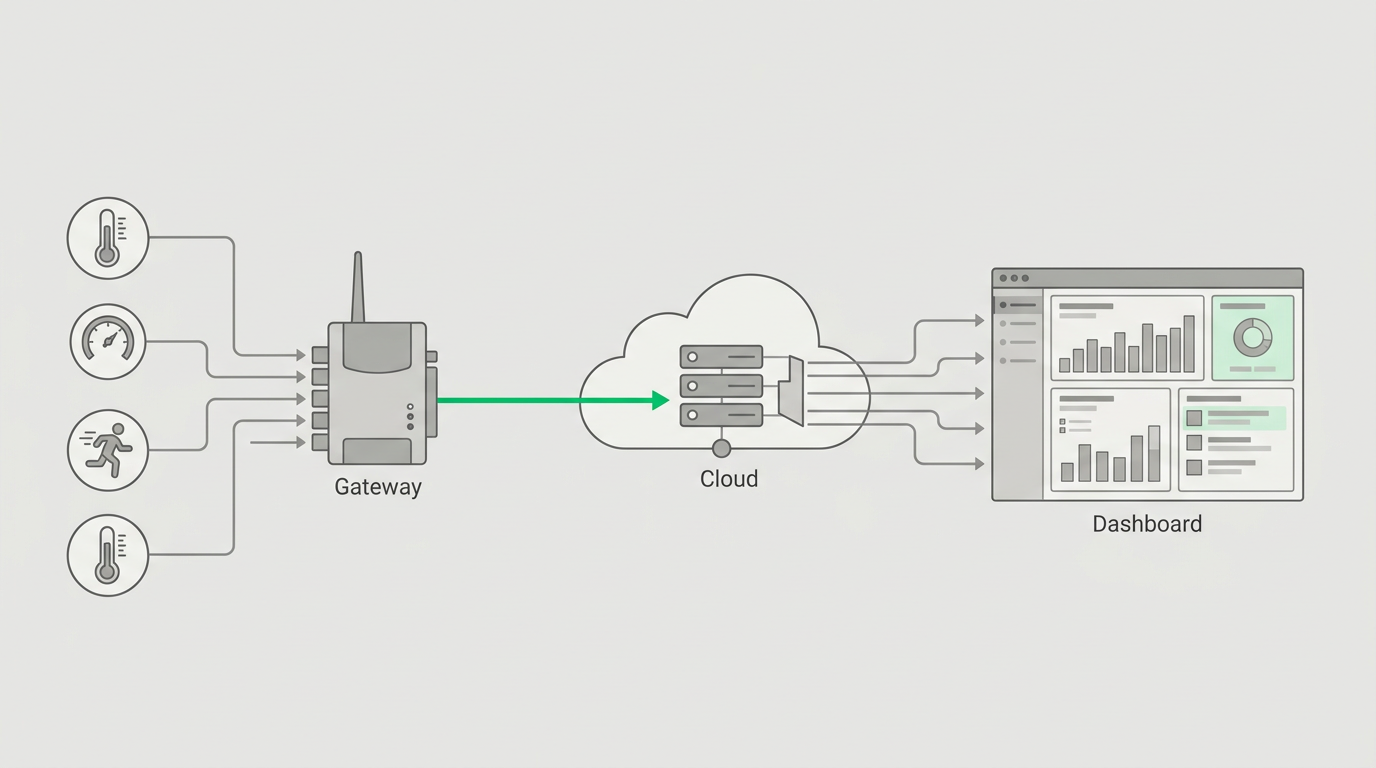
A typical SHM system involves several key stages:
- Sensing: Sensors are strategically placed on the structure to measure parameters such as strain, displacement, acceleration, and temperature.
- Data Acquisition: Data acquisition systems (DAQ) collect the sensor data and convert it into a digital format. Geolook provides industrial-grade DAQ and real-time settlement monitoring solutions for projects like DLF Downtown Gurgaon with Ahluwalia Constructions and B L Kashyap.
- Data Transmission: The data is transmitted wirelessly or via cables to a central processing unit.
- Data Processing: The data is processed and analyzed to identify any anomalies or signs of damage.
- Structural Assessment: Based on the processed data, engineers assess the structural health and make informed decisions about maintenance and repairs.
This end-to-end process allows for continuous structural monitoring and informed decision-making.
Benefits of Structural Health Monitoring
Implementing structural health monitoring offers numerous advantages:
- Improved Safety: Early detection of damage prevents catastrophic failures and ensures public safety.
- Reduced Maintenance Costs: Proactive maintenance based on real-time data reduces the need for costly repairs.
- Extended Lifespan: Timely repairs and maintenance extend the lifespan of the structure.
- Optimized Resource Allocation: SHM data helps prioritize maintenance efforts and allocate resources effectively.
- Enhanced Decision-Making: Real-time data provides engineers with valuable insights for making informed decisions about structural management.
Applications of SHM
Structural health monitoring is applicable to a wide range of infrastructure assets:
- Bridges: Monitoring strain, displacement, and vibration to detect corrosion, cracks, and other forms of damage. Geolook supplied bridge health monitoring accessories to IIT-Mandi.
- Tunnels: Monitoring convergence, stress, and deformation to ensure stability. Geolook provides real-time SHM across 5 tunnels on the Ramban-Banihal NH-44 project in association with DRAIPL, with review meetings involving NHAI Regional Office.
- Buildings: Monitoring settlement, strain, and vibration to detect structural issues. L&T Constructions Noida Realty Green, Sector-120 uses SHM with integrated sensor analytics for their high-rise.
- Dams: Monitoring water pressure, deformation, and seepage to ensure dam safety, referencing guidelines from the Dam Safety Act 2021 and CWC.
- High-Rise Buildings: Monitoring settlement and structural integrity during and after construction.
The Role of Digital Twins in SHM
Digital twins are virtual replicas of physical structures that are continuously updated with real-time data from SHM systems. This integration allows for advanced visualization, analysis, and simulation, enabling engineers to:
- Predict future performance
- Optimize maintenance schedules
- Assess the impact of various scenarios
Geolook's work with RITES Ltd on a 3D Digital Twin and VR Visualization Platform for Bridge Health Monitoring System demonstrates the power of digital twins in infrastructure management. The MIT-WPU Tunnel Health Monitoring & Digital Twin Excellence Centre, inaugurated by Hon'ble Minister Sh. Nitin Gadkari, further exemplifies the importance of digital twins in tunnel monitoring, training, and research.
SHM Technologies and Sensors
Various sensors and technologies are used in structural health monitoring, including:
- Strain Gauges: Measure strain in structural members.
- Accelerometers: Measure vibration and acceleration.
- Displacement Sensors: Measure displacement and deformation.
- Temperature Sensors: Monitor temperature variations.
- Fiber Optic Sensors: Provide distributed sensing capabilities.
- Wireless Sensors: Enable remote monitoring and data transmission. Neeladari Buildtech uses wireless DAQ for their Bridge Health Monitoring System.
The choice of sensors depends on the specific application and the parameters being monitored.
Structural Health Monitoring vs. Traditional Inspection Methods
While traditional visual inspections are still valuable, structural health monitoring offers several advantages:
| Feature | Structural Health Monitoring | Traditional Inspection |
|---|---|---|
| Data Collection | Continuous, real-time | Periodic, manual |
| Damage Detection | Early, automated | Late, visual |
| Accuracy | High, quantitative | Subjective, qualitative |
| Cost-Effectiveness | Lower long-term costs due to proactive maintenance | Higher long-term costs due to reactive repairs |
| Safety | Improved safety due to early detection of potential failures | Lower safety due to delayed detection of potential failures |
| Resource Allocation | Optimized resource allocation based on real-time data | Less efficient resource allocation based on limited data |
Indian Standards and Guidelines
Several Indian Standards and guidelines emphasize the importance of structural monitoring for various infrastructure assets. For bridges, IRC SP-35, IRC SP-37, IRC:6, IRC:78, IRC:112, and IRC:114 provide detailed specifications for design, construction, and maintenance. For seismic considerations, IS 1893 and IS 13920 are crucial. For concrete structures, IS 13311 and IS 516 offer guidance on testing and evaluation. Adhering to these standards ensures the safety and durability of our infrastructure.
Learn more about shm system explained.
Explore Geolook SHM
Discover how Geolook's advanced structural health monitoring solutions can help you ensure the safety and longevity of your infrastructure assets. Download our comprehensive structural health monitoring guide or contact us to learn more.
Frequently Asked Questions
Q: What is structural health monitoring?
A: Structural health monitoring (SHM) is the process of using sensors and data analysis to continuously monitor the condition of a structure, detecting damage or deterioration early on. SHM systems provide real-time data that enables proactive maintenance and prevents potential failures in bridges, tunnels, buildings, and other critical infrastructure.
Q: How does a structural health monitoring system work?
A: A structural health monitoring system works by using sensors to collect data on various parameters such as strain, displacement, and vibration. This data is then transmitted to a central processing unit, where it is analyzed to identify any anomalies or signs of damage, allowing engineers to assess the structural health and make informed decisions.
Q: What are the benefits of using structural health monitoring?
A: Using structural health monitoring offers several benefits, including improved safety through early damage detection, reduced maintenance costs by enabling proactive repairs, extended lifespan of structures through timely interventions, optimized resource allocation, and enhanced decision-making based on real-time data.
Q: What types of structures can benefit from structural health monitoring?
A: Many types of structures can benefit from structural health monitoring, including bridges, tunnels, buildings, dams, and high-rise structures. SHM is particularly valuable for critical infrastructure where early detection of damage can prevent catastrophic failures and ensure public safety.
Q: How can I implement structural health monitoring for my infrastructure project?
A: To implement structural health monitoring, you need to strategically place sensors on the structure, use a data acquisition system to collect and transmit the data, and employ data processing techniques to analyze the data and assess the structural health. Consider exploring machine learning structural health monitoring for advanced analysis.
Project inquiry
Talk to a Geolook™ specialist
Share your monitoring requirement and our team will help identify the right next step.
By submitting, you agree that Geolook™ may contact you about this inquiry. Your details are not added to a marketing list.