Real Time Bridge Monitoring Sensors India: A Complete Guide
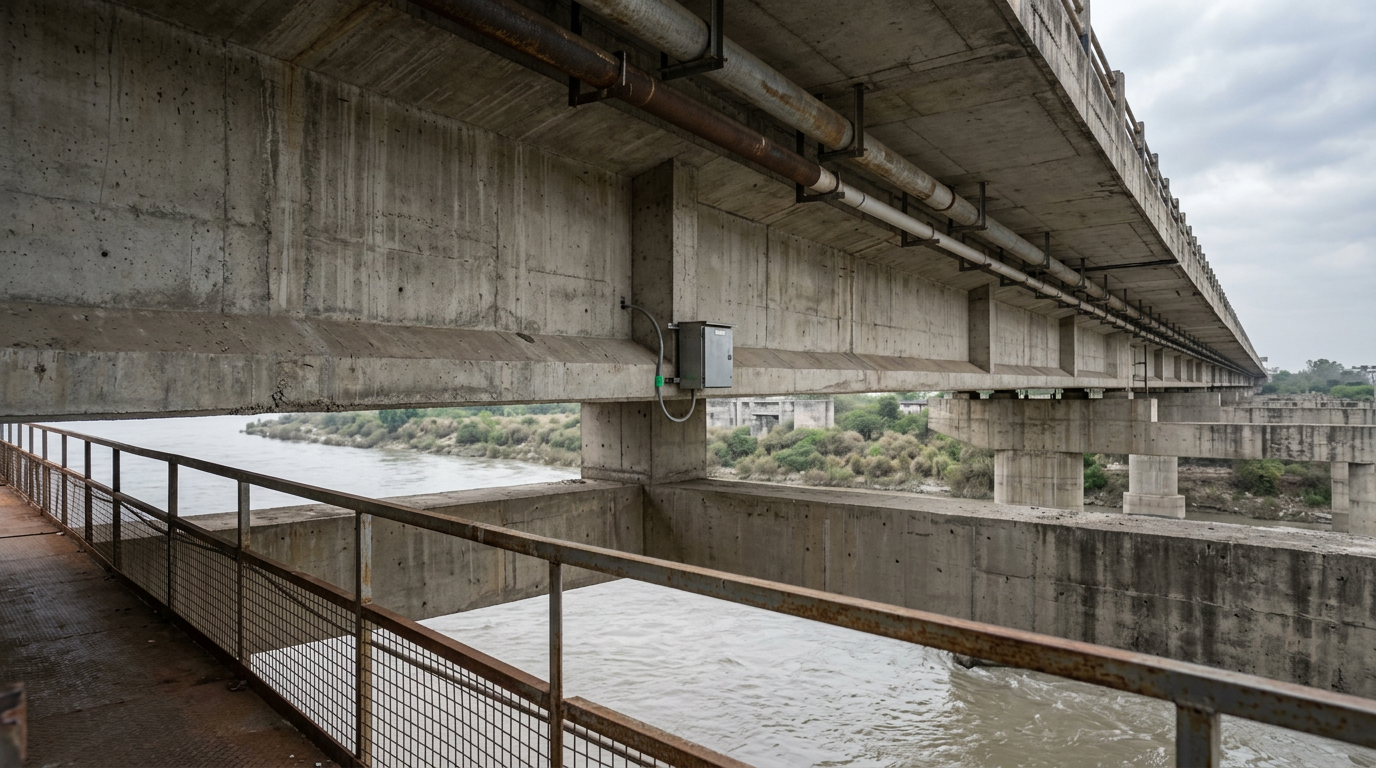
In 2021, a section of the under-construction Sutlej bridge in Himachal Pradesh collapsed, highlighting the critical need for robust bridge health monitoring systems. Implementing real time bridge monitoring sensors india is crucial for ensuring structural integrity and preventing such incidents. This guide provides a comprehensive overview of sensor technologies, selection criteria, and best practices for implementing a bridge health monitoring system in India, tailored for civil engineers, EPC project managers, and procurement leads involved in NHAI projects.
Key Takeaways
- Real time bridge monitoring sensors india are essential for proactive maintenance and preventing structural failures.
- Selecting the appropriate sensors depends on the specific bridge design, environmental conditions, and monitoring objectives.
- Data acquisition systems and software platforms play a critical role in processing and interpreting sensor data.
- Regular inspection and maintenance are necessary to ensure the long-term reliability of the monitoring system.
- Compliance with relevant Indian Standards (IRC codes) is crucial for ensuring the quality and safety of bridge infrastructure.
Understanding Bridge Health Monitoring Systems
A bridge health monitoring system (BHMS) is a comprehensive system that uses various sensors and data analysis techniques to assess the structural condition of a bridge in real-time. These systems provide continuous data on critical parameters, enabling proactive maintenance and preventing catastrophic failures. Geolook provides a range of high-precision sensors suitable for diverse bridge monitoring applications.
Types of Real Time Bridge Monitoring Sensors
Several types of sensors are used in bridge health monitoring systems to measure different parameters. The selection of sensors depends on the specific requirements of the bridge and the type of data needed. Here are some common types:
- Strain Gauges: Measure strain in structural members, indicating stress levels. Vibrating wire bridge sensors are a common type, known for their long-term stability and accuracy.
- Accelerometers: Detect vibrations and dynamic responses of the bridge under traffic and environmental loads.
- Displacement Transducers: Measure displacement and deformation of bridge components.
- Tiltmeters/Inclinometers: Monitor inclination and rotation of piers and abutments.
- Load Cells: Measure the load distribution on different parts of the bridge.
- Environmental Sensors: Monitor temperature, humidity, wind speed, and other environmental factors that can affect bridge performance.
Neeladari Buildtech uses Geolook's wireless DAQ for their bridge health monitoring system, showcasing the versatility of our offerings.
Selecting the Right Sensors for NHAI Bridge Projects
For NHAI bridge sensors, selection must align with IRC guidelines and project-specific requirements. Consider these factors:
- Accuracy and Resolution: Choose sensors with appropriate accuracy and resolution for the parameters being measured.
- Durability and Reliability: Select sensors that can withstand harsh environmental conditions and provide reliable data over long periods.
- Installation and Maintenance: Consider the ease of installation and maintenance of the sensors.
- Cost: Balance the cost of the sensors with their performance and reliability.
- Communication Protocol: Ensure compatibility with the data acquisition system.
Projects like the RITES 3D Digital Twin & VR Visualization Platform for Bridge Health Monitoring System demonstrate the importance of selecting sensors that integrate seamlessly with advanced data analysis tools.
Data Acquisition and Management
Data acquisition systems (DAQ) are essential for collecting and processing data from real time bridge monitoring sensors india. These systems typically include:
- Data Loggers: Record data from sensors at specified intervals.
- Signal Conditioners: Amplify and filter sensor signals to improve accuracy.
- Communication Interfaces: Transmit data to a central server for analysis.
- Power Supplies: Provide power to the sensors and DAQ system.
Wireless DAQ systems, as used by Neeladari Buildtech, offer flexibility and ease of installation, reducing the need for extensive wiring. Data management software is used to store, process, and visualize the sensor data. This software should provide tools for data analysis, trend monitoring, and alarm generation.
Comparison of Real Time Bridge Monitoring Sensors
The following table compares different types of real time bridge monitoring sensors india based on key characteristics:
| Sensor Type | Measurement | Accuracy | Durability | Cost | Application |
|---|---|---|---|---|---|
| Strain Gauges (Vibrating Wire) | Strain, Stress | High | Excellent | Moderate | Steel and concrete bridges |
| Accelerometers | Vibration, Acceleration | Moderate | Good | Low | Dynamic load monitoring |
| Displacement Transducers | Displacement, Deformation | Moderate to High | Good | Moderate | Expansion joints, supports |
| Tiltmeters/Inclinometers | Inclination, Rotation | High | Good | Moderate | Piers, abutments |
| Load Cells | Load, Force | High | Excellent | High | Bearing supports |
Installation and Maintenance Best Practices
Proper installation and maintenance are crucial for ensuring the accuracy and reliability of real time bridge monitoring sensors india. Follow these best practices:
- Installation: Install sensors according to manufacturer's instructions and relevant IRC codes. Ensure proper bonding and alignment.
- Calibration: Calibrate sensors regularly to maintain accuracy.
- Inspection: Inspect sensors and wiring for damage or corrosion.
- Data Validation: Validate sensor data to identify and correct errors.
- Maintenance: Replace damaged or malfunctioning sensors promptly.
Sandeep Gupta, IRSE, former CAO Indian Railways and Strategic Advisor at Geolook, emphasizes the importance of meticulous installation and regular maintenance, especially for cable-stayed and extra-dosed bridges.
Data Analysis and Interpretation
Analyzing and interpreting data from real time bridge monitoring sensors india is essential for assessing bridge health and identifying potential problems. This involves:
- Trend Analysis: Monitoring sensor data over time to identify trends and anomalies.
- Threshold Setting: Establishing threshold values for critical parameters and generating alarms when these thresholds are exceeded.
- Correlation Analysis: Correlating sensor data with environmental factors and traffic loads to understand their impact on bridge performance.
- Finite Element Analysis (FEA): Using FEA models to simulate bridge behavior and validate sensor data.
The real time remote monitoring platform for bridges and dams allows engineers to remotely access and analyze sensor data, facilitating timely decision-making.
Case Studies and Examples
Several successful implementations of bridge health monitoring systems in India demonstrate the benefits of this technology. For instance, IIT-Mandi has been involved in bridge health monitoring projects, highlighting the academic and practical applications of these systems. These case studies provide valuable insights into the design, implementation, and operation of BHMS.
Geolook's involvement in projects like IIT-Mandi Bridge Health Monitoring accessories supply underscores our commitment to advancing bridge monitoring technology in India. Our solutions are designed to meet the specific needs of Indian infrastructure projects, ensuring safety and longevity.
Learn why is structural health monitoring important for bridges for proactive maintenance.
Relevant Indian Standards and Guidelines
Several Indian Standards (IRC codes) and guidelines are relevant to bridge health monitoring systems. These include:
- IRC:6: Standard Specifications and Code of Practice for Road Bridges.
- IRC:112: Concrete Bridge Code.
- IRC SP-37: Guidelines on Design and Construction of Steel Bridges.
- IRC:78: Standard Specifications and Code of Practice for Road Bridges (Section VII - Foundations and Substructure).
Compliance with these standards is essential for ensuring the safety and reliability of bridge infrastructure. NHAI also provides specific guidelines for bridge monitoring and maintenance, which should be followed for all NHAI projects.
Frequently Asked Questions
Q: What is a bridge health monitoring system?
A: A bridge health monitoring system (BHMS) is a system that uses sensors and data analysis to continuously assess the structural condition of a bridge. It provides real-time data on critical parameters, enabling proactive maintenance and preventing failures.
Q: What types of sensors are used in bridge health monitoring?
A: Common sensors include strain gauges, accelerometers, displacement transducers, tiltmeters, and environmental sensors. Strain gauges measure strain, accelerometers detect vibrations, displacement transducers measure deformation, tiltmeters monitor inclination, and environmental sensors track temperature and humidity.
Q: How do I select the right sensors for my bridge project?
A: Consider factors such as accuracy, durability, installation requirements, and cost. The specific requirements of the bridge and the type of data needed will also influence the selection process. Consulting with sensor specialists is recommended.
Q: What is the role of data acquisition systems in bridge monitoring?
A: Data acquisition systems (DAQ) collect and process data from sensors. These systems include data loggers, signal conditioners, and communication interfaces. They transmit data to a central server for analysis and visualization, enabling informed decision-making.
Q: Why is real-time monitoring important for bridge safety?
A: Real-time monitoring allows for the immediate detection of structural issues, enabling timely interventions and preventing catastrophic failures. It provides continuous insights into bridge performance, facilitating proactive maintenance and extending the lifespan of the structure.
Request sensor datasheet
Ensure the safety and longevity of your bridge infrastructure with Geolook's advanced real time bridge monitoring sensors india. Contact us today to request a sensor datasheet and learn more about our comprehensive solutions.
Project inquiry
Talk to a Geolook™ specialist
Share your monitoring requirement and our team will help identify the right next step.
By submitting, you agree that Geolook™ may contact you about this inquiry. Your details are not added to a marketing list.