Landslide Monitoring India: Technologies, Sensors & Early Warning
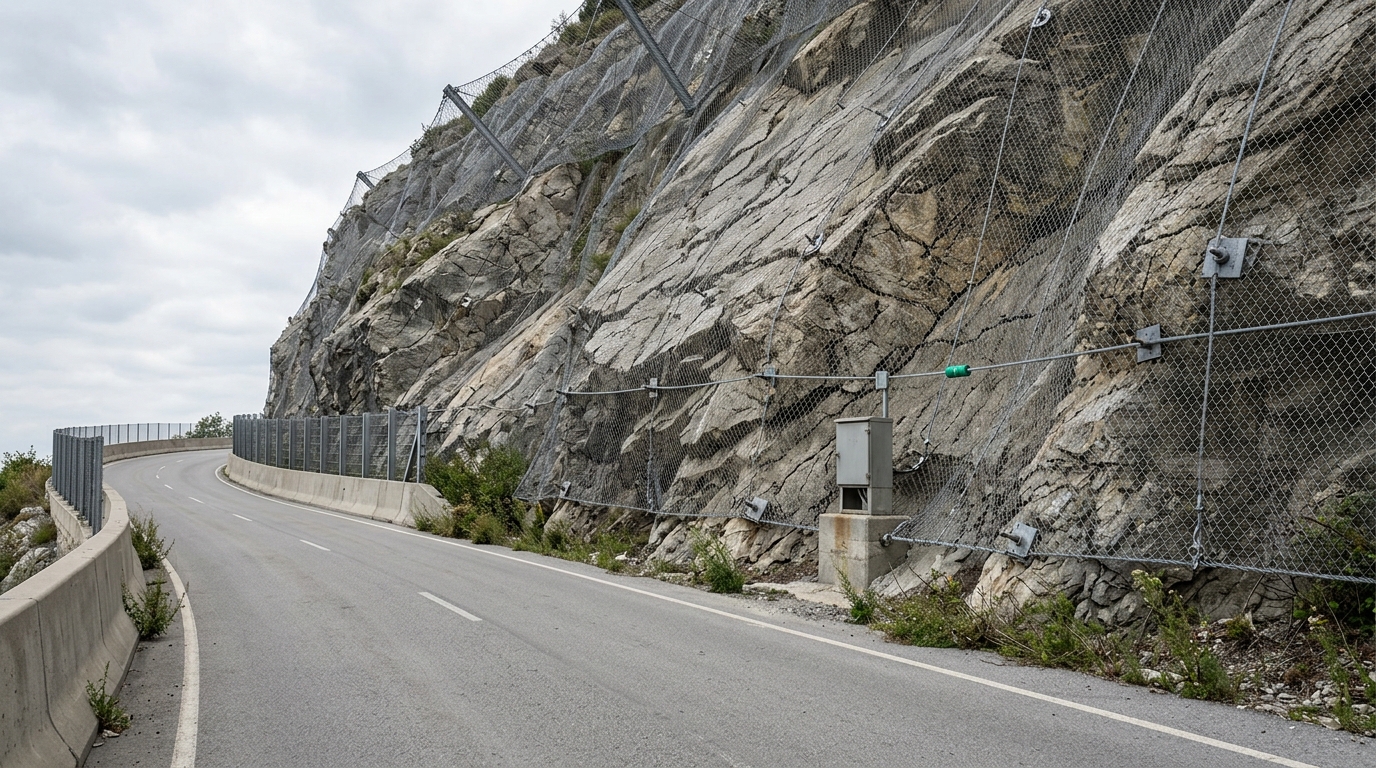
In August 2020, a series of landslides along NH-44 in the Ramban district of Jammu & Kashmir blocked the highway for over 72 hours, stranding thousands of vehicles and disrupting the only all-weather road link between Jammu and Srinagar. The incident was not exceptional — the Geological Survey of India (GSI) has mapped over 66,000 landslide-prone locations across India, concentrated in the Himalayas, Western Ghats, and North-East hill states. For government agencies, highway authorities, and infrastructure project managers, the question is no longer whether to invest in landslide monitoring India programmes, but which sensor technologies and early warning architectures actually meet the operational demands of Indian terrain and regulatory frameworks.
This post provides a structured technical comparison of slope monitoring technologies, explains how NDMA guidelines shape system design, and outlines the sensor configurations used in highway and railway corridor applications. Engineers and procurement leads will find actionable guidance on matching instrument specifications to site conditions, data acquisition requirements, and threshold-based alert protocols.
Key Takeaways
- The NDMA guidelines on landslides (2009) mandate multi-parameter monitoring combining rainfall, pore pressure, and displacement data for credible early warning — no single sensor type is sufficient.
- IS 14458 (Guidelines for Retaining Wall and Landslide Control) provides the Indian Standard framework for slope stabilisation; instrumentation design should align with its site investigation requirements.
- MEMS-based digital inclinometers, vibrating wire piezometers, and rain gauges form the core sensor triad for most highway corridor deployments in India.
- Threshold-based alert systems require site-specific calibration of displacement rate (typically expressed in mm/day) and pore pressure (kPa) against historical failure data.
- Real-time telemetry via GSM/4G or LoRaWAN is essential for remote Himalayan and Western Ghats sites where manual reading is impractical or unsafe.
What Is Landslide Monitoring?
Landslide monitoring is the continuous or periodic measurement of ground displacement, pore water pressure, rainfall intensity, and seismic vibration at a slope to detect precursory movement and trigger early warnings before a failure event occurs. In the Indian context, a complete landslide monitoring India system integrates geotechnical sensors, data acquisition hardware, telemetry infrastructure, and a threshold-based alert engine aligned with NDMA's multi-hazard early warning framework.
The physical basis for monitoring is well established: slope failure is preceded by measurable deformation. Creep rates in the range of 1–5 mm/day may indicate accelerating instability in clay-rich soils, while pore pressure build-up above a critical threshold — often site-specific but commonly in the range of 20–80 kPa above hydrostatic — is a reliable precursor to shallow translational slides. Monitoring systems are designed to capture these signals before they cross failure thresholds, giving operators time to issue warnings and close roads or evacuate settlements.
For a deeper treatment of site investigation and instrumentation layout principles, see our guide on slope stability monitoring.
Regulatory and Institutional Framework in India
The NDMA published its National Disaster Management Guidelines — Management of Landslides and Snow Avalanches in 2009. These guidelines establish that landslide early warning systems must be community-linked, multi-parameter, and integrated with district disaster management authorities. They explicitly recommend the deployment of automated rain gauges, piezometers, and displacement sensors at high-risk locations along national highways and in densely populated hill towns.
The Geological Survey of India (GSI) operates the National Landslide Susceptibility Mapping programme and has published district-level hazard zonation maps at 1:50,000 scale for 17 states. MORTH's guidelines for hill road construction reference slope protection measures and implicitly require instrumentation for cut slopes steeper than 1V:1H in highly weathered rock or soil. BRO projects in border areas of Arunachal Pradesh, Sikkim, and Ladakh increasingly specify real-time slope sensor India deployments as part of project execution plans.
IS 14458 provides guidance on site investigation, stability analysis, and remedial measures for landslide-prone slopes. While it does not prescribe specific sensor types, its requirement for ongoing post-construction monitoring creates the regulatory basis for permanent instrumentation on critical slopes. Procurement specifications for NHAI and state PWD projects should reference IS 14458 alongside NDMA guidelines when defining monitoring scope.
Core Sensor Technologies for Slope Monitoring
Effective landslide monitoring India deployments use a layered sensor architecture. Each instrument type captures a different physical parameter, and the combination of signals — not any single reading — drives alert decisions.
MEMS Digital Inclinometers: Micro-electromechanical system (MEMS) inclinometers measure lateral displacement within a borehole casing installed to depths of 10–30 m, depending on the expected failure plane depth. Modern MEMS sensors resolve angular changes of ±0.01° and can be configured for automated in-place readings at intervals as short as 1 minute. Unlike traditional manual inclinometer probes, in-place MEMS arrays provide continuous data without requiring site access — critical during monsoon when slopes are most active and access roads may be blocked. Explore the technical specifications of MEMS digital inclinometer sensors for slope monitoring used in Indian highway and railway applications.
Vibrating Wire Piezometers: Piezometers measure pore water pressure in kPa at a defined depth within the slope. Vibrating wire sensors offer long-term stability with drift typically less than 0.1% full scale per year, making them suitable for multi-year monitoring programmes. For a slope with a 15 m water table depth, a sensor with a range of 0–350 kPa and resolution of 0.025% full scale is appropriate. Multiple piezometers installed at different depths allow construction of a pore pressure profile, which is essential for back-analysis after a failure event.
Tipping Bucket Rain Gauges: Rainfall is the primary trigger for most shallow landslides in India. NDMA guidelines recommend correlating rainfall intensity (mm/hr) and cumulative rainfall (mm) with displacement and pore pressure data. Automated tipping bucket gauges with 0.2 mm resolution and GSM telemetry are standard for remote sites. Intensity-duration-frequency (IDF) thresholds derived from historical data at each site define the rainfall alert levels.
Crack Meters and Surface Extensometers: For slopes where tension cracks have already developed, wire-based crack meters or MEMS-based extensometers measure crack aperture changes in mm. A crack opening rate exceeding 2–5 mm/day in a previously stable crack is a strong indicator of accelerating failure.
Seismic Sensors (Geophones and Accelerometers): In areas with active seismicity — particularly the Himalayan seismic zone IV and V regions defined under IS 1893 — micro-seismic monitoring using geophones can detect internal fracturing within a slope mass before surface deformation is measurable. Accelerometers with sensitivity in the range of 0.001 m/s² are used to detect earthquake-triggered slope movements.
Sensor Technology Comparison for Landslide Early Warning Systems
| Sensor Type | Parameter Measured | Typical Range / Resolution | Installation Depth | Data Output Frequency | Best Application |
|---|---|---|---|---|---|
| MEMS In-Place Inclinometer | Lateral displacement (mm) | ±30° / 0.01° | 10–30 m borehole | 1 min – 1 hr (automated) | Deep-seated rotational and translational slides on highways and railways |
| Vibrating Wire Piezometer | Pore water pressure (kPa) | 0–700 kPa / 0.025% FS | 2–25 m borehole | 5 min – 1 hr (automated) | Rainfall-triggered shallow slides; embankment toe monitoring |
| Tipping Bucket Rain Gauge | Rainfall intensity (mm/hr) | 0–500 mm/hr / 0.2 mm | Surface mounted | Real-time event-based | Trigger threshold correlation; NDMA early warning integration |
| Wire Crack Meter | Crack aperture (mm) | 0–100 mm / 0.01 mm | Surface / shallow | 15 min – 1 hr | Tension crack monitoring on cut slopes and retaining walls |
| Geophone / Seismic Sensor | Ground velocity (mm/s) | 0.001–100 mm/s | Surface or shallow burial | Continuous (triggered) | Seismic zone IV/V slopes; rockfall detection on NH corridors |
| GNSS / GPS Displacement Sensor | 3D surface displacement (mm) | ±5 mm horizontal / ±10 mm vertical | Surface monument | Hourly – daily | Large slow-moving landslide bodies; regional deformation mapping |
Data Acquisition, Telemetry, and Alert Architecture
Sensor data is only as useful as the system that collects, transmits, and interprets it. In remote Himalayan and Western Ghats locations, data acquisition units (DAQs) must operate on solar power with battery backup for at least 72 hours of autonomy during overcast monsoon conditions. Industrial-grade DAQs with IP67 enclosures, operating temperature ranges of -20°C to +60°C, and support for RS-485, SDI-12, and 4–20 mA sensor interfaces are standard for Indian field conditions.
Telemetry options for a landslide warning India system include GSM/4G (preferred where network coverage exists), LoRaWAN (for dense sensor networks in valleys with poor cellular coverage), and VSAT (for high-altitude BRO sites above 4,000 m where terrestrial networks are absent). Hybrid telemetry architectures — primary 4G with LoRaWAN fallback — are increasingly specified for NH corridor projects.
Alert thresholds are defined in three tiers: green (normal), amber (watch), and red (warning/evacuation). Displacement rate thresholds are typically set at 2 mm/day for amber and 10 mm/day for red, though these values must be calibrated against site-specific geology and historical movement data. Pore pressure thresholds are expressed as a percentage of the critical pressure derived from slope stability analysis using IS 14458 methods. Automated SMS and email alerts to district disaster management authority (DDMA) control rooms are the standard notification mechanism under NDMA's framework.
For highway applications, integration with NHAI's traffic management systems allows automatic variable message sign (VMS) activation when red-level alerts are triggered, providing a direct link between geotechnical monitoring and road user safety. Learn how slope monitoring solutions for transport infrastructure connect sensor networks to highway operations centres.
Highway and Railway Corridor Applications
National Highway corridors through the Himalayas — NH-44 (Jammu–Srinagar), NH-58 (Rishikesh–Badrinath), NH-707 (Paonta Sahib–Shimla), and NH-27 (Assam–Meghalaya) — represent the highest-priority locations for landslide monitoring India deployments. These corridors carry strategic traffic, and closures have measurable economic and security consequences. NHAI's hill road maintenance manuals now include provisions for instrumented slope monitoring at identified high-risk chainage locations.
Railway corridors present a different challenge. RVNL and IRCON projects in the North-East Frontier Railway zone and Konkan Railway corridor require monitoring of cut slopes adjacent to track, where even a 0.5 m debris fall can cause derailment. In these applications, geophone-based rockfall detection systems with response times under 500 milliseconds are used to trigger automatic track circuit interruption, stopping approaching trains before they reach the affected section.
For cut slopes on hill highways, the typical instrumented cross-section includes two to three inclinometer boreholes spaced 20–30 m apart across the slope width, one to two piezometers per borehole cluster, a rain gauge at the crest, and crack meters at any visible tension cracks. The entire array feeds a single DAQ unit with solar power and 4G telemetry, transmitting to a cloud-based monitoring dashboard accessible to the NHAI regional office and the state DDMA.
Understanding the full range of best instruments for early landslide warning systems helps procurement teams specify complete sensor packages rather than individual instruments in isolation.
Geotechnical Investigation Requirements Before Instrumentation
No monitoring system can compensate for inadequate site investigation. IS 1892 (Code of Practice for Site Investigation for Foundations) and IS 2720 (Methods of Test for Soils) provide the baseline requirements for characterising slope materials. Before specifying sensor types and depths, the following investigation data are essential: borehole logs to the expected failure plane depth, laboratory shear strength parameters (cohesion c' in kPa and friction angle φ' in degrees), grain size distribution, Atterberg limits for fine-grained soils, and in-situ permeability (hydraulic conductivity in m/s).
The failure plane depth determines inclinometer borehole depth — sensors must extend at least 3–5 m below the expected slip surface to anchor in stable ground. Permeability data informs piezometer placement depth and the expected lag time between rainfall events and pore pressure response, which in turn affects the lead time available for early warning.
GSI's landslide hazard zonation maps provide a starting point for identifying high-risk locations, but site-specific investigation is mandatory before instrumentation design. Slopes classified as Zone IV or V in GSI mapping should be treated as priority candidates for permanent automated monitoring.
For a comprehensive overview of how investigation data feeds into monitoring system design, refer to our detailed resource on real time slope monitoring system for landslide prevention india.
Procurement and Specification Considerations
Government agencies and EPC contractors specifying landslide monitoring India systems should structure tenders around performance outcomes rather than individual instrument brands. Key specification parameters include: sensor accuracy and resolution (expressed in physical units, not percentages), data acquisition scan rate (minimum 1-minute intervals for active slopes), telemetry uptime requirement (typically ≥98% monthly availability), alert response time (time from threshold breach to notification, typically ≤5 minutes), and data storage (minimum 12 months on-device with cloud backup).
Power supply specifications should account for worst-case solar irradiance at the site latitude during monsoon months. For sites above 30°N latitude (most Himalayan locations), a minimum of 100 Wp solar panel with 100 Ah battery capacity is a reasonable starting point for a 4-sensor array with 4G telemetry.
Calibration certificates traceable to NABL-accredited laboratories should be required for all sensors. Vibrating wire sensors should be factory-calibrated with calibration data supplied in digital format for entry into the DAQ configuration. MEMS inclinometers should be calibrated against a precision tilt table with certificate of conformance.
Maintenance contracts should specify quarterly sensor health checks, annual calibration verification, and immediate response (within 24 hours) to telemetry outages. For NHAI and RVNL projects, the monitoring system should be designed for a minimum operational life of 10 years, consistent with the design life of the slope protection works.
Explore the full range of landslide monitoring instruments and systems available for Indian highway, railway, and government infrastructure projects.
Frequently Asked Questions
Q: What sensors are used in landslide monitoring India systems?
A: Landslide monitoring India systems typically use a combination of MEMS in-place inclinometers, vibrating wire piezometers, tipping bucket rain gauges, crack meters, and geophones. Each sensor captures a different physical parameter — displacement, pore pressure, rainfall, crack aperture, or seismic vibration — and the combined dataset drives threshold-based early warning alerts aligned with NDMA guidelines.
Q: What do NDMA guidelines say about landslide early warning systems?
A: NDMA's 2009 guidelines on landslide management specify that early warning systems must be multi-parameter, community-linked, and integrated with district disaster management authorities. They recommend automated rain gauges, piezometers, and displacement sensors at high-risk locations, with alert outputs connected to DDMA control rooms. A single-sensor approach does not satisfy the multi-parameter requirement of the NDMA framework.
Q: What is the role of a slope sensor India deployment on national highways?
A: A slope sensor India deployment on national highways continuously measures ground displacement and pore water pressure at instrumented chainage locations, transmitting data via 4G or LoRaWAN to a central dashboard. When displacement rates or pore pressures exceed pre-set thresholds, automated alerts are sent to NHAI regional offices and state DDMAs, enabling road closure decisions before a failure event reaches the carriageway.
Q: Which Indian Standard governs landslide monitoring and slope instrumentation?
A: IS 14458 (Guidelines for Retaining Wall and Landslide Control) is the primary Indian Standard governing slope stabilisation and monitoring. It requires site investigation per IS 1892 and soil testing per IS 2720 before instrumentation design. NDMA guidelines complement IS 14458 by specifying the early warning and community alert components that technical instrumentation must support.
Q: How deep should inclinometer boreholes be for landslide monitoring?
A: Inclinometer boreholes for landslide monitoring should extend at least 3–5 m below the expected failure plane depth, as determined by site investigation and slope stability analysis. This ensures the bottom of the casing is anchored in stable, non-moving ground, providing a fixed reference point against which upper-zone displacement is measured. Typical borehole depths for Indian highway slopes range from 10 to 30 m.
Explore landslide solutions
Geolook designs and supplies complete landslide monitoring India systems for national highway corridors, railway embankments, dam abutments, and urban hill slopes. Our sensor packages are configured to NDMA guidelines and IS 14458 requirements, with solar-powered DAQs, multi-channel telemetry, and cloud-based alert dashboards accessible to NHAI, RVNL, BRO, and state PWD teams.
Whether you are specifying instrumentation for a new hill road project, retrofitting monitoring on an existing high-risk slope, or building a district-level early warning network, our geotechnical engineers can assist with borehole layout, sensor selection, threshold calibration, and system integration.
Contact the Geolook slope monitoring team to discuss your project requirements, request a technical proposal, or download our detailed landslide monitoring specification guide.
Project inquiry
Talk to a Geolook™ specialist
Share your monitoring requirement and our team will help identify the right next step.
By submitting, you agree that Geolook™ may contact you about this inquiry. Your details are not added to a marketing list.