Dam Safety Monitoring with IoT: From Sensors to Real-Time Dashboard
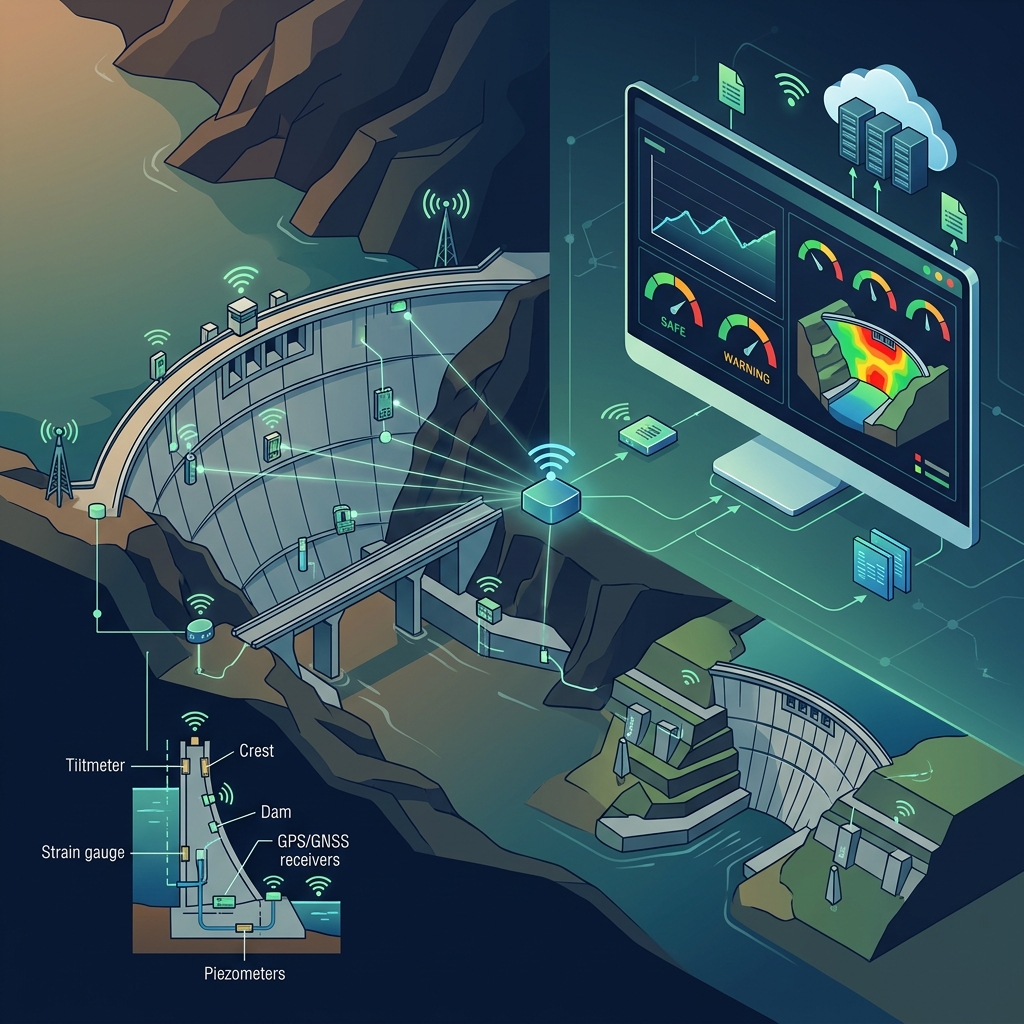
Effective dam safety monitoring is crucial for preventing catastrophic failures and ensuring the long-term integrity of these vital structures. Traditional methods often involve manual inspections and periodic data collection, which can be time-consuming and prone to errors. Modern IoT-based dam monitoring systems offer a more efficient and reliable approach, providing real-time data, automated alerts, and comprehensive insights into dam health. This guide explores the key components, benefits, and implementation strategies for IoT in dam safety monitoring.
Who This Guide Is For
- Civil Engineers: Responsible for the design, construction, and maintenance of dams.
- Geotechnical Consultants: Specializing in soil and rock mechanics, providing expertise in dam stability analysis.
- Infrastructure Project Managers: Overseeing dam construction and rehabilitation projects, ensuring timely and cost-effective execution.
- Procurement Leads: At organizations like NHAI, RVNL, CPWD, and smart city bodies, tasked with sourcing and implementing advanced monitoring solutions.
The Core Components of an IoT Dam Monitoring System
An IoT-based dam monitoring system comprises several key components working together to provide comprehensive data and insights:
- Sensors: Deployed strategically throughout the dam structure to measure various parameters.
- Data Acquisition System (DAQ): Collects data from the sensors and transmits it to a central server.
- Communication Network: Enables data transmission, often using cellular, satellite, or LoRaWAN technologies.
- Data Processing and Storage: Involves cleaning, validating, and storing the data in a secure database.
- Real-Time Dashboard: Visualizes the data, providing engineers with a clear and concise overview of dam health.
- Alert System: Automatically notifies stakeholders of critical events or anomalies.
Essential Sensors for Dam Monitoring
Selecting the right sensors is crucial for effective dam monitoring. Here are some of the most commonly used sensors:
- Piezometers: Measure pore water pressure within the dam and foundation, indicating seepage and potential instability.
- Strain Gauges: Monitor deformation and stress within the dam structure.
- Accelerometers: Detect vibrations and seismic activity, providing early warning of potential damage.
- Tiltmeters/Inclinometers: Measure changes in slope and deformation, indicating potential landslides or settlement.
- Water Level Sensors: Monitor reservoir water levels, crucial for flood control and dam stability.
- Temperature Sensors: Track temperature variations within the dam, which can affect concrete strength and stability.
- Displacement Transducers: Measure movement at joints and cracks, indicating structural changes.
Strategic Sensor Placement for Comprehensive Dam Monitoring
The placement of sensors is as important as the sensors themselves. A well-designed sensor network ensures comprehensive coverage and accurate data. Consider these factors:
- Dam Type: Concrete dams require different sensor placement strategies than embankment dams.
- Potential Failure Modes: Focus sensor placement on areas prone to specific failure modes, such as cracking, seepage, or instability.
- Historical Data: Use historical data and geological surveys to identify areas of concern.
- Accessibility: Ensure sensors are accessible for maintenance and replacement.
Example Sensor Placement (Embankment Dam):
- Piezometers: Installed at various depths within the dam core and foundation.
- Strain Gauges: Embedded in the dam body to measure internal stresses.
- Tiltmeters: Placed on the dam crest and slopes to monitor deformation.
- Water Level Sensors: Installed in the reservoir and downstream to monitor water levels.
Setting Up Alert Thresholds for Proactive Dam Safety
A critical aspect of an IoT dam monitoring system is the ability to automatically detect and alert stakeholders to potential problems. This requires setting up appropriate alert thresholds for each sensor. Consider these factors:
- Baseline Data: Establish a baseline of normal operating conditions based on historical data.
- Safety Factors: Apply appropriate safety factors to account for uncertainties and potential risks.
- Alert Levels: Define multiple alert levels (e.g., warning, alarm) with corresponding actions.
- Notification Channels: Configure notification channels (e.g., email, SMS, phone call) to ensure timely delivery of alerts.
Example Alert Configuration:
- Piezometer: Warning if pore water pressure exceeds 80% of design limit; Alarm if it exceeds 90%.
- Tiltmeter: Warning if slope changes by more than 0.5 degrees; Alarm if it changes by more than 1 degree.
Real-Time Data Visualization and Analysis
The real-time dashboard is the central hub for monitoring dam health. It provides engineers with a clear and concise overview of all sensor data, allowing them to quickly identify potential problems. Key features of a good dashboard include:
- Customizable Views: Allows users to select and display the data that is most relevant to them.
- Interactive Charts and Graphs: Enables users to drill down into the data and explore trends.
- Geospatial Visualization: Displays sensor data on a map of the dam, providing a spatial context.
- Alert Notifications: Displays active alerts and allows users to acknowledge and resolve them.
- Reporting Tools: Generates reports for regulatory compliance and internal analysis.
Geolook vs Traditional Approach
Traditional dam monitoring methods often rely on manual inspections and infrequent data collection, leading to delayed detection of potential problems. Geolook's IoT-based dam monitoring system offers a significant improvement, providing real-time data, automated alerts, and comprehensive insights. For example, a recent project showed that Geolook reduced the time required to detect critical seepage issues by 60% compared to traditional methods, potentially saving up to INR 50 Lakhs in repair costs.
Comparison Table
| Feature | Geolook | Encardio-Rite | Traditional Methods |
|---|---|---|---|
| Data Frequency | Real-time | Near Real-time | Periodic (e.g., monthly) |
| Alerting | Automated, customizable thresholds | Automated | Manual inspection required |
| Data Visualization | Interactive dashboard with geospatial context | Standard dashboard | Spreadsheets and reports |
| Remote Access | Yes, via web and mobile app | Yes | No |
| Indian Project Suitability | Specifically designed for diverse Indian dam conditions and regulatory requirements | Globally designed, requires customization | Limited applicability |
| Scalability | Highly scalable to accommodate future expansion | Scalable | Limited scalability |
Download: Dam Monitoring Setup Guide
Ready to implement an IoT-based dam monitoring system? Download our comprehensive Dam Monitoring Setup Guide for detailed instructions and best practices.
Frequently Asked Questions
Q: What is the typical lifespan of sensors used in dam monitoring?
A: The lifespan of sensors varies depending on the type and environmental conditions, but typically ranges from 5 to 10 years. Regular maintenance and calibration are essential to ensure accuracy and longevity.
Q: How secure is the data transmitted from the sensors?
A: Geolook employs robust security measures, including encryption and authentication protocols, to protect data during transmission and storage. Our system complies with industry best practices for data security.
Q: Can the system be integrated with existing SCADA systems?
A: Yes, Geolook's dam monitoring system can be integrated with existing SCADA systems using standard communication protocols.
Q: What type of training is required for personnel to operate the system?
A: Geolook provides comprehensive training for personnel on system operation, data interpretation, and troubleshooting. The training can be customized to meet the specific needs of the client.
Q: What is the cost of implementing an IoT-based dam monitoring system?
A: The cost varies depending on the size and complexity of the dam, the number of sensors required, and the communication infrastructure. Contact us for a customized quote.
Conclusion
IoT-based dam monitoring systems offer a powerful and cost-effective way to enhance dam safety and prevent catastrophic failures. By providing real-time data, automated alerts, and comprehensive insights, these systems enable engineers to make informed decisions and take proactive measures to protect these vital structures. Geolook provides a tailored solution designed for the specific challenges of Indian dam infrastructure.
Ready to Upgrade Your Dam Safety Monitoring?
Don't wait for a potential disaster. Contact Geolook today to learn how our IoT-based dam monitoring system can help you improve dam safety, reduce costs, and ensure the long-term integrity of your infrastructure. Visit our blog to learn more about IoT in civil engineering, or check out this article on IoT in Civil Engineering.