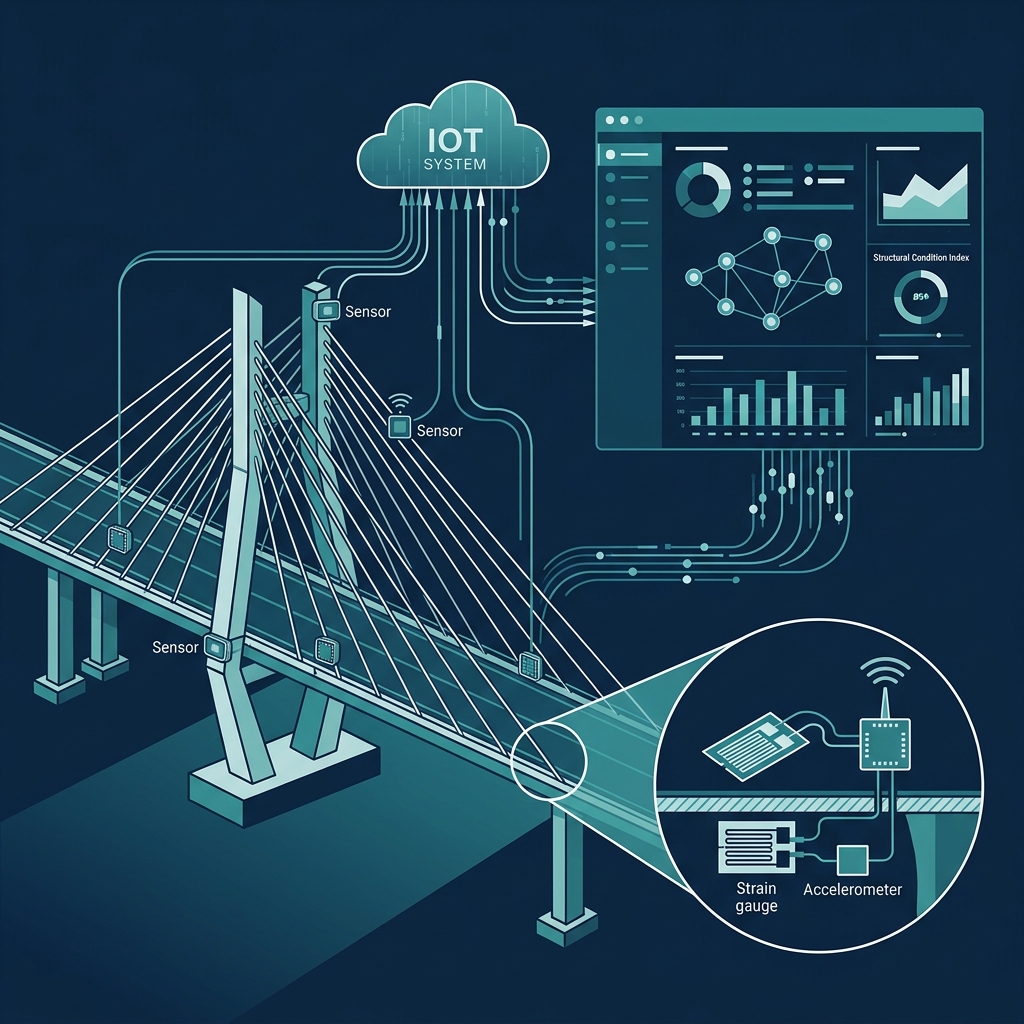
Bridge Monitoring with IoT Sensors: A Complete Project Manager's Guide
Who This Guide Is For:
- Civil Engineers specializing in structural integrity
- Geotechnical Consultants assessing bridge health
- Infrastructure Project Managers overseeing bridge construction and maintenance
- Procurement Leads at NHAI/RVNL/CPWD/Smart City bodies evaluating SHM solutions
Bridges are critical components of infrastructure, facilitating transportation and economic activity. However, they are constantly subjected to environmental stressors, traffic loads, and material degradation, leading to potential structural issues. Traditional bridge inspection methods are often time-consuming, costly, and may not provide a comprehensive assessment of a bridge's condition. This guide explores the use of IoT (Internet of Things) sensors for real-time, continuous bridge monitoring system, offering a more efficient and data-driven approach to bridge management.
This guide is designed to equip civil engineers, geotechnical consultants, project managers, and procurement leads with the knowledge necessary to understand, evaluate, and implement IoT-based bridge monitoring solutions. We will delve into the types of sensors used, data analysis techniques, implementation strategies, and the advantages of using a modern SHM platform like Geolook.
Understanding Bridge Deterioration
Before diving into the specifics of IoT-based monitoring, it's crucial to understand the factors that contribute to bridge deterioration. These factors can be broadly categorized as:
- Environmental Factors: Exposure to weather elements like rain, snow, and extreme temperatures can cause corrosion, erosion, and freeze-thaw damage.
- Traffic Loads: Constant heavy traffic can induce fatigue and stress on bridge components, leading to cracking and deformation.
- Material Degradation: Concrete can crack and spall, steel can corrode, and other materials can degrade over time, weakening the bridge's structure.
- Seismic Activity: Earthquakes can cause significant damage to bridges, especially those not designed to withstand seismic forces.
Understanding these deterioration mechanisms is essential for selecting the appropriate sensors and developing effective monitoring strategies. By identifying the specific risks a bridge faces, engineers can tailor the monitoring system to detect early signs of damage and prevent catastrophic failures.
Regular inspections are vital, but they offer only a snapshot in time. Continuous bridge monitoring system provides a constant stream of data, enabling proactive maintenance and extending the lifespan of the bridge.
IoT Sensors for Bridge Monitoring
IoT sensors are the backbone of a modern bridge monitoring system, providing real-time data on various structural parameters. Here are some of the most commonly used sensor types:
- Strain Gauges: Measure the strain or deformation in structural members, indicating stress levels and potential cracking.
- Accelerometers: Detect vibrations and movements, providing insights into the bridge's dynamic response to traffic and environmental loads.
- Displacement Sensors: Measure the displacement or deflection of bridge components, indicating settlement or deformation.
- Tilt Sensors: Monitor the inclination or tilt of bridge piers and abutments, detecting potential instability.
- Corrosion Sensors: Detect the onset and progression of corrosion in steel reinforcement, allowing for timely intervention.
- Environmental Sensors: Measure temperature, humidity, and other environmental parameters that can affect bridge deterioration.
The selection of sensors depends on the specific monitoring objectives and the characteristics of the bridge. For example, a bridge in a seismic zone would benefit from accelerometers and displacement sensors, while a bridge in a coastal environment would require corrosion sensors. Geolook offers a wide array of sensor integrations, ensuring that you can choose the optimal sensor suite for your specific needs.
Data Analysis and Visualization
The data collected from IoT sensors is only valuable if it can be effectively analyzed and visualized. A robust bridge monitoring system should include:
- Data Acquisition System: Collects and transmits data from the sensors to a central server.
- Data Processing and Storage: Cleans, filters, and stores the data in a secure database.
- Data Analysis Algorithms: Analyze the data to identify trends, anomalies, and potential problems.
- Data Visualization Tools: Present the data in a clear and intuitive manner, allowing engineers to easily understand the bridge's condition.
Advanced data analysis techniques, such as machine learning, can be used to predict future bridge performance and identify potential risks before they become critical. Geolook's platform provides powerful data analysis and visualization tools, enabling engineers to make informed decisions about bridge maintenance and rehabilitation.
Real-time dashboards, customizable alerts, and comprehensive reporting features allow for proactive management and efficient resource allocation. This ensures that potential issues are addressed promptly, minimizing downtime and maximizing the lifespan of the bridge.
Implementing a Bridge Monitoring System
Implementing a bridge monitoring system involves several key steps:
- Define Monitoring Objectives: Clearly define the goals of the monitoring program, such as detecting specific types of damage or assessing the effectiveness of repairs.
- Select Sensors: Choose the appropriate sensors based on the monitoring objectives and the characteristics of the bridge.
- Develop a Deployment Plan: Determine the optimal location for sensor placement and develop a plan for installing and connecting the sensors.
- Configure Data Acquisition System: Set up the data acquisition system to collect and transmit data from the sensors.
- Establish Data Analysis Procedures: Develop procedures for analyzing the data and identifying potential problems.
- Implement a Maintenance Plan: Establish a plan for maintaining the sensors and data acquisition system.
Proper planning and execution are crucial for the success of a bridge monitoring program. Geolook provides comprehensive support throughout the implementation process, from sensor selection to data analysis.
Challenges and Solutions in Bridge Monitoring
Implementing a bridge monitoring system can present several challenges:
- Sensor Reliability: Sensors can be affected by environmental factors, power outages, and communication failures. Solution: Choose robust sensors with built-in redundancy and implement a reliable power and communication infrastructure.
- Data Overload: The large volume of data generated by IoT sensors can be overwhelming. Solution: Use data filtering and aggregation techniques to reduce the amount of data that needs to be analyzed.
- Data Security: Bridge monitoring data can be sensitive and must be protected from unauthorized access. Solution: Implement strong data encryption and access control measures.
- Cost: The initial cost of implementing a bridge monitoring system can be significant. Solution: Choose a cost-effective system that meets your specific needs and provides a clear return on investment.
Geolook addresses these challenges by offering reliable sensors, advanced data analysis tools, robust security measures, and flexible pricing options. Our team of experts can help you overcome these challenges and implement a successful bridge monitoring program.
Geolook vs. Traditional Bridge Monitoring
Traditional bridge monitoring methods, such as visual inspections and manual measurements, are often time-consuming, costly, and subjective. They may not detect subtle changes in structural condition or provide a comprehensive assessment of bridge health. Geolook offers a superior alternative with its real-time, continuous monitoring capabilities.
For example, a traditional bridge inspection might cost INR 50,000 and take a team of engineers a full day to complete. With Geolook, continuous monitoring provides far more granular data, and automated alerts can highlight potential issues *before* they require a full inspection, potentially saving up to 75% of inspection costs over the bridge's lifespan. Furthermore, Geolook's data-driven insights enable proactive maintenance, extending the bridge's lifespan and reducing the risk of catastrophic failures. While Encardio-Rite offers comprehensive solutions, Geolook's focus on actionable insights and user-friendly interface makes it a more effective tool for project managers focused on proactive intervention.
Comparative Analysis of Monitoring Solutions
| Feature | Geolook | Traditional Methods | Encardio-Rite |
|---|---|---|---|
| Data Collection | Real-time, continuous | Periodic, manual | Real-time, continuous |
| Data Analysis | Automated, AI-powered | Manual, subjective | Automated |
| Alerting | Customizable, real-time | None | Real-time |
| Reporting | Comprehensive, customizable | Limited, manual | Comprehensive |
| Cost | Scalable, cost-effective | High, labor-intensive | Premium |
| Ease of Use | User-friendly interface | Simple data collection but complex analysis | Complex setup, requires specialized training |
| Indian project suitability | Specifically designed for Indian infrastructure challenges, local support | Generic, may not address specific regional issues | Global solution, may require adaptation for Indian conditions |
Enhance Your Bridge Monitoring Strategy
Ready to take the next step in optimizing your bridge monitoring efforts? Download our comprehensive Bridge Monitoring Quote Checklist. This checklist will guide you through the essential considerations when evaluating and selecting a bridge monitoring system, ensuring you make an informed decision that aligns with your project's specific needs. Download it now: Bridge Monitoring Quote Checklist
What types of bridges can be monitored using IoT sensors?
IoT sensors can be used to monitor a wide variety of bridge types, including concrete bridges, steel bridges, suspension bridges, and cable-stayed bridges. The specific sensors and monitoring strategies will vary depending on the bridge's design, materials, and environmental conditions.
How often should bridge monitoring data be collected?
The frequency of data collection depends on the monitoring objectives and the characteristics of the bridge. In general, real-time or near-real-time data collection is recommended for critical bridges or those with known structural issues. For less critical bridges, data can be collected less frequently, such as hourly or daily.
What are the benefits of using machine learning in bridge monitoring?
Machine learning algorithms can be used to analyze bridge monitoring data to identify trends, anomalies, and potential problems. They can also be used to predict future bridge performance and optimize maintenance schedules. This enables proactive intervention and prevents costly repairs.
How secure is the data collected from bridge monitoring systems?
Data security is a critical consideration in bridge monitoring. Reputable providers implement strong data encryption and access control measures to protect the data from unauthorized access. Geolook prioritizes data security and adheres to industry best practices.
What is the typical lifespan of IoT sensors used in bridge monitoring?
The lifespan of IoT sensors varies depending on the sensor type, environmental conditions, and maintenance practices. In general, sensors should be inspected and maintained regularly to ensure their accuracy and reliability. High-quality sensors from reputable manufacturers typically have a lifespan of several years.
IoT-based bridge monitoring system offers a powerful and cost-effective way to improve bridge safety and extend bridge lifespan. By providing real-time data on bridge condition, these systems enable proactive maintenance and prevent catastrophic failures. Geolook provides a comprehensive platform for implementing and managing IoT-based bridge monitoring programs, offering reliable sensors, advanced data analysis tools, and expert support.
Ready to revolutionize your bridge monitoring strategy? Contact us today to request a personalized quote and discover how Geolook can help you ensure the safety and longevity of your critical infrastructure. Learn more about IoT in civil engineering or explore our other resources.