Structural Instrumentation for Metro Rail Projects in Indian Cities
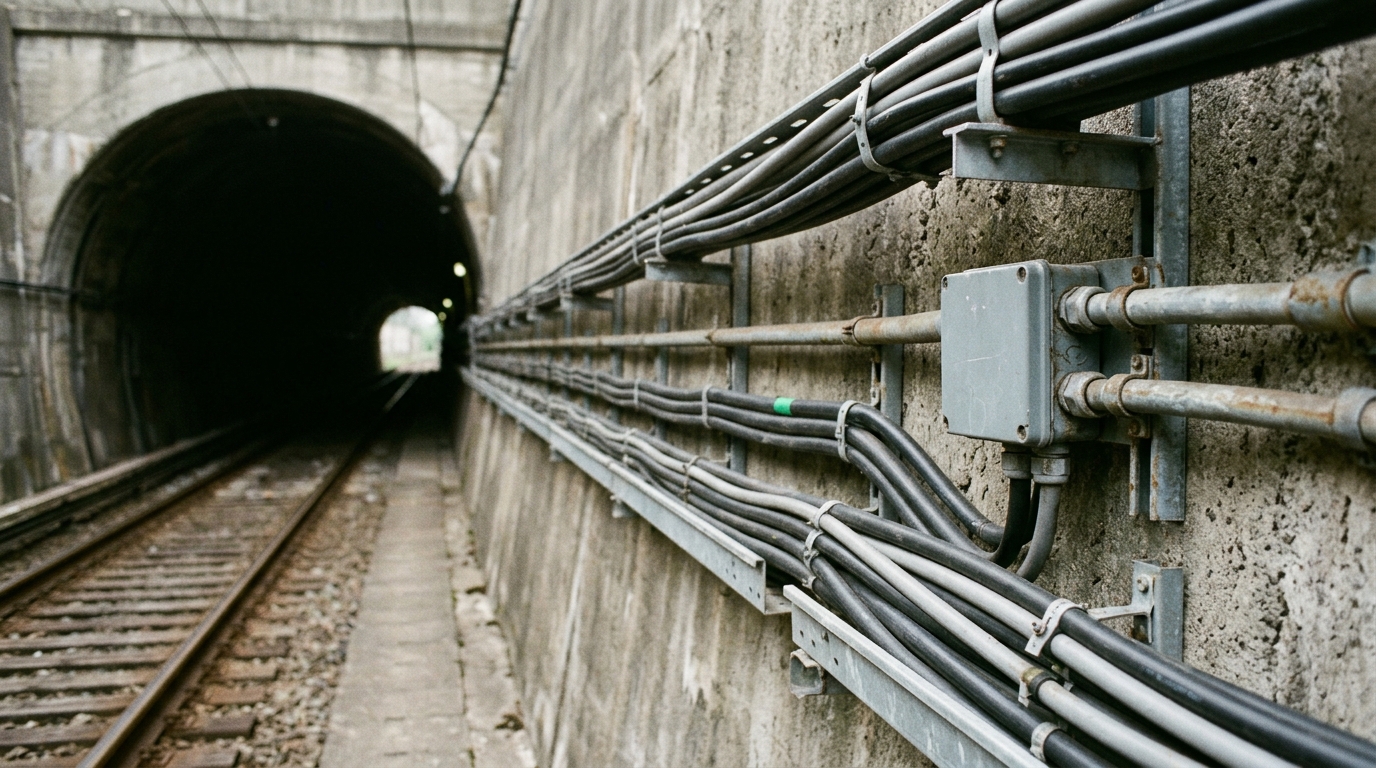
```json { "title": "Structural Instrumentation for Metro Rail Projects in Indian Cities", "metaDescription": "Structural instrumentation for metro rail projects in Indian cities: city-wise sensor requirements, Indian Standards, and SHM strategies for metro authorities and consultants.", "slug": "structural-instrumentation-for-metro-rail-projects-in-indian-cities", "sections": [ { "header": "", "content": "<p>In April 2017, a section of the under-construction Kolkata East-West Metro tunnel caused ground subsidence that damaged residential structures along Bowbazar Street — a reminder that urban tunnelling beneath dense city fabric carries consequences measured not just in millimetres of settlement but in displaced families and regulatory scrutiny. Structural instrumentation for metro rail projects in Indian cities is therefore not a value-add; it is the primary mechanism by which geotechnical risk is quantified, communicated, and controlled throughout design, construction, and operation. As metro networks expand across Delhi, Mumbai, Bengaluru, Hyderabad, Chennai, Pune, Kochi, and Nagpur, the instrumentation brief has grown correspondingly complex — encompassing tunnel lining health, adjacent structure protection, track geometry, and seismic response, all governed by a layered framework of DMRC, MMRC, BMRCL, and CMRL specifications alongside national codes.</p><p>This post examines the engineering basis for metro rail instrumentation, the city-specific ground conditions that shape sensor selection, and the monitoring architectures that satisfy both construction-phase trigger levels and long-term metro SHM India requirements.</p>" }, { "header": "Key Takeaways", "content": "<ul><li>Structural instrumentation for metro rail projects in Indian cities must address three distinct phases: pre-construction baseline, active excavation, and operational structural health monitoring — each with different sensor types and trigger-level hierarchies.</li><li>Ground conditions vary significantly between Indian metros: Delhi's alluvial plains, Mumbai's basalt, Bengaluru's weathered gneiss, and Chennai's marine clay each demand a tailored metro rail instrumentation strategy.</li><li>IS 1893 (Part 1): 2016 seismic zoning and DMRC/MMRC general specifications define minimum instrumentation obligations; non-compliance can trigger contractual penalties and regulatory hold orders.</li><li>Automated data acquisition with real-time alert thresholds — not periodic manual readings — is now the standard expected by metro authorities and their third-party independent checkers.</li><li>Digital twin integration, as demonstrated at the <a href='/resources/blogs/tunnel-monitoring-iot-sensors'>MIT-WPU Tunnel Health Monitoring and Digital Twin Excellence Centre</a>, is emerging as the reference architecture for lifecycle metro SHM India deployments.</li></ul>" }, { "header": "What Is Structural Instrumentation for Metro Rail Projects", "content": "<p>Structural instrumentation for metro rail projects is the systematic deployment of sensors, data acquisition systems, and monitoring networks to measure the mechanical, geotechnical, and structural response of tunnel linings, shafts, cut-and-cover boxes, viaducts, and adjacent structures throughout the construction and operational life of an urban metro system.</p><p>The instrumentation scope typically spans: convergence monitoring of tunnel cross-sections using electro-optical total stations or automated robotic total stations (RTS) reading reflective targets at 0.1 mm resolution; vibrating-wire strain gauges embedded in precast concrete segments or cast-in-situ lining to capture hoop stress in the range of ±3,000 micro-strain; piezometers measuring pore-water pressure changes in kPa during TBM advance; inclinometers tracking lateral ground movement in adjacent soil profiles to 0.02 mm/0.5 m resolution; and tiltmeters on heritage structures and utility bridges sensitive to rotations of 0.001°. Each instrument category addresses a specific failure mode — lining overstress, ground heave, building settlement, or seepage — and feeds trigger levels defined in the project's Geotechnical Instrumentation and Monitoring Plan (GIMP).</p><p>For a broader understanding of how these principles apply across infrastructure asset classes, see <a href='/resources/blogs/structural-health-monitoring-for-bridges-dams-and-tunnels-india-guide'>structural health monitoring for bridges dams and tunnels india</a>.</p>" }, { "header": "Regulatory and Standards Framework Governing Metro Instrumentation in India", "content": "<p>Metro rail instrumentation in India operates within a multi-tier regulatory framework. At the national level, IS 1893 (Part 1): 2016 classifies Indian cities into seismic zones II through V, directly influencing the accelerometer density and trigger thresholds specified in metro SHM India programmes. IS 4968 (dynamic cone penetration), IS 1892 (site investigation), and IS 2720 (soil testing) underpin the geotechnical baseline against which instrumentation readings are interpreted.</p><p>Metro-specific obligations are set by each city's metro rail corporation. DMRC's General Specifications for Civil Works and the associated Geotechnical Baseline Reports (GBR) mandate third-party monitoring of all structures within 1.5 times the tunnel diameter of the excavation face. MMRC's contract documents for Mumbai Metro Line 3 required continuous automated monitoring of over 2,400 monitoring points along the 33.5 km alignment. BMRCL and CMRL have adopted similar frameworks, referencing ITA (International Tunnelling Association) guidelines and CIRIA C760 for trigger-level hierarchies: typically a three-tier system of Alert (A), Action (AA), and Alarm (AAA) thresholds expressed in mm of settlement or mm/day of settlement rate.</p><p>The Dam Safety Act 2021 analogy is instructive: just as that legislation mandated instrumentation for all large dams, metro rail concession agreements increasingly embed instrumentation obligations as contractual conditions precedent to TBM launch.</p>" }, { "header": "City-Wise Ground Conditions and Instrumentation Requirements", "content": "<p>No two Indian metro corridors present identical ground conditions, and the instrumentation brief must reflect the specific geomechanical environment of each city.</p><p><strong>Delhi (DMRC):</strong> The Indo-Gangetic alluvial sequence — alternating layers of silty sand, sandy silt, and occasional kankar — produces variable SPT N-values from 10 to over 50 within a single tunnel drive. Settlement troughs above TBM drives in this stratigraphy can extend laterally to 2–3 times the tunnel radius. The instrumentation response: closely spaced surface settlement points at 5 m intervals over the tunnel crown, supplemented by multi-point borehole extensometers (MPBX) anchored at 5 m, 10 m, and 20 m depth to disaggregate surface settlement from deep-seated movement.</p><p><strong>Mumbai (MMRC):</strong> Deccan Basalt with weathered zones (grades III–V) and occasional dykes creates mixed-face conditions. The primary instrumentation concern shifts from settlement to lining stress concentration at lithological contacts. Vibrating-wire strain gauges on the precast lining segments, read at 15-minute intervals during TBM passage, capture the stress redistribution as the TBM crosses dyke boundaries. Piezometers in the weathered zone monitor drawdown, which can trigger consolidation settlement in the overlying reclaimed land of South Mumbai.</p><p><strong>Bengaluru (BMRCL):</strong> Highly variable weathered gneiss — from residual soil to fresh rock within metres — means that NATM (New Austrian Tunnelling Method) sections coexist with TBM drives on the same alignment. NATM sections require shotcrete stress cells, rock bolt load cells (measuring axial load in kN), and convergence monitoring at every 5 m ring. The <a href='/products/tunnel-monitoring'>tunnel monitoring sensor systems</a> deployed in such mixed-ground environments must accommodate both vibrating-wire and digital MEMS-based sensors on a single data acquisition backbone.</p><p><strong>Chennai (CMRL):</strong> Marine clay and beach sand in the coastal corridor present the highest consolidation settlement risk among Indian metros. Primary consolidation under surcharge can continue for months post-construction. Long-term settlement monitoring using precise levelling benchmarks and automated settlement sensors with sub-millimetre resolution is mandatory. Pore-pressure dissipation curves from vibrating-wire piezometers provide the primary indicator of consolidation progress.</p><p><strong>Hyderabad (HMRL) and Pune (Maha-Metro):</strong> Hard granite and basalt respectively reduce settlement risk but increase the importance of blast vibration monitoring during drill-and-blast sections. Peak particle velocity (PPV) limits — typically 5 mm/s for residential structures and 2 mm/s for heritage buildings per IS 6922 — are enforced through triaxial geophones mounted on adjacent structures, with real-time SMS alerts to the blasting supervisor.</p>" }, { "header": "Sensor Selection and Monitoring Architecture for Metro Tunnels", "content": "<p>A well-designed metro rail instrumentation architecture integrates sensors at three spatial scales: the tunnel lining itself, the ground mass around the excavation, and the surface structures above. The data acquisition layer must unify readings from heterogeneous sensor types — vibrating-wire, MEMS, optical fibre, and electro-optical — into a single time-stamped database accessible to the project's geotechnical engineer, the metro authority's independent checker, and the contractor's site team simultaneously.</p><p>Key sensor categories and their engineering specifications in a typical metro deployment:</p><ul><li><strong>Vibrating-wire strain gauges (VWSG):</strong> Embedded in lining concrete; range ±3,000 micro-strain; resolution 1 micro-strain; thermistor co-located for temperature correction per IS 13311.</li><li><strong>Vibrating-wire piezometers:</strong> Range 0–700 kPa; accuracy ±0.1% FS; installed in filter sand pockets within the borehole, grouted above.</li><li><strong>In-place inclinometers (IPI):</strong> Biaxial MEMS sensors at 0.5 m spacing within a 70 mm OD inclinometer casing; resolution 0.02 mm/0.5 m; suitable for continuous automated reading.</li><li><strong>Robotic total stations (RTS):</strong> Angular accuracy 0.5"; distance measurement to 0.3 mm + 1 ppm; scanning reflective prisms on tunnel lining at 15-minute intervals.</li><li><strong>Distributed fibre optic sensing (DFOS):</strong> Brillouin-based strain sensing along the full tunnel lining length; spatial resolution 0.5 m; suitable for detecting localised cracking between discrete sensor points.</li><li><strong>Triaxial geophones / seismographs:</strong> Frequency range 2–250 Hz; PPV measurement for blast vibration monitoring per IS 6922.</li></ul><p>The data acquisition units (DAQ) must support multiplexed vibrating-wire reading at scan rates of up to 1 Hz for dynamic events, with onboard data storage and cellular/fibre telemetry to a cloud-hosted monitoring dashboard. Geolook's experience at the Ramban-Banihal NH-44 Tunnels on NH-44 in Jammu & Kashmir — where real-time SHM was deployed across five tunnels in association with DRAIPL, with review meetings conducted with the NHAI Regional Office — demonstrates the operational discipline required to sustain continuous monitoring in challenging terrain. The same data governance principles apply to urban metro environments, where the consequence of a missed alert is measured in public safety rather than highway downtime.</p><p>Explore <a href='/solutions/underground'>underground infrastructure monitoring solutions</a> for a complete view of sensor-to-dashboard architectures applicable to metro tunnels.</p>" }, { "header": "Instrumentation for Adjacent Structure Protection", "content": "<p>The protection of existing buildings, utilities, and heritage structures above and alongside metro alignments is the instrumentation brief that most directly affects public perception and legal liability. DMRC's standard specification requires that any structure within the zone of influence — defined as the area within which predicted settlement exceeds 10 mm — be instrumented before TBM launch.</p><p>The instrumentation package for an adjacent structure typically includes: precise levelling benchmarks on the structure's plinth at 3–5 m spacing, read by digital level to 0.01 mm; tiltmeters on columns and walls, measuring rotation in two axes to 0.001°; crack gauges (vibrating-wire or MEMS) across existing cracks, measuring aperture change to 0.01 mm; and structural accelerometers for heritage buildings in seismic zones III–V per IS 1893.</p><p>Trigger levels are set relative to the structure's assessed fragility. For a load-bearing masonry structure, the Alert threshold for differential settlement might be 5 mm; for a modern reinforced concrete frame, 15 mm. When the Alert threshold is breached, the contractor must notify the metro authority within one hour and submit a written assessment within 24 hours. Action and Alarm thresholds trigger progressively more severe responses, up to TBM stoppage.</p><p>For construction-phase monitoring protocols that integrate adjacent structure protection with tunnel face monitoring, see <a href='/resources/blogs/metro-construction-monitoring-guide'>metro construction monitoring</a> practices used on Indian metro projects.</p>" }, { "header": "Comparison of Instrumentation Methods for Metro Tunnel Monitoring", "content": "<p>The table below compares the principal instrumentation methods used in structural instrumentation for metro rail projects in Indian cities, across the parameters most relevant to metro authority procurement decisions.</p><table><thead><tr><th>Method</th><th>Measured Parameter</th><th>Typical Range / Resolution</th><th>Reading Frequency</th><th>Best-Fit Application</th></tr></thead><tbody><tr><td>Vibrating-Wire Strain Gauge (VWSG)</td><td>Lining hoop / bending strain</td><td>±3,000 µε / 1 µε</td><td>Continuous automated (15 min)</td><td>Precast segment stress monitoring during TBM advance</td></tr><tr><td>Robotic Total Station (RTS)</td><td>3D displacement of tunnel crown and walls</td><td>0–50 mm / 0.3 mm</td><td>Automated (15–60 min)</td><td>Convergence monitoring in NATM and bored tunnels</td></tr><tr><td>In-Place Inclinometer (IPI)</td><td>Lateral ground / retaining wall movement</td><td>±50 mm / 0.02 mm per 0.5 m</td><td>Continuous automated (hourly)</td><td>Cut-and-cover box and diaphragm wall deflection</td></tr><tr><td>Vibrating-Wire Piezometer</td><td>Pore-water pressure</td><td>0–700 kPa / 0.1% FS</td><td>Continuous automated (15 min)</td><td>Groundwater drawdown monitoring in marine clay / alluvium</td></tr><tr><td>Distributed Fibre Optic (DFOS)</td><td>Distributed strain along lining</td><td>Full tunnel length / 0.5 m spatial</td><td>Continuous (minutes)</td><td>Detecting localised cracking between discrete sensor points</td></tr><tr><td>Triaxial Geophone</td><td>Peak particle velocity (PPV)</td><td>0.1–100 mm/s / 0.1 mm/s</td><td>Event-triggered continuous</td><td>Blast vibration monitoring per IS 6922</td></tr><tr><td>Precise Levelling Benchmark</td><td>Vertical settlement of surface / structure</td><td>0–100 mm / 0.01 mm</td><td>Manual (daily to weekly)</td><td>Adjacent structure settlement baseline and trend</td></tr></tbody></table>" }, { "header": "Digital Twin Integration and Long-Term Metro SHM India", "content": "<p>The operational phase of a metro system introduces a different instrumentation mandate: track geometry degradation, lining crack propagation, drainage performance, and seismic response over a design life of 100 years. Metro SHM India programmes are increasingly specifying digital twin platforms that ingest sensor data, maintenance records, and inspection photographs into a unified asset model — enabling predictive maintenance rather than reactive repair.</p><p>Geolook's work at the MIT-WPU Tunnel Health Monitoring and Digital Twin Excellence Centre in Pune, inaugurated by Hon'ble Minister Sh. Nitin Gadkari, provides a reference architecture for this approach. The centre integrates real-time sensor feeds, finite element model updating, and immersive visualisation to demonstrate how a digital twin can track the divergence between as-designed and as-monitored structural behaviour over time. The same architecture — sensor layer, data acquisition layer, analytics layer, and visualisation layer — is directly transferable to operational metro tunnels.</p><p>For metro authorities evaluating long-term SHM contracts, the key performance indicators are: data availability (target >98% uptime per sensor point), alert response time (automated SMS/email within 60 seconds of threshold breach), and model update frequency (finite element model recalibrated against sensor data at least quarterly). These KPIs should be embedded in the SHM service-level agreement, not left to contractor discretion.</p><p>Explore <a href='/resources/blogs/real-time-sensor-monitoring-during-underground-tunnel-excavation-guide'>real time sensor monitoring during underground tunnel excavation</a> for the construction-phase counterpart to these operational SHM requirements.</p><p>For a detailed breakdown of sensor types and system architectures used in urban metro tunnels, see <a href='/resources/blogs/what-sensors-and-systems-are-used-in-tunnel-health-monitoring-for-urban-metro-projects-guide'>what sensors and systems are used in tunnel health monitoring for urban metro projects</a>.</p>" }, { "header": "Procurement and Specification Considerations for Metro Authorities", "content": "<p>Metro authorities and their consultants face a recurring challenge: instrumentation specifications written at the design stage often do not anticipate the data management burden of a 30–50 km automated monitoring network generating readings every 15 minutes from 2,000+ sensor points. The result is either data overload — where alert fatigue causes genuine threshold breaches to be missed — or data gaps, where sensors fail and are not replaced promptly.</p><p>Effective procurement for metro rail instrumentation should specify: sensor redundancy (minimum two independent sensors per critical monitoring section); calibration intervals (vibrating-wire sensors factory-calibrated per IS 13311, with field verification at 6-month intervals); data transmission protocols (MQTT or OPC-UA over cellular or fibre, with local onboard storage for 30 days as backup); and reporting obligations (automated daily summary reports, weekly trend analysis, and monthly geotechnical review meetings with the independent checker).</p><p>The <a href='/solutions/transport'>transport infrastructure monitoring solutions</a> framework addresses these procurement requirements, providing metro authorities with a structured approach to sensor specification, DAQ selection, and long-term data management. Additionally, <a href='/products/sensors'>geotechnical and structural sensors for infrastructure monitoring</a> covers the full sensor catalogue relevant to metro tunnel and adjacent structure applications.</p>" }, { "header": "Frequently Asked Questions", "content": "<p><strong>Q: What is structural instrumentation for metro rail projects in Indian cities?</strong></p><p>A: Structural instrumentation for metro rail projects in Indian cities is the deployment of sensors, data acquisition systems, and monitoring networks to measure the geotechnical and structural response of tunnels, shafts, viaducts, and adjacent structures throughout metro construction and operation. It covers parameters including lining strain in micro-strain, ground settlement in millimetres, pore-water pressure in kPa, and blast vibration in mm/s PPV.</p><p><strong>Q: Which Indian Standards govern metro tunnel instrumentation?</strong></p><p>A: Metro tunnel instrumentation in India is governed by IS 1893 (Part 1): 2016 for seismic zoning, IS 1892 for site investigation, IS 13311 for sensor calibration, and IS 6922 for blast vibration limits. Metro rail corporations — DMRC, MMRC, BMRCL, CMRL — supplement these with project-specific General Specifications and Geotechnical Baseline Reports that define trigger-level hierarchies and reporting obligations.</p><p><strong>Q: How are alert thresholds set for adjacent structure monitoring during metro construction?</strong></p><p>A: Alert thresholds for adjacent structure monitoring are set based on the structure's assessed fragility and the predicted settlement trough from TBM advance. A three-tier system — Alert, Action, and Alarm — is standard, with thresholds expressed in mm of settlement, mm/day of settlement rate, or degrees of tilt. Load-bearing masonry structures typically have tighter thresholds than reinforced concrete frames due to lower differential settlement tolerance.</p><p><strong>Q: What is the difference between construction-phase and operational-phase metro SHM India requirements?</strong></p><p>A: Construction-phase metro SHM India focuses on real-time risk control during TBM advance and excavation, with high-frequency automated readings and immediate alert escalation. Operational-phase SHM shifts to long-term asset health management — tracking lining crack propagation, track geometry degradation, and seismic response over a 100-year design life — typically using digital twin platforms that integrate sensor data with finite element model updating.</p><p><strong>Q: Why do different Indian metro cities require different instrumentation strategies?</strong></p><p>A: Different Indian metro cities require different instrumentation strategies because their ground conditions vary fundamentally. Delhi's alluvial plains produce wide settlement troughs requiring dense surface monitoring; Mumbai's basalt creates lining stress concentrations at lithological contacts; Bengaluru's weathered gneiss demands NATM-specific shotcrete stress cells and rock bolt load cells; and Chennai's marine clay requires long-term consolidation settlement monitoring with sub-millimetre resolution piezometers.</p>" }, { "header": "Explore metro solutions", "content": "<p>Geolook provides end-to-end structural instrumentation for metro rail projects in Indian cities — from geotechnical baseline surveys and sensor specification through automated data acquisition, real-time alert management, and digital twin integration. Our instrumentation deployments, including the real-time SHM programme across five tunnels on NH-44 at Ramban-Banihal and the digital twin research infrastructure at the MIT-WPU Tunnel Health Monitoring and Digital Twin Excellence Centre, demonstrate the operational and analytical rigour that metro authorities and their consultants require.</p><p>Whether you are specifying a construction-phase monitoring plan for a new TBM drive, evaluating long-term SHM options for an operational metro line, or benchmarking your current instrumentation against DMRC or MMRC standards, our team of geotechnical and structural instrumentation engineers can assist.</p><p><a href='/contact'>Contact Geolook to discuss your metro rail instrumentation requirements</a> or download the full guide to structural instrumentation for metro rail projects in Indian cities for a detailed technical reference covering sensor selection, trigger-level frameworks, and procurement specifications.</p>" } ] } ```
Project inquiry
Talk to a Geolook™ specialist
Share your monitoring requirement and our team will help identify the right next step.
By submitting, you agree that Geolook™ may contact you about this inquiry. Your details are not added to a marketing list.